
Zork is one of the earliest interactive fiction computer games, with roots drawn from the original genre game, Colossal Cave Adventure. The first version of Zork was written in 1977–1979 using the MDL programming language on a DEC PDP-10 computer.
ZORK takes place in the ruins of an ancient empire lying far underground. You, a dauntless treasure-hunter, are venturing into this dangerous land in search of wealth and adventure. Many strange tales have been told of the fabulous treasures, exotic creatures and diabolical puzzles in the Great Underground Empire. As an aspiring adventurer, you will undoubtedly want to locate the treasures and deposit them in your trophy case. You' d better equip yourself with a source of light (for the caverns are dark) and weapons (for some of the inhabitants are unfriendly - especially the thief, a skilled pickpocket and ruthless opponent). The time is 948 GUE according to the Zork calendar. You are an adventurer, and your journey begins near a white house in a small, self-contained area.

Wishbringer: The Magick Stone of Dreams is an interactive fiction computer game written by Brian Moriarty and published by Infocom in 1985. It was intended to be an easier game to solve than the typical Infocom release and provide a good introduction to interactive fiction for inexperienced players, and was very well received.

In the third game of the adventure game series Zork, you are once again a nameless adventurer, only this time you won't travel through a beautiful magical land, but are immediately cast into a deep dungeon. Like in a dream, you hear a mysterious voice telling you that you have passed all the tests but one. When conscience returns to you, you find yourself on the endless spiral of stairs, with only your trusty lantern near you... will you be able to survive the horrors of the Dungeon?

Spellbreaker is an interactive fiction computer game written by Dave Lebling and released by Infocom in 1985, the third and final game in the "Enchanter Trilogy". Like most of Infocom's games, it was released for many of the time's popular computer platforms, such as the Commodore 64, Atari ST and Apple II. It is Infocom's eighteenth game. Over the course of events in the trilogy's earlier games from 956 to 957 GUE (Enchanter and Sorcerer), the player's character has progressed from a novice wizard possessing a few weak spells to the leader of the Circle of Enchanters. Now, in 966 GUE (ten years after the events of Enchanter), the very foundations of Magic itself seem to be failing, and the leaders of all the Guilds in the land have gathered to demand answers. In the midst of this impassioned meeting, the crowd is suddenly transformed into a group of toads and newts. Everyone present is affected except for the player and a shadowy figure who flees the hall.

The adventure begins in the Barrow from "Zork I" armed only with the trusty brass lantern and sword of elvish antiquity. The purpose of the game is not initially clear. Like its predecessor, Zork II is essentially a treasure hunt. Unlike the previous game, the ten treasures are tied together by a crude plot. Finding the treasures does not end the game, nor are all the treasures needed to finish the game. Instead, the adventurer must figure out a way to use the treasures in order to reach the game's finale.

Point-and-click / Adventure / Fantasy
Mix of conversational and point & click game where the messages sent to us by the game play a fundamental role but instead of conversing directly as in other text adventures, we must choose actions to perform from a menu of icons. The initial location of the player, the objects to find, the movements of the characters and the correct solution of some of the puzzles are randomized every time we start a game.

Role-playing (RPG) / Adventure / Fantasy
Beyond Zork: The Coconut of Quendor is an interactive fiction computer game written by Brian Moriarty and released by Infocom in 1987. It was one of the last games in Infocom's Zork series It signified a notable departure from the standard format of Infocom's earlier games which relied purely on text and puzzle-solving: among other features, Beyond Zork incorporated an on-screen map, the use of character statistics and levels, and RPG combat elements. The game, Infocom's twenty-ninth, was available on the Amiga (512kb), Apple (128kb), Atari ST, Commodore 128, and IBM (192kb), and the Macintosh (512kb) computers The player explores the Southlands of Quendor somewhat aimlessly at first. Soon, however, a task is bestowed by the Implementors, a group of godlike creatures jokingly based on Infocom's game designers. The Coconut of Quendor, an incredibly powerful artifact that embodies the whole of Magic, has fallen into the claws of an unspeakably foul beast: an Ur-grue. Rumoured to be the spirits of fallen Implementors, Ur-Grues can surround themselves in a sphere of darkness that only sunlight can pierce. The player must recover the Coconut from this monster's grasp or face the unthinkable consequences.

Adventure / Fantasy / Historical
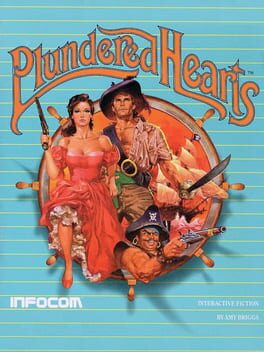
Hearing your father has taken ill, you rush to his aid in this 17th century island romance tale.

Adventure / Thriller / Mystery
The Witness was the seventh game released by interactive fiction pioneers Infocom. The player character is a detective who has been summoned to the Cabeza Plana, California office of Mr. Linder, a millionaire. Linder fears that his life is in danger... and indeed, as he sits in his office with the player, he is murdered before the player's eyes. The player then must solve the murder.