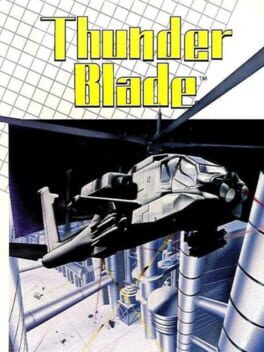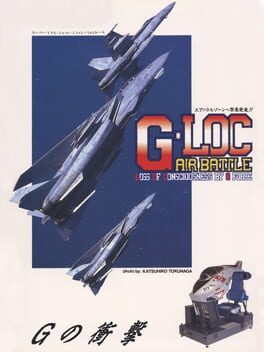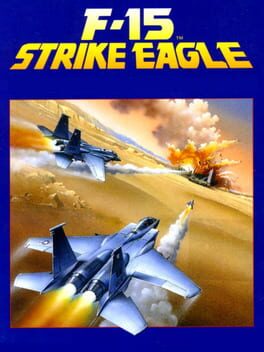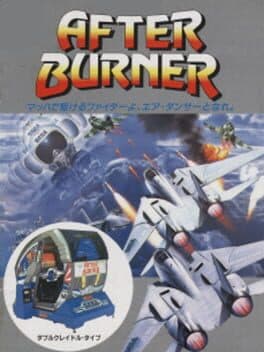

Muster up all the skill, reflexes and guts you've got. Because inside your F-14 Thunder Cat, you're going to need all that - and more. Blast laser-directed, anti-aircraft fire at enemy planes. Dodge heat-seeking missiles with fancy flywork, like dips, turns and barrel rolls. Come head to head with the infamous Flying Fortresses (the toughest of all enemies) and dogfight your way through, to a nanosecond of safety. And if you make it far enough, a fuel tanker will be waiting for you. Dock successfully and you'll replenish valuable energy and ammunition. So get your adrenaline pumping and grab your joystick. Then take to the skies. You're not going to believe what's up there!

Shooter / Simulator / Action / Science fiction
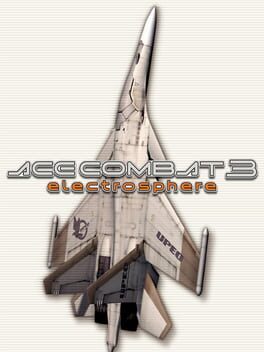
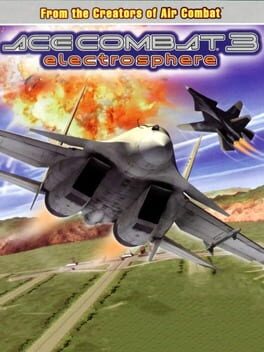
Ace Combat 3: Electrosphere is a combat flight simulation video game developed and published by Namco for the PlayStation. The third game in the Ace Combat franchise, it was released in Japan in 1999. Players control an aircraft and must complete various mission objectives, such as destroying squadrons of enemies or protecting a base from enemy fire. Electrosphere carries a more futuristic science fiction-inspired landscape and world compared to the modern-day theme of its predecessors. The japanese version of Ace Combat 3 differs significantly from the international release: its campaign features 52 missions split among different paths depending on in-mission decisions. The story centers around the "Intercorporate War" in 2040 between Neucom Incorporated and the General Group.

Shooter / Simulator / Action / Warfare
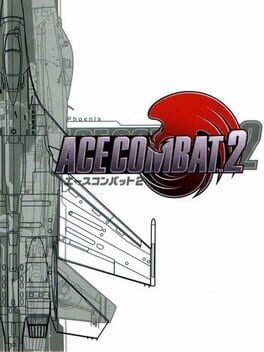
Ace Combat 2 serves as the follow-up to Namco's Air Combat, a combat flight simulator for the PlayStation. In this sequel, the player steps into the shoes of a mercenary pilot, determined to thwart a global terrorist conspiracy. With 30 challenging missions ahead, your triumphs will enable you to acquire weapon upgrades, parts, and various enhancements, mirroring the mechanics of the original game. Enhanced with crisper visuals and more immersive audio, Ace Combat 2 also boasts an expanded array of planes and customisable options. Additionally, it introduces dual shock support, along with the inclusion of analogue joystick support, enriching the overall gaming experience.

Shooter / Simulator / Arcade / Action / Warfare
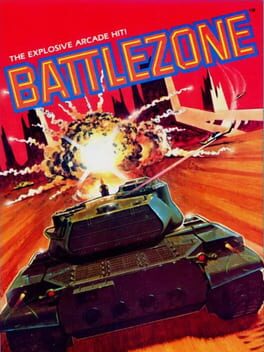
Battlezone is an arcade game from Atari released in November 1980. It displays a wireframe view (using vector graphics rather than raster graphics) on a horizontal black and white (with green and red sectioned color overlay) vector monitor. Due to its novel gameplay and look, this game was very popular for many years. Throughout the 1980s, Battlezone was ported to several home computer systems (usually on the Atarisoft label), including the Apple II, the Commodore 64, the Sinclair ZX Spectrum, and the Atari XEGS. The Atari ST port contains large parts of the original 6502 code which is emulated in real time. An Atari 2600 port was also released, but has colored raster graphics due to limitations and the view is behind the tank rather than inside it.


Shooter / Simulator / Action / Science fiction
Ace Combat 3: Electrosphere is a combat flight simulation video game developed by Namco for the PlayStation. The third game in the Ace Combat franchise, it was released in Europe and North America in 2000 and was localized for specific regions. Players control an aircraft and must complete various mission objectives, such as destroying squadrons of enemies or protecting a base from enemy fire. Electrosphere carries a more futuristic science fiction-inspired landscape and world compared to the modern-day theme of its predecessors. The international version of Ace Combat 3 differs significantly from the japanese release: its campaign has 36 out of the original 52 missions with no different paths. The story, as well as all related voice acting and cutscenes, was removed and replaced with a more basic story with no voice acting.