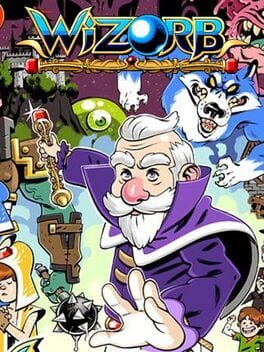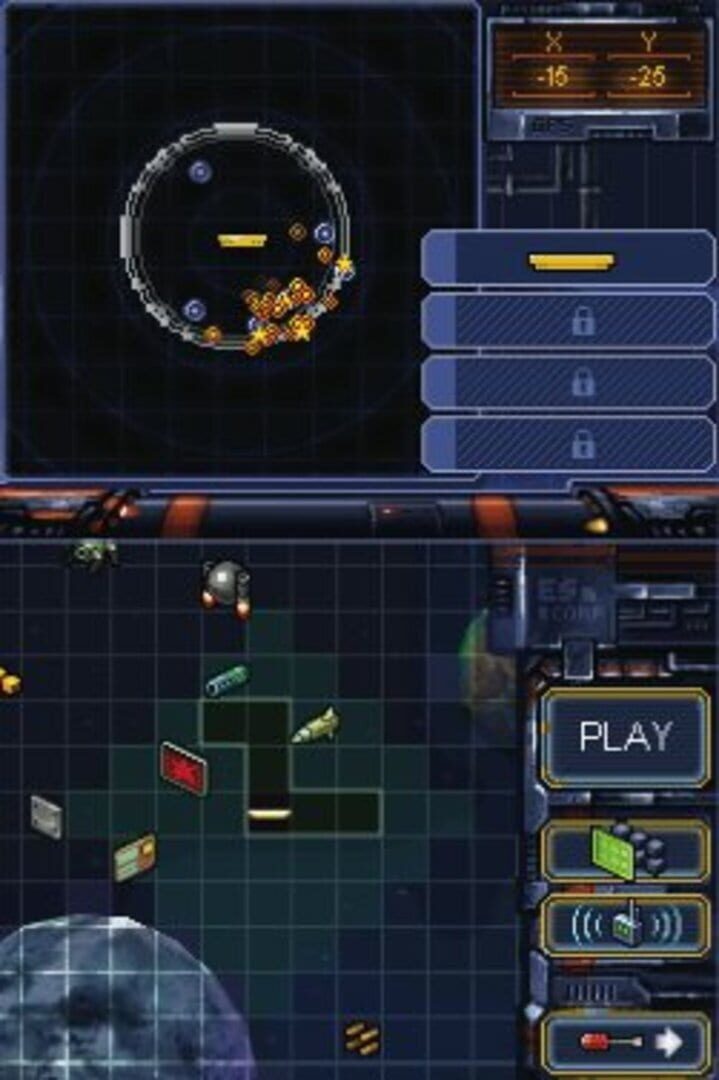
A brick-breaking game with RPG elements. The goal is to find your way back to Earth through the walls of bricks blocking your path.
Screenshots
Featured in
A brick-breaking game with RPG elements. The goal is to find your way back to Earth through the walls of bricks blocking your path.
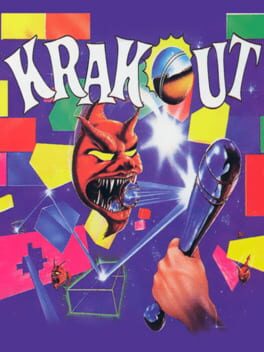
Arkanoid-style Breakout clone, which unlike most other similar games has the bat on the side of the screen (there is a left/right option) instead of at the bottom. There are a number of types of special bricks, but unlike e.g. Arkanoid, they do not fall towards the bat. Instead, when you hit a special brick, it flips to show a letter. E.g. E (Extend bat), C (Catch ball), M (Missile), B (Bomb, explodes when hit by ball, clearing a number of bricks) and X (Extra life). The enemies/obstacles are more varied than in Arkanoid. Some make the bat freeze, some actually chew and eat your ball and spit out the core back at you!
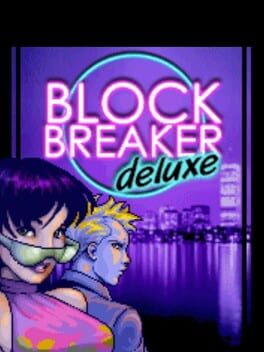
Prepare for the frenzy of the coolest block-breaker game ever. Block Breaker Deluxe is a reinvention of the classic arcade brick-breaker game with a trendy graphical style, fun atmosphere and an exclusive multiplayer mode. Lively characters and amazing graphics provide distinctive settings of the jet-set nightlife, including a cool bar, dance club, casino and more. Special bricks, multiple bonuses, secret weapons, paddle size options and ball-speed variations make this fascinating game even more challenging. The Block Breaker Deluxe rage has arrived.
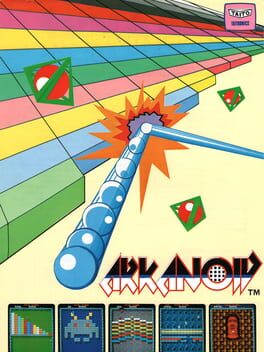
Arcade / Action / Science fiction
Arkanoid is an arcade game developed by Taito in 1986. It expanded upon Atari's Breakout games of the 1970s by adding power-ups, different types of bricks, and a variety of level layouts. The title refers to a doomed "mothership" from which the player's ship, the Vaus, escapes.
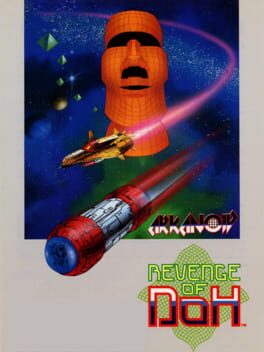
Puzzle / Arcade / Action / Science fiction
Arkanoid - Revenge of Doh (a.k.a. Arkanoid 2) is an arcade game released by Taito in 1987 as a sequel to Arkanoid. The mysterious enemy known as DOH has returned to seek vengeance on the Vaus space vessel. The player must once again take control of the Vaus (paddle) and overcome many challenges in order to destroy DOH once and for all. Revenge of Doh sees the player battle through 34 rounds, taken from a grand total of 64. NEW FEATURES: Revenge of Doh differs from its predecessor with the introduction of "Warp Gates". Upon completion of a level or when the Break ("B") pill is caught, two gates appear at the bottom of the play area, on either side. The player can choose to go through either one of the gates - the choice will affect which version of the next level is provided. The fire-button is only used when the Laser Cannons ("L") or Catch ("C") pill is caught. The game also features two new features for bricks. Notched silver bricks, like normal silver bricks, take several hits to destroy. However, after a short period of time after destruction, they regenerate at full strength. Fortunately, clearing a level does not require that any notched bricks be destroyed. Also, some bricks move from side to side as long as their left and/or right sides are not obstructed by other bricks. The US version features an entirely different layout for Level 1 that feature an entire line of notched bricks, with all colored bricks above it moving from side to side. The game features a mini-boss in the form of a giant brain, which will help you practice for DOH. Home versions of Revenge of DOH also featured a level editor, where players could create their own levels or edit and replace existing levels, with the exception of two levels: the mini-boss and DOH.
Aura-Aura Climber is a DSiWare platformer, published by Nintendo. The goal is to climb back to the sky using Aura-Aura's grapple arm, while avoiding enemies and obstacles as fast and accurately as possible.
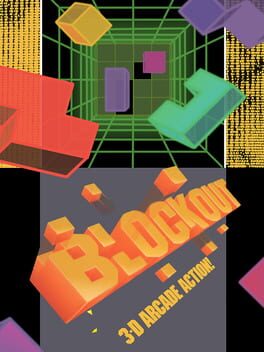
Blockout is a puzzle videogame, created in 1989 by Polish developer - California Dreams, designed by Aleksander Ustaszewski and Mirosław Zabłocki. The game is the logical extension of Tetris into the third dimension. In Tetris, the player manipulates a set of tetrominoes which fall into a two-dimensional pit (seen from the side). The aim is to solve a real-time packing problem by forming complete rows, which then disappear and score points. Poor play leads to incomplete rows, caused by inefficient arrangements of tiles; these rows do not disappear, giving the player progressively less space and less time to play subsequent pieces. Similarly, in Blockout, the player manipulates a set of polycubes which fall into a three-dimensional pit (seen from above; the pieces appear in the foreground and fall away). The pieces can be rotated around all three axes, and moved horizontally and vertically. The aim is to form complete layers.

He’s a small bird with a very long tongue and an insatiable appetite for beans. Luckily for Pyoro, beans drop constantly from the sky. However, if Pyoro lets a bean fall, it breaks a hole in the ground that he can’t cross.