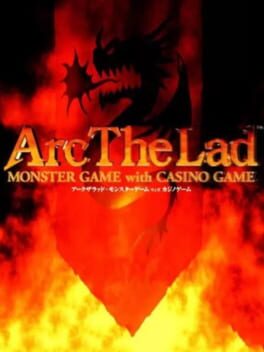
Arc the Lad: Monster Game with Casino Game is a spin-off from the Arc the Lad series and a bonus expansion to Arc the Lad II, as it uses the player's saves from the second game so the player can compete in the tournament with his monsters, visit shops, trade items etc. In addition there is a collection of casino mini-games that complete the package.

Role-playing (RPG) / Strategy / Turn-based strategy (TBS) / Action / Fantasy
Battle Hunter (known as The Hunter in Europe) pits you against evil robots, mutated animals, and even some of your own friends! Battle Cards will help you get a leg up on the competition, and awesome action physics make the gameplay smooth and realistic. If you’re looking for an original challenge that lives up to its premise, check out BATTLE HUNTER.

Role-playing (RPG) / Strategy / Fantasy / Science fiction
In a world where technology and mythology are one, a young rebel and his ragtag crew are unwittingly drawn into a holy war being waged by the bloodthirsty General Faulkner and his mercenary forces. Guide the charasmatic Bastion as he realizes his destiny to lead the rebellion against the Junaris Kingdom, and to save the people of his world from an eternity of oppression. Lead powerful squadrons of robotic warriors into battle and take complete command of their actions. Smite your foes with cleaving swords, piercing spears, and sizzling magic spells. Use the terrain to your advantage and maneuver your forces into superior combat positions. Witness the results of your tactical decisions in glorious 3D combat sequences.

Role-playing (RPG) / Strategy / Turn-based strategy (TBS) / Fantasy
The events of this game take place several years after Elk and Arc faced their ultimate enemy in "Arc the Lad II". You control Alec, a teenager whose entire village was destroyed by an unknown evil - an event that was later called "The Great Disaster". He was saved by a mysterious Hunter. Since then, growing peacefully in a village he was brought to, which was like a new home for the survivors of the Great Disaster, Alec dreams about meeting the Hunter again, and becoming a Hunter himself. Together with his best friend Lutz he tries his luck in nearby towns, receiving small Hunter jobs, until the fate crosses the ways of the two young people with a mysterious organization called the Academy. And there their adventure really begins... The gameplay of this third installment of Arc the Lad series is very similar to that of the predecessor. You fight enemies in turn-based battles, and can move freely on the battlefield, positioning your party members the way you like. You can upgrade your weapons by forging them with special materials, and have a variety of techniques and magic spells at your disposal.

Role-playing (RPG) / Strategy / Turn-based strategy (TBS) / Action / Fantasy
Arc the Lad is a tactical role-playing video game developed by G-Craft for the PlayStation and is the first game in the Arc the Lad series. It was released in 1995 in Japan, and released in North America on April 18, 2002, as part of Arc the Lad Collection. The Japanese released was published by SCEI, while the North American release was published by Working Designs. It was the best-selling Japanese PlayStation game of 1995 with over a million copies sold. Arc the Lad was followed by two direct sequels and many games that make up the series.

Role-playing (RPG) / Strategy / Fantasy
In 2000, Hearty Robin released a remake of the game called Brigandine: Grand Edition, which included multiplayer support, along other new features. - Multiplayer game mode: allowing up to 6 players, each controlling a nation. - The Esgares Empire became a fully playable nation, and gained plot cut scenes. - Changes on battle mode gameplay: Like on the Fire Emblem series, elements became based on the Rock, Paper, Scissors rule: red is effective against green, green is effective against blue, and blue is effective against red. White and black still oppose each other. - If, after 13 turns of battle, the attacking side has a unit over the defending side's castle, the attacking side now wins. - Monsters became able to equip items. - The player is redirected to a final boss, when the continent is successfully conquered. - The original 3D opening was replaced by an anime opening. - Many dialog-only cut scenes where replaced by anime cut scenes. - 3D battle animations replaced by simpler and faster 2D animations. - Major changes on soundtrack. - New rune knights, character classes, items and monsters. - Voice acting is present with Japanese Seiyu, including the voice talents of Soichiro Hoshi, Mitsuaki Madono and Yuri Shiratori to name a few.
Role-playing (RPG) / Strategy / Turn-based strategy (TBS) / Fantasy / Warfare
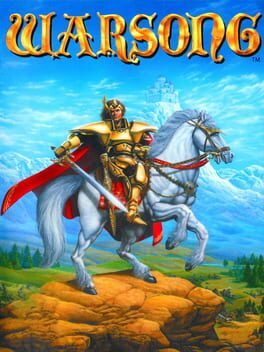
"The Dalsis Empire has laid seige upon the Castle of Baltia to seize the legendary sword WARSONG. In a desperate attempt, King Alfador sends his only son, Prince Garett, into the countryside, away from impending death. Now Garett must rally his allies from across the kingdom, and lead their valiant armies in a battle against the Empire to retrieve the sacred sword! But, time is running short! Command troops and choose your mission commanders. Unite with loyal allies and charge into campaigns that forge the destiny of a realm. Between you and the path to victory lie dangerous rogues, the steel of Dalsis, and a confrontation in the ultimate showdown against evil!"

Real Time Strategy (RTS) / Role-playing (RPG) / Strategy / Fantasy
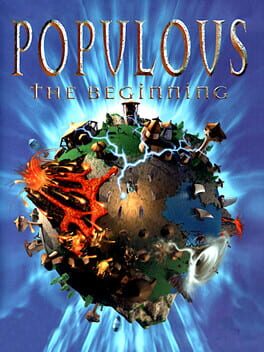
Populous: The Beginning is a strategy and god-style video game. It is the third entry in the Populous video game series, developed by Bullfrog Productions in 1998. The PC version of the game was released November 30, 1998 and a PlayStation version was later developed and released on April 2, 1999. Unlike earlier games in the series, which cast the player in the role of a god influencing loyal followers, The Beginning took a radical departure and placed the player in the role of a shaman, who directly leads her tribe against opponents. Throughout the twenty-five missions of the campaign, the player leads their tribe across a solar system, dominating enemy tribes and tapping new sources of magic, with the ultimate goal of the shaman attaining godhood herself. Populous: The Beginning was the first entry in the series to use true 3D computer graphics; Bullfrog waited four years after Populous II: Trials of the Olympian Gods so that the graphics technology could catch up to their vision for a new and different game in the series. The developers considered the addition of terrain deformation and manipulation, combined with "smart" villagers who automatically attended to tasks, to add an entirely new dimension to the series. The game's original title was Populous: The Third Coming before being changed prior to the beta release. Populous: The Beginning plays very differently from earlier titles and received mixed reviews. Reviewers positively noted the excellent graphics, while complaints were directed at the artificial intelligence and the indecision in game design between being a real time strategy title and a god game. GamePro's Peter Olafson wrote that Populous: The Beginning was not a bad game, in fact a good one; "but it's a different game—one without a quintessential quality that defined Populous."

Role-playing (RPG) / Strategy / Adventure / Action / Fantasy
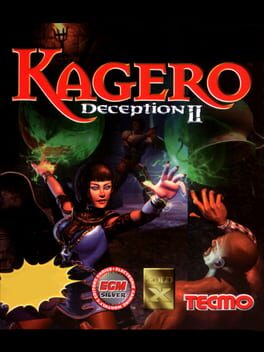
Kagero: Deception II is the sequel to Tecmo's Deception. It follows a similar, hard-to-classify gameplay style, which can be perhaps defined as a real-time strategy game with RPG elements. Instead of commanding troops and units, Millennia has to place traps and activate them to prevent the intruders from conquering the castle. Unlike the first game, Kagero: Deception II is played from a third-person perspective. A major addition to the gameplay is the introduction of "trap combos": traps can be positioned in such a way that they will trigger each other, leading to powerful combinations that would harm the invaders more. The game also allows to customize traps and use various materials to build new ones. As before, the main character and her traps grow in power in correspondence with the amount of enemies killed, lending the game a RPG flavor. The morality system also present in this sequel, as the player can decide for Millennia whom to kill and whom to spare. Eventually, the player will be able to choose to join either the Timenoids or the humans.