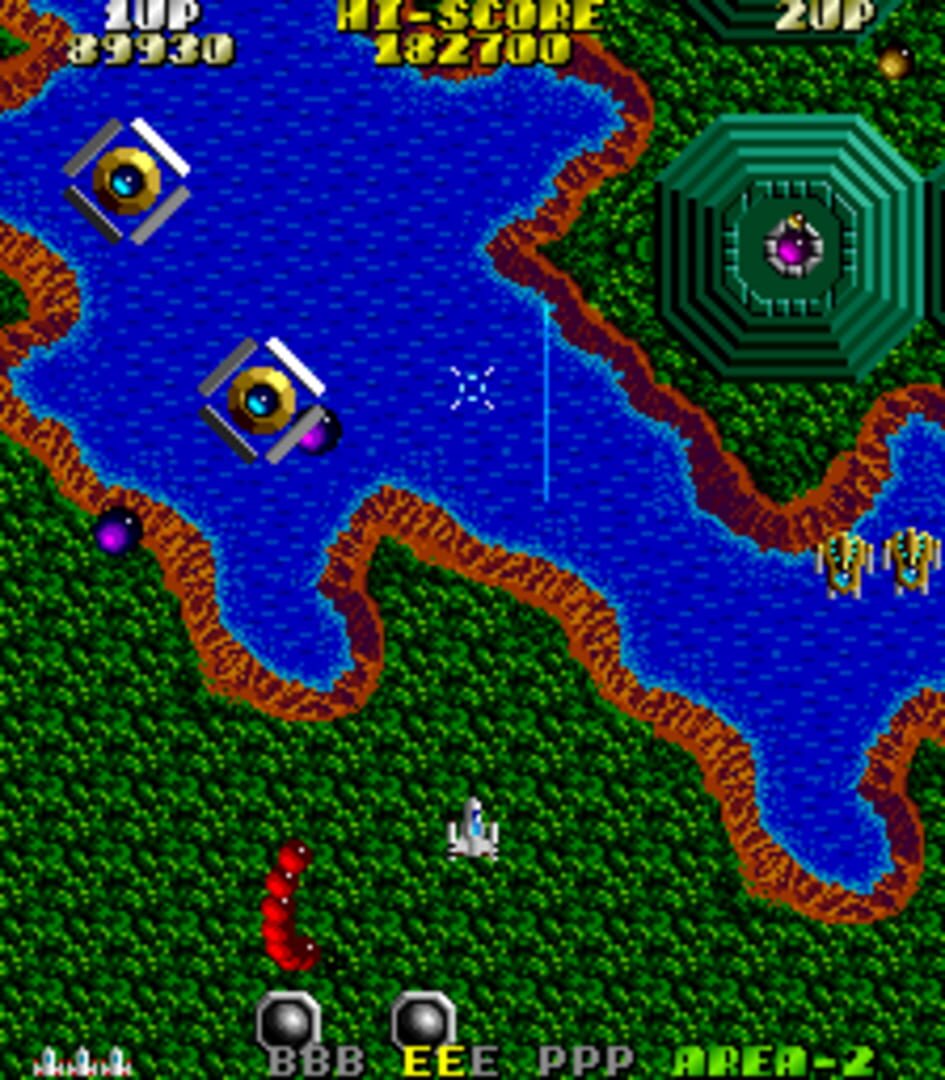
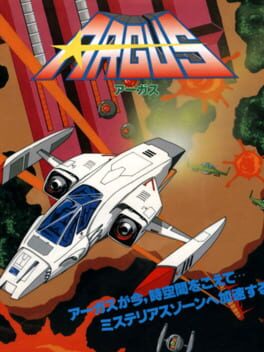
A vertical scrolling shoot 'em up. Fire guns and drop bombs on the enemies in this deep space battle. Pickup assorted power-ups. The screen also scrolls left and right if your ship nears the edges of the screen.
Screenshots
Featured in
A vertical scrolling shoot 'em up. Fire guns and drop bombs on the enemies in this deep space battle. Pickup assorted power-ups. The screen also scrolls left and right if your ship nears the edges of the screen.
Shooter / Arcade / Action / Science fiction
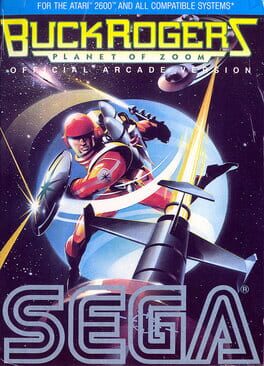
Sega released the arcade video game Buck Rogers: Planet of Zoom in 1982. It was a forward-scrolling rail shooter where the user controls a spaceship in a behind-the-back third-person perspective that must destroy enemy ships and avoid obstacles; the game was notable for its fast pseudo-3D scaling and detailed sprites. The game would later go on to influence the 1985 Sega hit Space Harrier, which in turn influenced the 1993 Nintendo hit Star Fox. Buck is never seen in the game, except assumedly in the illustration on the side of the arcade cabinet, and its only real connections to Buck Rogers are the use of the name and the outer space setting. Home versions were released for the Atari 2600, Atari 5200, Atari XE, ColecoVision, Coleco Adam, Intellivision, MSX and Sega SG-1000 video game systems, and the Commodore VIC-20, Commodore 64, Texas Instruments TI-99/4A, Apple II and ZX Spectrum computers. A version for IBM PC using CGA graphics was also available.
Shooter / Arcade / Action / Science fiction
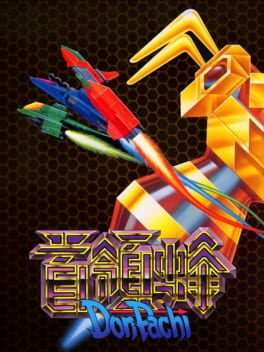
DonPachi is a 1995 vertical manic shoot-'em-up originally in arcades and was the first game from the developer Cave. Settings are mainly woodland and enemies are military vehicles and robots, culminating in the final boss, a huge robotic bee. One of three weapon configurations is chosen at start and then leveled up through dropped power-ups. DonPachi was ported to the Sega Saturn and Sony Playstation in 1996.
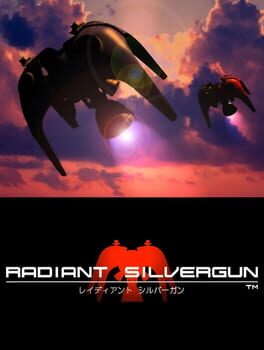
Shooter / Arcade / Science fiction
Unlike in most other shoot 'em ups, there are no power-ups. All weapons are available from the start. Weapons can 'level up', however, becoming more powerful as the player uses them to score points. There are a selection of 7 weapons that can be used at any given time: The game is designed so that there is almost always a 'right' weapon for any situation. The bosses in the game are designed so that they have multiple 'sections' which, if all destroyed before the 'core' of the boss, will award the players with point bonuses. Being able to apply the right weapons on any different boss is key to obtaining these bonuses. For example, a boss may have two sections located on either side of the screen. You could immediately go up to one and begin shooting it with a vulcan, or you could hover in the centre and hit both at the same time with the side bombs. This would increase your chance of obtaining the bonus before the time limit runs out and the boss self-destructs. The game rewards players for "chaining" enemies of just one of three colors, red, blue, or yellow. Whenever the player kills three enemies that are of the same color, who can obtain a points bonus. This also facilitates faster upgrading of weapons.
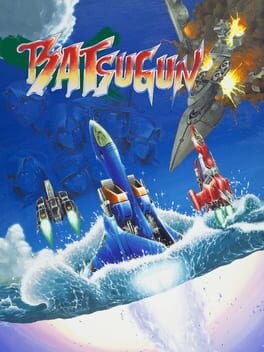
Shooter / Arcade / Action / Fantasy
Batsugun is a vertically scrolling shoot 'em up video game created by the now-defunct Japanese game developer Toaplan. The title translates to "exceptional" or "extraordinary". It was the final game created before Toaplan's dissolution, and has been regarded as a key title in the development of the modern manic shooter, with elements of the game such as the size of the player's hitbox, the scale of their firepower, and the complexity of enemy bullet patterns all having an influence on future titles in the sub-genre. Members of the development team also went on to work on other successful manic shooters, most notably lead artist Junya Inoue.
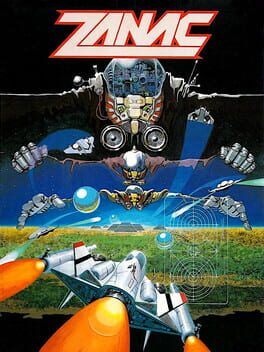
Shooter / Arcade / Action / Science fiction
The "system" was created by an organic intelligence body many milleniums ago and began attacking the human race. The earth was thrown into turmoil with only one hope for salvation. Fighter model AFX-6502 ZANAC was perfected by the 256th Riot Fleet to ward off the enemy system. It's your job, as ZANAC, to save the human race. Using eight special weapons and secret power forces buried along the way, guide ZANAC through 12 screens of enemy creatures to victory.
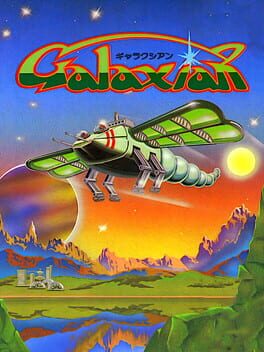
Shooter / Arcade / Science fiction
Galaxian is a shooter arcade game developed by Namco in 1979. It was released by Namco in Japan and a few months later by Midway Games in North America. The game was developed to compete with Taito Corporation's Space Invaders, released a year earlier, and featured a similar space theme. The player controls a space ship in the bottom part of the screen and shoots at enemies descending from the top of the screen. The game was received very well by the public and has continued to be a game with a competitive community to this day. It was followed by a successful sequel called Galaga in 1981 and two less known sequels called Gaplus in 1984 and Galaga '88 in 1987. Galaxian was one of the most popular games in the golden age of arcade video games.
Shooter / Arcade / Science fiction
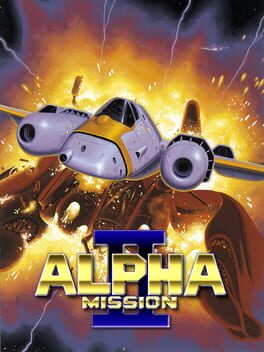
Alpha Mission II is a 2D vertical scrolling shooter with a great deal of depth for two players moving vertically up the screen boards shooting anything that moves. Equip up to three pieces of armor, which also serve as weapons, for a variety of attacks such as the laser and flamethrower. Use them to defeat the evil “Fulvar” and save mankind!
Shooter / Arcade / Action / Science fiction
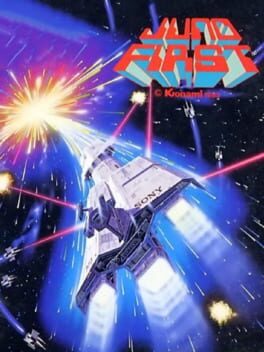
Juno First is a shoot 'em up originally developed and published by Konami Corporation for Arcades. The game was later published by Mylstar Electronics (US arcades), Datasoft Inc. (Atari 8-bit, PC Booter, and Commodore 64), and Sony Computer Entertainment Japan (MSX). Juno First is a top down, vertical scrolling shooter in which there is a limited amount of time to defeat the enemies in each wave. The players spaceship starts out with a laser that has a longer reach than the enemy weapons. The enemies start out firing a few bullets at the ship but the amount enemy fire rapidly increases as players progress through to the next waves. Certain enemies fire tracking missile-like projectiles that can shoot additional bullets.