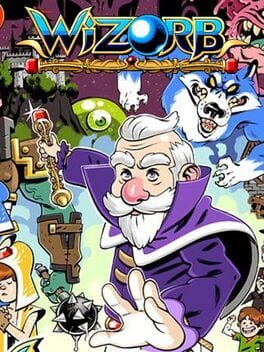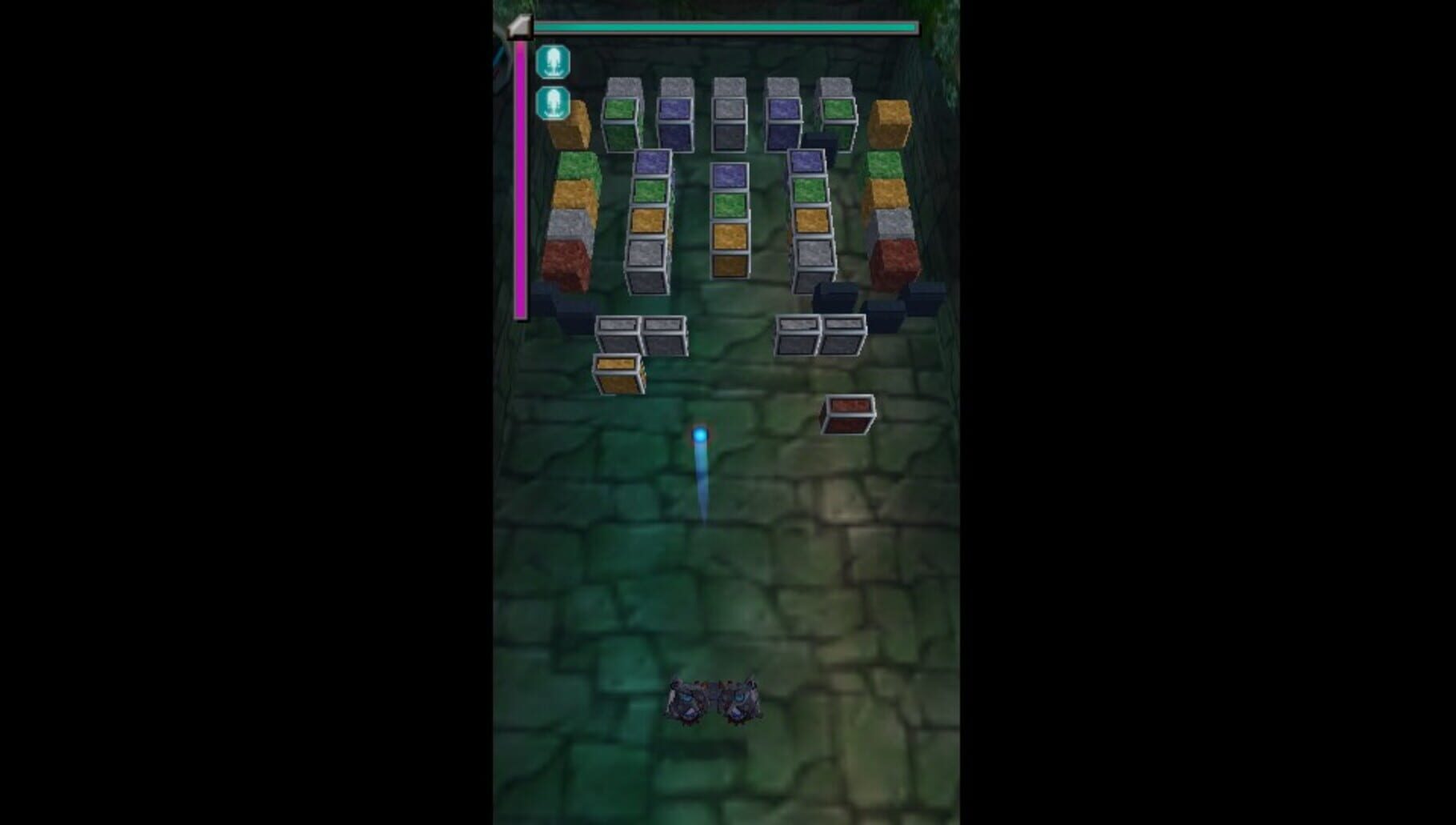
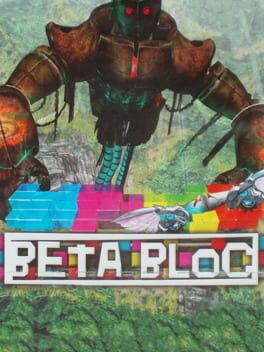
The world of Beta Bloc is made up of 7 citadels and dungeons, guarded by legendary monsters! Use your paddle to fight your way through more than 120 stages, casting magic spells to fight tough foes!
Screenshots
Featured in
The world of Beta Bloc is made up of 7 citadels and dungeons, guarded by legendary monsters! Use your paddle to fight your way through more than 120 stages, casting magic spells to fight tough foes!
Puzzle / Arcade / Action / Science fiction
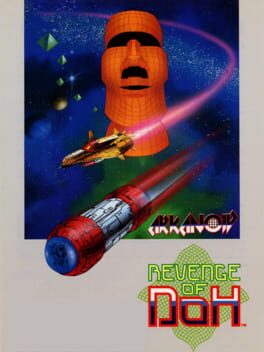
Arkanoid - Revenge of Doh (a.k.a. Arkanoid 2) is an arcade game released by Taito in 1987 as a sequel to Arkanoid. The mysterious enemy known as DOH has returned to seek vengeance on the Vaus space vessel. The player must once again take control of the Vaus (paddle) and overcome many challenges in order to destroy DOH once and for all. Revenge of Doh sees the player battle through 34 rounds, taken from a grand total of 64. NEW FEATURES: Revenge of Doh differs from its predecessor with the introduction of "Warp Gates". Upon completion of a level or when the Break ("B") pill is caught, two gates appear at the bottom of the play area, on either side. The player can choose to go through either one of the gates - the choice will affect which version of the next level is provided. The fire-button is only used when the Laser Cannons ("L") or Catch ("C") pill is caught. The game also features two new features for bricks. Notched silver bricks, like normal silver bricks, take several hits to destroy. However, after a short period of time after destruction, they regenerate at full strength. Fortunately, clearing a level does not require that any notched bricks be destroyed. Also, some bricks move from side to side as long as their left and/or right sides are not obstructed by other bricks. The US version features an entirely different layout for Level 1 that feature an entire line of notched bricks, with all colored bricks above it moving from side to side. The game features a mini-boss in the form of a giant brain, which will help you practice for DOH. Home versions of Revenge of DOH also featured a level editor, where players could create their own levels or edit and replace existing levels, with the exception of two levels: the mini-boss and DOH.
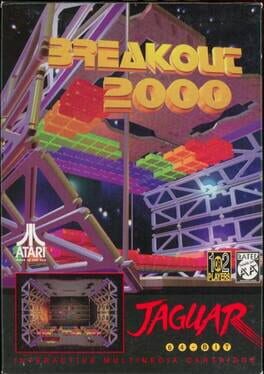
SMASH! POW! CRUNCH! Is your hand/eye coordination up to demolishing field after field of bricks? Breakout 2000 brings back the nostalgia of early gaming days but adds 90's challenges, such as a three-dimensional field and bricks that resist breaking, as well as many powerups and hazards. You can also test your skill against a buddy. Break through your own wall and start working on his. You'll gain bonus points, and he'll go nuts! Who ever said life was fair never played Breakout 2000.
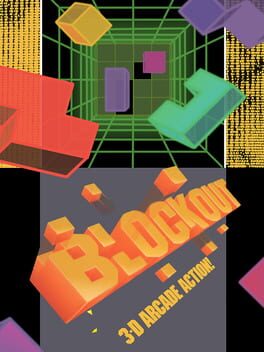
Blockout is a puzzle videogame, created in 1989 by Polish developer - California Dreams, designed by Aleksander Ustaszewski and Mirosław Zabłocki. The game is the logical extension of Tetris into the third dimension. In Tetris, the player manipulates a set of tetrominoes which fall into a two-dimensional pit (seen from the side). The aim is to solve a real-time packing problem by forming complete rows, which then disappear and score points. Poor play leads to incomplete rows, caused by inefficient arrangements of tiles; these rows do not disappear, giving the player progressively less space and less time to play subsequent pieces. Similarly, in Blockout, the player manipulates a set of polycubes which fall into a three-dimensional pit (seen from above; the pieces appear in the foreground and fall away). The pieces can be rotated around all three axes, and moved horizontally and vertically. The aim is to form complete layers.
Puzzle / Arcade / Action / Comedy
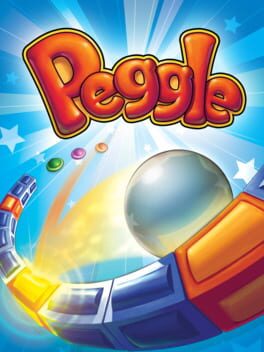
Take your best shot with energizing arcade fun! Aim, shoot, clear the orange pegs, then sit back and cheer as 10 whimsical teachers guide you to Peggle greatness. Conquer 55 fanciful levels with 10 mystical Magic Powers, racking up bonus points and shots you'll smile about for weeks. Face off against your friends in Duel Mode, or tackle 75 extra-tricky challenges. It's luck and skill and joyous thrills, and amidst all this fevered action only one question remains: Can you become a Peggle Master?
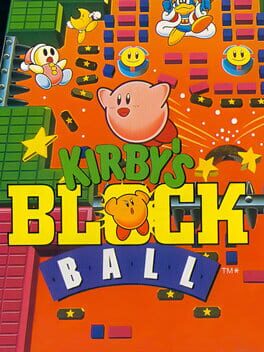
Kirby's back with fast-paced, four-way action! It's a breakaway bash in this wild new Kirby game of Block Ball! By destroying the blocks on the screen, you clear stages and obtain powers that help you in your final confrontation with King Dedede. Paddles on all four sides of the screen make this an intense four-way action contest. Your quick reactions and your careful use of Kirby's powers will determine your ultimate fate!
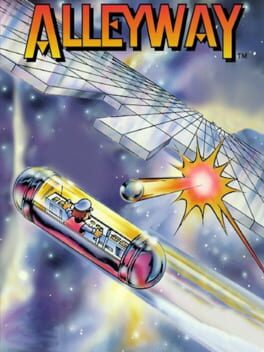
Puzzle / Arcade / Action / Science fiction
Interstellar ping-pong with a deadly energy ball! Your spaceship is at the gate of the Alleyway. Use your vessel to repel the energy ball. Atomize space grids with your return shots. Destroy the entire field and move on to even more challenging targets. You're in command in the Alleyway!
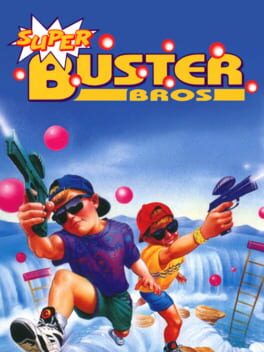
Super Pang is an adventure for one or two players that takes the player around the world, aiming to rid the planet of a terrible foe: seemingly innocuous-looking bubbles. The main portion of the game is Tour mode, where the player visits a series of different levels representing different countries of the world. Each player's character is armed with a gun, which shoots a vertical cable. If this hits a bubble, it will cause it to split in two. Upgrades allow two cables to be shot at once, or the ability to stick a cable to the ceiling where it will cling for a few seconds, bursting any bubble that hits it. Players must clear each screen of bubbles before progressing to the next one. The largest bubbles will have 4 degrees of splitting before clearing. Many level layouts have ladders, barriers and breakable bricks in part of the screen, affecting movement of both the player and the bubbles. Faster bubbles in the shape of diamonds also bounce around the screen going any which way rather than bouncing in predictable arcs like the other bubbles. Several power-up tokens are also available, offering features such as splitting all bubbles down to their minimal size, freezing the bubbles for a few seconds, and various different weapons. Monsters also enter the screen periodically, which hit the bubbles and take them down a size, and can often be directed by the cable weapon. In addition to the main Tour mode, the game also features Panic mode, in which a succession of bubbles are thrown at at the players. As the player progresses, the amount of bubbles required to reach the next level also increases, similar to scoring on Tetris.