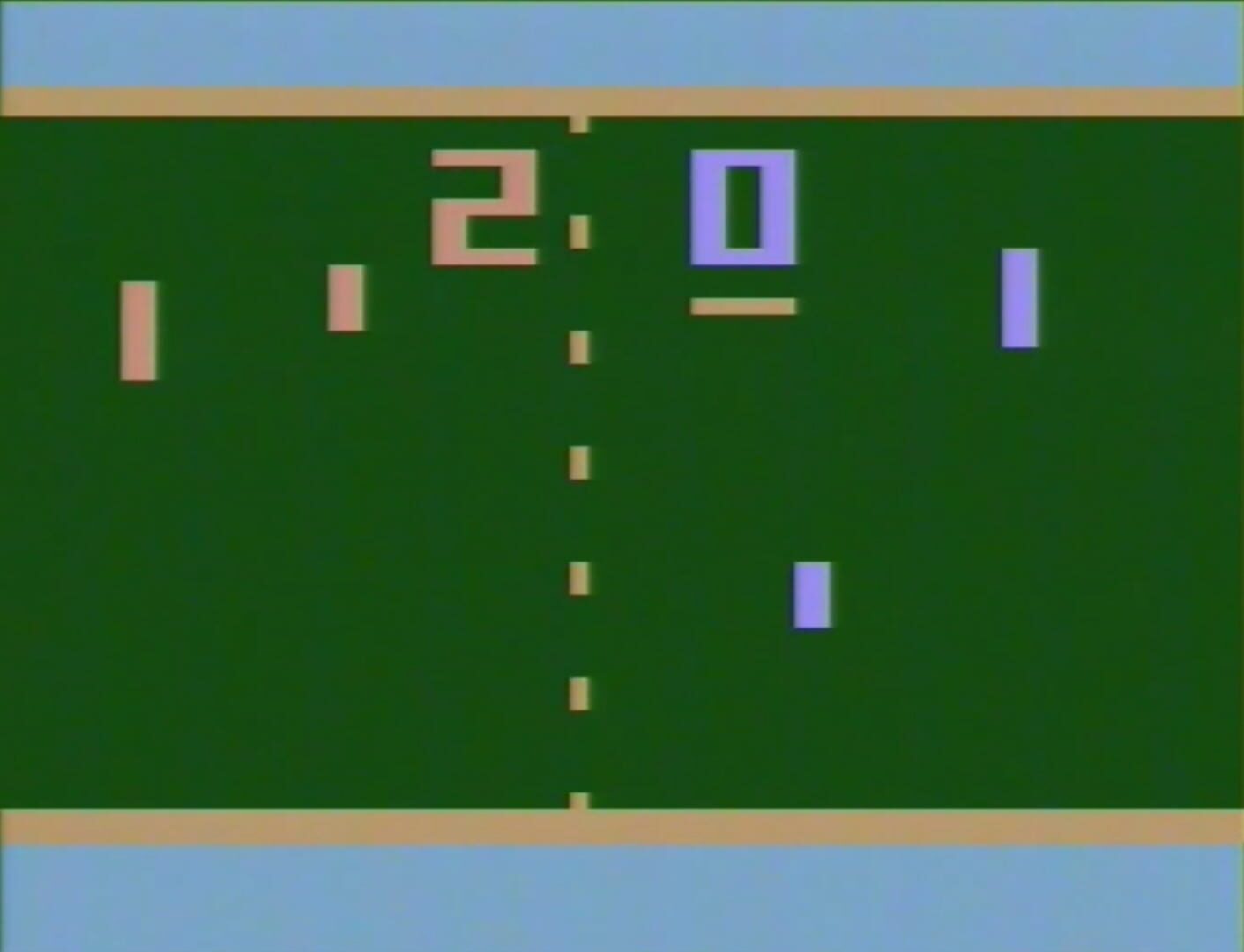
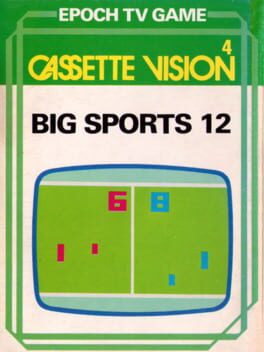
Fourth game for the Epoch Cassette Vision. A collection of 12 games, including 4 which use the light gun peripheral released especially for this game. Surprisingly, the game contains three other shooting game (Shooting I, II and III) which do not use the light gun. The games are as follows: 1. Tennis 2. Volley Ball 3. Practice 4. Soccer 5. Squash 6. Shooting I 7. Shooting II 8. Shooting III 9. Gun I 10. Gun II 11. Gun III 12. Gun IV

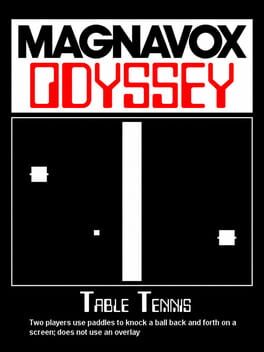
Table Tennis was developed from 1966-1969 until eventually releasing as the pack-in game for the Magnavox Odyssey in 1972 and is one of the earliest known sports games, notably the inspiration for Atari's Pong.

Simulator / Sport / Arcade / Action
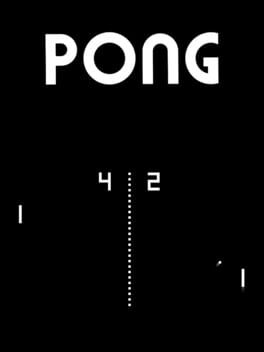
Pong is a table tennis-themed twitch arcade video game with simple two-dimensional graphics. It was the first sports arcade video game and one of the earliest arcade video games in history, helping to establish the video game industry along with the Magnavox Odyssey. Soon after its release, several companies began producing games that closely mimicked its gameplay.

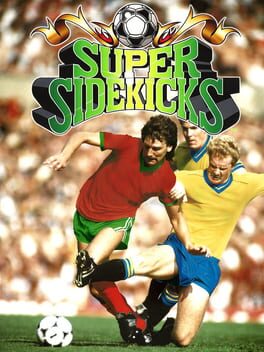
Published in 1993, the original Super Sidekicks (known as Tokuten Ou, "Goal-Scoring King" in Japan) was SNK's first soccer video game. It features 12 teams divided into two groups which compete for the "SNK Cup" (the main differences between teams is their formations on the field): Group A: Germany, Italy, Spain, England, Mexico, Japan Group B: Argentina, Holland, Brazil, France, United States, South Korea The players' team plays against all the others in their group, then it goes into an elimination tournament's semifinals and then the final to win the cup. There was also a hidden feature in the game, which wasn't documented, and affects a single player game. During a free kick for the CPU if the player has tapped button A for player two, the CPU performs a short-shot, while pressing the button A performs a longer kick.

Racing / Sport / Arcade / Action / Comedy
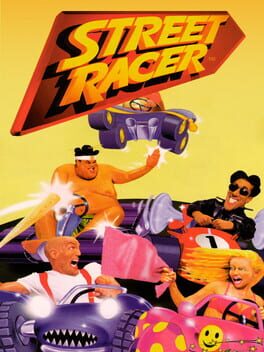
Street Racer is a kart racing game similar to Super Mario Kart. Up to four players can play by split-screen. If there are no human opponents, the player can drive against seven computer opponents in three leagues. If the player wins the first league, they can play the second and so on. The game has eight different vehicles with different skills in speed, haste or resistance. There are also some power-ups on the tracks such as bombs, nitro fuel, and health packs.

Sport / Arcade / Action / Science fiction
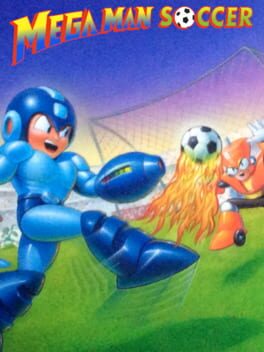
Mega Man Soccer, known in Japan as Rockman's Soccer, is a soccer video game for the Super Nintendo Entertainment System/Famicom. The game is based on the original Mega Man series of action-platform games. Mega Man Soccer was first released in Japan on February 17, 1994 and in North America in April of that same year. Mega Man Soccer is a traditional soccer game with exhibition matches, tournaments, and leagues that can be played both single-player and multiplayer depending on the mode. The game features characters and Robot Masters from previous entries in the original Mega Man series. Each character has a unique special shot that will temporarily disable anyone that comes in contact with the ball. This aspect of Mega Man Soccer was met with critical praise, but overall reception has been average, particularly due to its perceived poor play control.

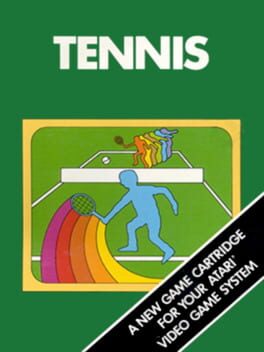
Tennis offers singles matches for one or two players; one player is colored pink, the other blue. The game has two user-selectable speed levels. When serving and returning shots, the tennis players automatically swing forehand or backhand as the situation demands, and all shots automatically clear the net and land in bounds. The first player to win one six-game set is declared the winner of the match (if the set ends in a 6-6 tie, the set restarts from 0-0). This differs from professional tennis, in which player must win at least two out of three six-game sets.

Sport / Arcade / Non-fiction
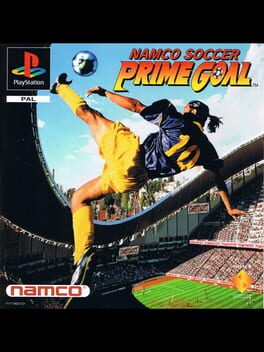
J-League Prime Goal EX is one of the first football games in Sony's console, following previous appearances in the SNES, Prime Goal is a straightforward action game with simple arcade controls. While the Japanese version features all 14 J-League teams and fully licensed players, the European version features the same number of national teams with fictional players, all from Europe. Game modes include friendly match, league and cup knockout modes, as well as an all-star game where the player chooses his stars from the best in the selected zone. Graphically, the game uses a polygonal playing field, while players are represented using sprites, and gameplay features a combination of the face buttons to perform actions (passing, lobbing, shooting, tackling and so on) with shoulder buttons to add swerve to the ball, change team tactics on the fly or pushing the camera backwards to find an open team mate. While gameplay is fast and simple, it has three quirks: first, unlike most modern offerings, the AI does not set up the target players for passes and crosses, making the player control the target player as soon as the ball is released in order to place them in the best position to complete the play, and also unlike most other games, the players are able to run freely off-bounds, allowing the player to capture a free ball close to the touchlines without risking touching it for a throw-in. The final main gameplay feature can be seen when the ball carrier faces a defender, as the camera quickly changes to behind the forward, as he tries to trick the defender into going the wrong way as the defender tries to steal the ball by predicting where will the forward move, with the winner of the challenge being able to run a few meters unopposed. League.