Mystery box
?
Sealed
Mystery Box
Every game in your current results, in one box. Add it to a quest and each run draws a fresh game from it, revealed on release day.
Atari 2600
This side out
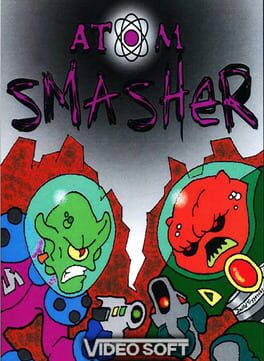
A battle to the last atom! The Atomic Arena is where all sorts of nasty, burly life-forms come to contest each other in the galaxy's deadliest game! Armed with a regulation Atom Smasher Blaster, you must blast unstable atomic particles past your opponent and out of the arena, but if one hits you, it degrades your very atomic structure, and the results aren't pretty. But remember, someone else has the same goal...
Atari 2600
1983
This side out
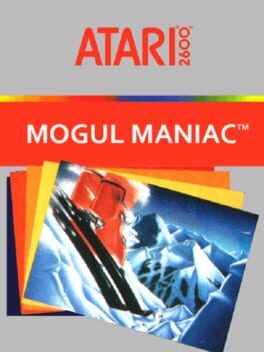
Quite simply, the objective of Mogul Maniac is to get through the open and closed gates and down the mountain as quickly as possible without breaking anything on or around your body...
Atari 2600
1983
This side out
Adventure / Arcade / Action / Fantasy
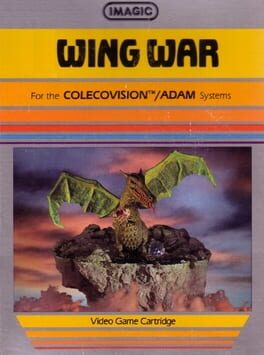
Wing War is a rather unique game that was only available in Europe, even though it was announced for the US market and is the only Imagic title that was not released in the US. The gameplay is a little like the classic arcade game Joust, except it's a bit more complex and involves a lot of exploration. A mystical dragon sets out to find crystals of fire, air, and water, in order to gain special powers, and eggs which will hatch into new dragons. The dragon must defeat enemies by shooting fireballs, which is accomplished by pushing the joystick upwards and in the direction the player wishes to shoot in. Some enemies can be killed with one shot, others with two, and some take more and more fireballs to be killed as the game progresses. What is truly unique about this game is that the fire and water crystals must never be dropped off consecutively, or else they will destroy one another. An air crystal must separate the two. Also, players must learn to conserve fireballs, otherwise they will find they have no way of defending themselves against their enemies. Wing War is a very unique game, and a shame it was never released in the United States.
Atari 2600
1980

This side out
Sport / Arcade / Non-fiction
In Skiing, your goal is to ski to the bottom of the mountain in the shortest time possible. The mountain is treacherous with plenty of trees and moguls in the way! There are two different modes of gameplay. In slalom mode, there are a series of gates you need to ski through; missing any will result in a penalty to your time. In downhill mode you just need to ski to the bottom as fast as possible. Each mode includes five different skill levels which affect the length of the course (and the number of gates in slalom mode.)
Atari 2600
1983
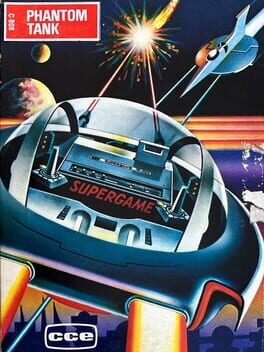
This side out
Atari 2600
1983

This side out
Q*bert is a popular arcade game. The goal is to change all of the tiles on a pyramid to the target color. To do this you guide Q*bert around the pyramid, and every tile he hops on will change color. On early levels, a single hop will change the tile to the desired color, but on later levels you may need to hop on a tile multiple times or even avoid hopping on a tile multiple times! Trying to stop Q*bert are many different creatures which wander around the board, including Coily the snake, Slick and Sam, and falling balls. On the edge of the board are floating discs; if Q*bert jumps on one of these discs when the snake is in pursuit, the snake will fall off the board while Q*bert is safely transported to the top.
Arcade
1978
This side out
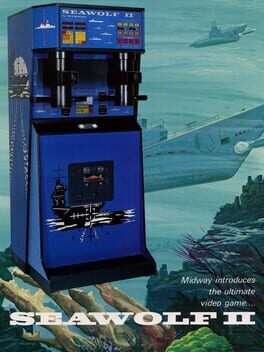
This game is a colour sequel of Sea Wolf. The Atari 2600-game "Submarine Commander" is a loose port of Sea Wolf II, and thus not to be confused with the 8-bit game of the same name.
Atari 2600
1978
This side out
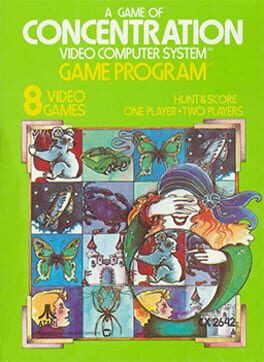
The game is played using a matrix of numbered panels, either 4 x 4 (for 16 panels) or 5 x 6 (for 30 panels). Using the keypad, players enter the number of the panels they wish to reveal. If the images behind the two panels match, the panels are removed and the player scores 1 or 2 points, depending on what difficulty the switch is set to, along with an extra turn. The game has a total of eight variations, four each for each matrix size and four have wild cards. Each matrix can be played by either a single player or by two players taking turns; in single-player games, the player attempts to clear the matrix with as few incorrect matches as possible. Also, players can enable wild cards that will match any image on the board.
Atari 2600
1982
This side out
Shooter / Arcade / Action / Science fiction
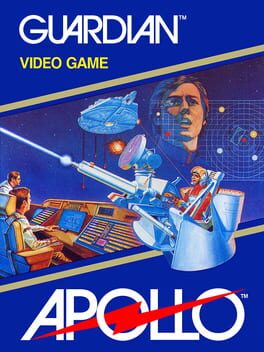
Guardian is an arcade action game for one or two players. In an intergalactic war, an enemy ship called Dromeda is attacking your home planets and you need to defend them! The planets are located at either the top or the bottom of the screen, and are defended by a shield. Dromeda is in the middle of the screen, and will be launching explosive devices at the planets. You control a spaceship which is the last hope to save the planets. Unfortunately, your ships lasers are unable to reach Dromeda, so you you must shoot the explosives as they come in. If you miss any explosives, they will destroy part of the shield. If a large enough hole forms, an explosive could get through and destroy an entire planet. The game ends when all of your planets have been destroyed.
Atari 2600
1982
This side out
Puzzle / Racing / Educational
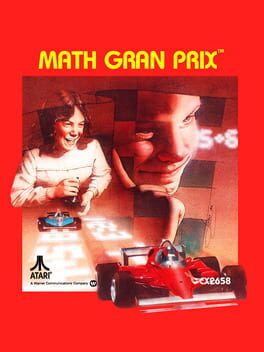
The principle of the game is to fuel your car with correctly answered math questions. It can move 2 to 3 spaces depending on how hard the math problem is. The track contains many triggers that can give extra spaces, extra turns, and even keep your car on the track. There are areas in the track where a car coming from behind can knock you off, to get back answer a math problem correctly. In the end, the one with the most math skills and greatest planning effort will win the checkered flag.
Atari 2600
1982
This side out
Shooter / Arcade / Action / Science fiction
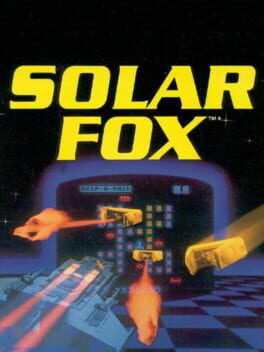
In the game the player pilots a starfighter, with the purpose of destroying a number of enemy ships before they destroy four friendly starbases. Gameplay is presented mostly in first person cockpit view, which is achieved with surprisingly good effect given the 2600's primitive graphics capabilities. The starfighter carries laser weapons, shields, and a faster-than-light drive. The fighter also carries a limited energy supply, which is drained by firing the lasers, being hit by enemy fire, warping, or simply flying around. If the ship's energy drops to zero it is destroyed, and the game ends. Enemy fire can knock out the fighter's subsystems (such as weapons) on top of draining energy. The game "universe" is a square-shaped galaxy mapped into a grid of 36 sectors. Each sector can be home to some enemy ships, a starbase, both, or nothing. The player "warps" the fighter to a sector to engage enemy ships; once they are all destroyed, the player moves on to another. The player can also warp to a sector with a starbase, and dock with it (a rather tricky process) to replenish energy and repair damaged subsystems. Enemy ships in turn maneuver through the galaxy as they home in to destroy the starbases. The game is won when all enemy ships are destroyed, or lost if either the player's fighter or all four starbases are destroyed.
Intellivision
1979
This side out
Shooter / Action / Science fiction
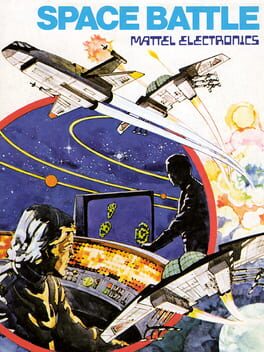
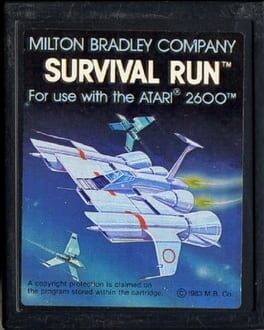
Space Battle is a one-player game that pits you against the computer. Six alien fleets of different sizes are attacking your mothership, and it's up to you to defend it using your three squadrons. Alien ships will dodge your attacks and will attack you with photon blasts.
Atari 2600
1983
This side out
Shooter / Arcade / Action / Science fiction
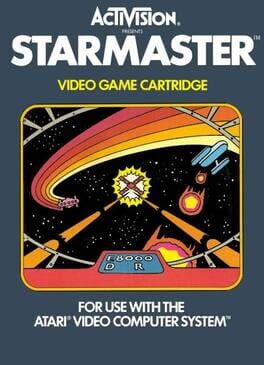
Powerful aliens have assembled an awesome strike force to destroy Earth. Grab the controls of you starfighter and attack the enemy fortress, lying deep inside a distant planet. Fly through the maze of subterranean caverns at hyperspeed, following your onboard computer map for navigation. Fire your photon torpedoes to zap enemy force fields and marauding alien guards as you race toward the ultimate showdown against the Alien Master in his command ship.
Atari 2600
1980
This side out
Simulator / Sport / Arcade / Action
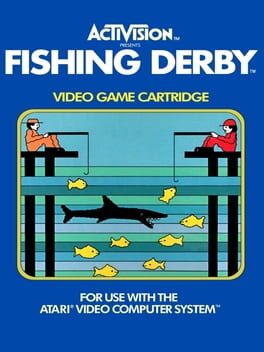
In Fishing Derby, two fishermen sit on opposite docks over a lake filled with fish (and a shark that passes through). Using the joystick the player is able to move his line left right and up and down in the water. When a fish is hooked, the line slowly comes up to the surface of the water. Pressing the fire button on the joystick reels in the fish faster. However, if both fishermen have fish hooked, only one person can reel theirs in (the one who hooked theirs first). The shark that roams the water will try to eat hooked fish before they surface. The objective for both fishermen is to reach 99 pounds of fish first. There are six rows of fish; the top two rows have 2 lb. fish, the middle two rows have 4 lb. fish, and the two bottom rows have 6 lb. fish. The more valuable fish sit at the bottom, but they are harder to bring in as they run a higher risk of being eaten by the shark. The game's two variants are simply single player and multi-player. In both games the objective is to reach 99 lb. of fish first.
Atari 2600
2021
This side out
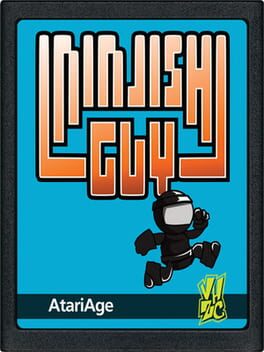
You don't know how. You don't know why. All you know is you are in the depths of a strange facility. The path in front of you is a dangerous path. But it's the only path available. So it begins... Ninjish Guy in Low-Res World is a platform game where you have to jump, slide and stomp your way through more than forty labyrinthine screens plagued with enemies, fire, sharks and other hazards, plus some tough bosses that will try to destroy you. Climb ropes and stairs, swim in dangerous waters, collect keys to open doors, find hidden hearts and especially try survive all the dangers that lurk in Low-Res World.
Arcade
1980
This side out
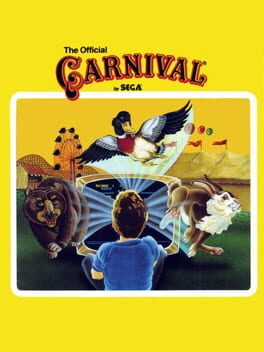
The goal of the game is to shoot at targets, while carefully avoiding running out of bullets. Three rows of targets scroll across the screen in alternating directions; these include rabbits, ducks, owls, and bonus items. If a duck target crosses the bottom row without being shot, it will come to life and begin flying down toward the player. Any ducks that reach the bottom of the screen in this manner will eat some of the player's bullets. Objects also periodically appear among the targets that will give the player extra bullets or points when hit. A spinning wheel with eight pipes sits above the rows of moving targets; these pipes and all targets must be shot in order to complete the round. At the end of each round, the player receives bonus points for all bullets remaining in his supply. He then plays a bonus round, where a large white bear with a target walks across the screen. Each time the bear is shot, it rears up for a second, then begins walking more quickly in the other direction. The object is to shoot the bear as many times as possible until it escapes off the screen. Following the bonus round, the next wave begins. Later bonus rounds add more bears to the screen. In higher levels, there are more duck targets and fewer extra bullet targets, putting a premium on accurate shooting. The game ends when the player runs out of bullets.
Still plenty of games...