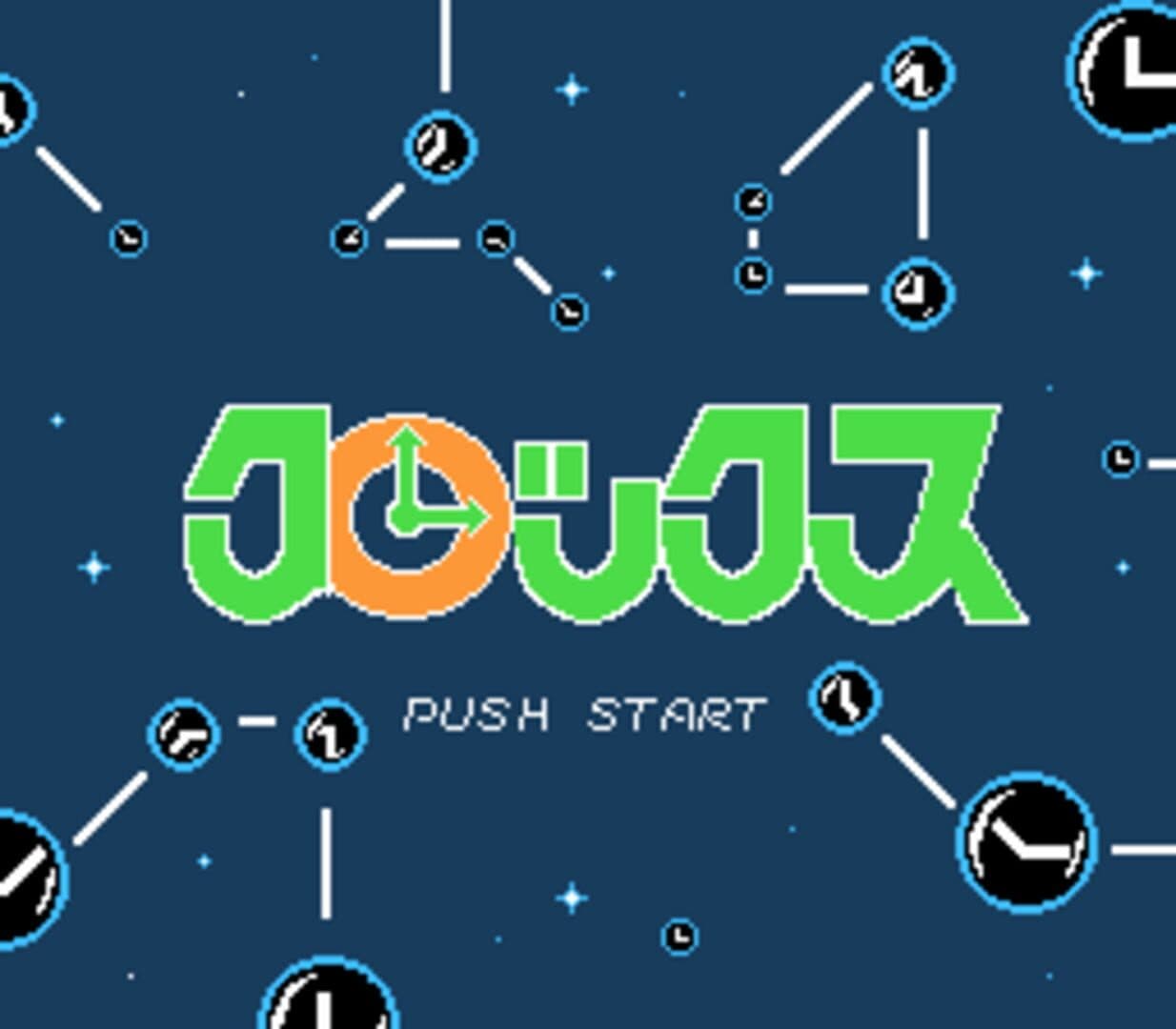

The fourth game featured as a coverdisk on the Japanese magazine Famimaga, Clocks is a Tetris variant in which clock faces must be placed together form larger shapes. Clocks, or Famimaga Disk Vol. 4 Clocks (and occasionally as "Clox"), is a falling blocks puzzle game that is superficially similar to Tetris or Columns. Single clock faces depicting one of four angles fall from the top and the player needs to manipulate and place them so they can form larger objects, such as simple formations like squares, diamonds and hourglass shapes to more object-intensive shapes like octagons and hexagons. The four angles include 180 degree lines ("12:30"), 90 degree lines ("12:15"), 135 degree lines ("~12:22") and 45 degree lines ("~12:07"). Once a clock face is placed, the lines from it extend to connect to any other lines that surround it. Placing lines in such a way that it forms a shape - for example, placing four 90 degree clocks in such a way to form a square - earns the player points and removes the clocks used to form the shape. Larger shapes are more risky but earn more points. The player is given some leeway to recover from mistakes: should the player hold the down button to make a clock fall faster, it'll destroy any clocks underneath. A misplacement, therefore, can be rectified with a correctly positioned clock if it falls quickly enough to crush the offending clock. However, the player can only do this a limited number of times per stage.

Puzzle / Strategy / Tactical / Science fiction
A surreal and very original game by Geoff Crammond The game plays out on a 3D landscape with hills and valleys made up of several levels. At the highest vantage point stands The Sentinel, a statue-like being with an energy draining stare, you begin at the lowest. "Energy" plays an important role, there's a constant amount in the game world and each object is worth a certain number of units - including you. The object of each level is to absorb The Sentinel and Hyperspace to the next from his vantage point. The Sentinel scans further round the landscape every few seconds - if you're caught in his gaze, or rather the square you are standing on can be seen, you'll have about 5 seconds to teleport to another location (or hit a key to teleport to a random location - which will never be higher, and may be lower than your current level) before the Sentinel begins absorbing your energy, when it reaches zero you will be destroyed. To travel a "robot hull" must be created on a visible square then teleported to, making sure you absorb your old hull to avoid losing energy. Boulders and trees can also be created, trees to block The Sentinels view and boulders can be stacked to gain higher ground. There are a few other elements to the game - on later levels there will be other Sentries positioned around the landscape. If only part of you can be seen i.e. not the square you are standing on, a nearby tree can be changed into a "Meanie" which will ultimately force you to teleport. There are 9999 levels in the game but the next level number is based on the current level + how much energy you have remaining.

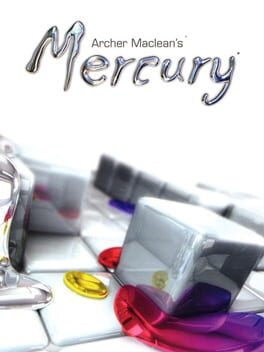
From the mind of developer Archer Maclean comes Mercury, a puzzle game that lets you guide the metallic substance through a series of challenging puzzles. Without spilling too much, you must control your colored mercury blobs around 3D mazes simply by tilting the level. Negotiate obstacles and hazards, solve puzzles, and compete against time and percentage limits while avoiding traps and predators. In addition to the single-player mode, Archer Maclean's Mercury also features multiplayer battle and ghost modes.

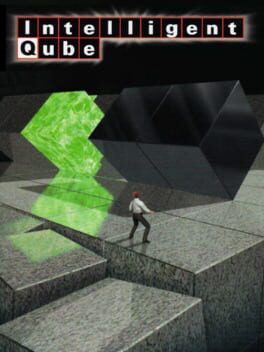
Intelligent Qube is a puzzle game for the PlayStation. In the game, the player controls a character who must run around a platform made of cubes, clearing certain cubes as they approach. Cubes are "cleared" by marking a spot on the stage, waiting for the cube to roll on top of it, and then deactivating the marked spot.

Blockade is a black and white arcade game developed and published by Gremlin in October 1976. Using four directional buttons, each player moves their character around leaving a solid line behind them, turning at 90 degree angles. To win, a player must last longer than the opponent before hitting something, with the first person to hit something losing. The game ends after one player gains six wins. Blockade is the first of what have become known as snake games.

Music / Puzzle / Strategy / Science fiction / Kids
The gameplay in Lumines II is very similar to its predecessor, Lumines. The object is still to move blocks of four different colored squares across the board; while trying to create a single square of the same color. This all must be done before a "timeline" crosses the screen deleting the squares that you make. Deleting four or more squares will add a bonus multiplier to your score. (Refer to the Gameplay section of Lumines for more details). There is no Infrastructure gameplay in Lumines II. The game is visually similar to Lumines Live! and the PC port of Lumines during both gameplay and in the menus.

Shooter / Platform / Puzzle / Action / Fantasy
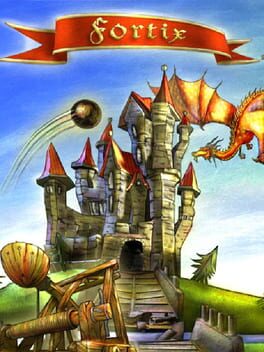
Can you reclaim your ancestors’ land? Evil forces have taken over the once fertile land of Fortiana. You are the only one who can storm the castles and claw it back from the hordes of dragons. Experience a new type of strategy and arcade game. Fence off parts of the battlefield to corner your enemies. Collect catapults and power-ups to besiege the fortresses and take on dragons. But beware! As you progress through the levels it gets harder and harder. The fortresses become much larger and the monsters more vicious. Can you emerge victorious and reclaim the land of your ancestors? You are knight Fortix, the sole hope for the desolate and tortured land of Fortiana to become the fertile land that it was before.

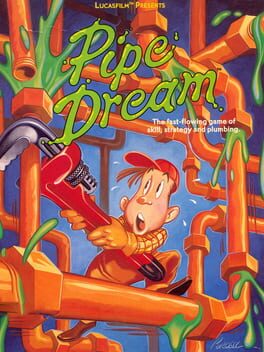
Each level of this abstract puzzler challenges the player to set up a network of pipes to allow an unspecified substance known as 'flooz' to flow through as many of those as possible. The pieces are offered in random order, and there are seven different types - straight lines going horizontally or vertically, corners rotating in each of the four directions, and cross-over pieces which carry the flooz straight across horizontally and vertically. Each of these can be entered from either side. When the flooz hits a gap, or a piece which the previous piece can't flow into, the pipe is finished. Before the flooz starts flowing from its randomly-selected starting position, the player has several seconds to start placing pieces. They can be put down anywhere. However a situation that can often occur is there will be a long and complex piping arrangement set up, yet a gap somewhere remains to be filled. Players are able to replace a piece with another in the same square (to make it easier to flow the flooz that way), but for a slight scoring penalty.