Commodore C64/128/MAX / BBC Microcomputer System / Amstrad CPC
A surreal and very original game by Geoff Crammond The game plays out on a 3D landscape with hills and valleys made up of several levels. At the highest vantage point stands The Sentinel, a statue-like being with an energy draining stare, you begin at the lowest. "Energy" plays an important role, there's a constant amount in the game world and each object is worth a certain number of units - including you. The object of each level is to absorb The Sentinel and Hyperspace to the next from his vantage point. The Sentinel scans further round the landscape every few seconds - if you're caught in his gaze, or rather the square you are standing on can be seen, you'll have about 5 seconds to teleport to another location (or hit a key to teleport to a random location - which will never be higher, and may be lower than your current level) before the Sentinel begins absorbing your energy, when it reaches zero you will be destroyed. To travel a "robot hull" must be created on a visible square then teleported to, making sure you absorb your old hull to avoid losing energy. Boulders and trees can also be created, trees to block The Sentinels view and boulders can be stacked to gain higher ground. There are a few other elements to the game - on later levels there will be other Sentries positioned around the landscape. If only part of you can be seen i.e. not the square you are standing on, a nearby tree can be changed into a "Meanie" which will ultimately force you to teleport. There are 9999 levels in the game but the next level number is based on the current level + how much energy you have remaining.
Puzzle / Strategy / Tactical / Science fiction
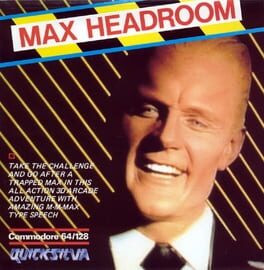
This game is based on a 1984 British television movie which led to a 14-episode television series that ran in 1987 in the U.S. It's an early cyberpunk vision set "twenty minutes in the future" where powerful corporations rule and compete for television ratings and consumer dollars. Edison Carter is an investigative reporter for Network 23 seeking to free his alter ego Max Headroom, a cybernetic construct of his mind that was stored after Edison was involved in a motorcycle accident and the last thing he saw before losing consciousness was a "Max Headroom" sign going into a tunnel. Max lives in computers and can appear on any screen, television or any electronic device. The character is actually Matt Frewer in a latex mask, edited so as to appear jittery and stuttering like an early computer model. In the game, Max has been abducted by Network 23 and you must retrieve him from somewhere in the 11 top floors of their high-rise building starting at the 200th floor. Security systems protect each floor and you have to find and enter the correct codes to gain access from the elevators. Each floor seen in isometric view, has lines representing walls of various rooms with doors and office furniture. Robots will chase and fire at you and decrease your health level as shown on the biomonitor at bottom of screen. Also indicated are the floor number and time left. On the right side of screen are 4 icons for Reporter E. Carter which open a door, call elevator, view through camera, or allow movement to run around the floor. On the left side are icons for Controller T. Jones (Theora helps you hack into systems) to show you the floor and computer circuits. When entering a security code, it takes the form of an LED digit over which you must move a pointer over a row of circuit lines in order to activate various segments to form a desired digit. Each segment will remain lit only temporarily so when time runs out you must ensure that the letter is fully lit or your code will fail. In that event, you must make your way across the floor to the second elevator and try again.

Puzzle / Strategy / Tactical / Science fiction
As a floating orb, players must perform repairs to a spaceship.

Puzzle / Strategy / Tactical / Science fiction
An isometric adventure game set on an alien spaceship bound for earth.

Puzzle / Strategy / Tactical / Action
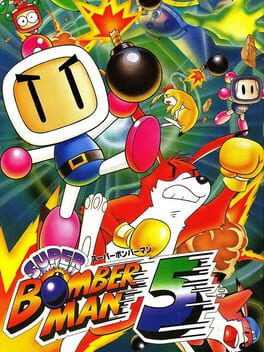
An evil Bomber named Emperor Terrorin who has the power of Time itself has freed various criminal Bombers from their prison cells in orbit around Planet Bomber. Setting them up in a warped time and space, Shirobon, Kurobon, and their Louie (Rui) companions must travel through stages and defeat them before going up against Emperor Terrorin himself. Super Bomberman 5, released by Hudson Soft in early 1997, was the final Bomberman game released on the Super Family Computer - the Japanese version of the SNES. The game was released in two variations: a standard cartridge and a gold cartridge, which was sold exclusively through CoroCoro Comic. The gold cartridge included extra maps in battle mode.

Strategy / Turn-based strategy (TBS) / Tactical / Science fiction / Horror
X-COM: UFO Defense is a strategy game that combines tactical combat with base management and global defense. Players lead an international organization tasked with defending Earth from an alien invasion. The game unfolds on two levels: a global view where players manage resources, research alien technology, and intercept UFOs, and a tactical combat mode where squad-based battles occur. Players recruit and train soldiers, build bases, and develop new weapons and equipment based on recovered alien technology. Missions involve turn-based combat against aliens in various environments, with permadeath adding tension to each engagement. As the alien threat escalates, players must balance research, defense, and offensive operations to protect Earth's nations from panic and alien infiltration. X-COM: UFO Defense's blend of strategic depth, tactical combat, and atmospheric tension creates a compelling gameplay experience in the face of a global alien threat.

Puzzle / Real Time Strategy (RTS) / Strategy / Action / Survival
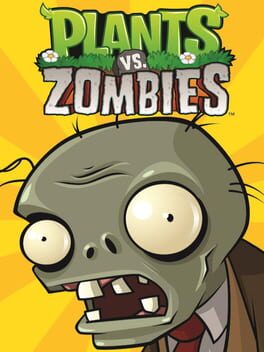
Plants vs. Zombies is a tower defense game in which players protect their suburban home from waves of approaching zombies by placing various plants on a grid-based lawn. Each plant has a unique defensive function, from shooting projectiles to blocking or exploding, while different zombie types require specific strategies to defeat. The game spans five stages across daytime, nighttime, backyard pool, fog, and rooftop settings, with additional puzzle, mini-game, and survival modes.

Music / Puzzle / Strategy / Science fiction / Kids
The gameplay in Lumines II is very similar to its predecessor, Lumines. The object is still to move blocks of four different colored squares across the board; while trying to create a single square of the same color. This all must be done before a "timeline" crosses the screen deleting the squares that you make. Deleting four or more squares will add a bonus multiplier to your score. (Refer to the Gameplay section of Lumines for more details). There is no Infrastructure gameplay in Lumines II. The game is visually similar to Lumines Live! and the PC port of Lumines during both gameplay and in the menus.