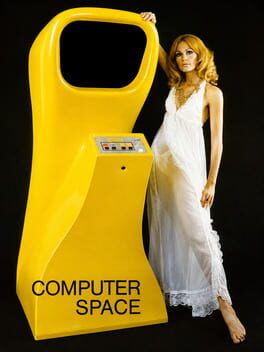
Developed by Atari for Nutting Associates.
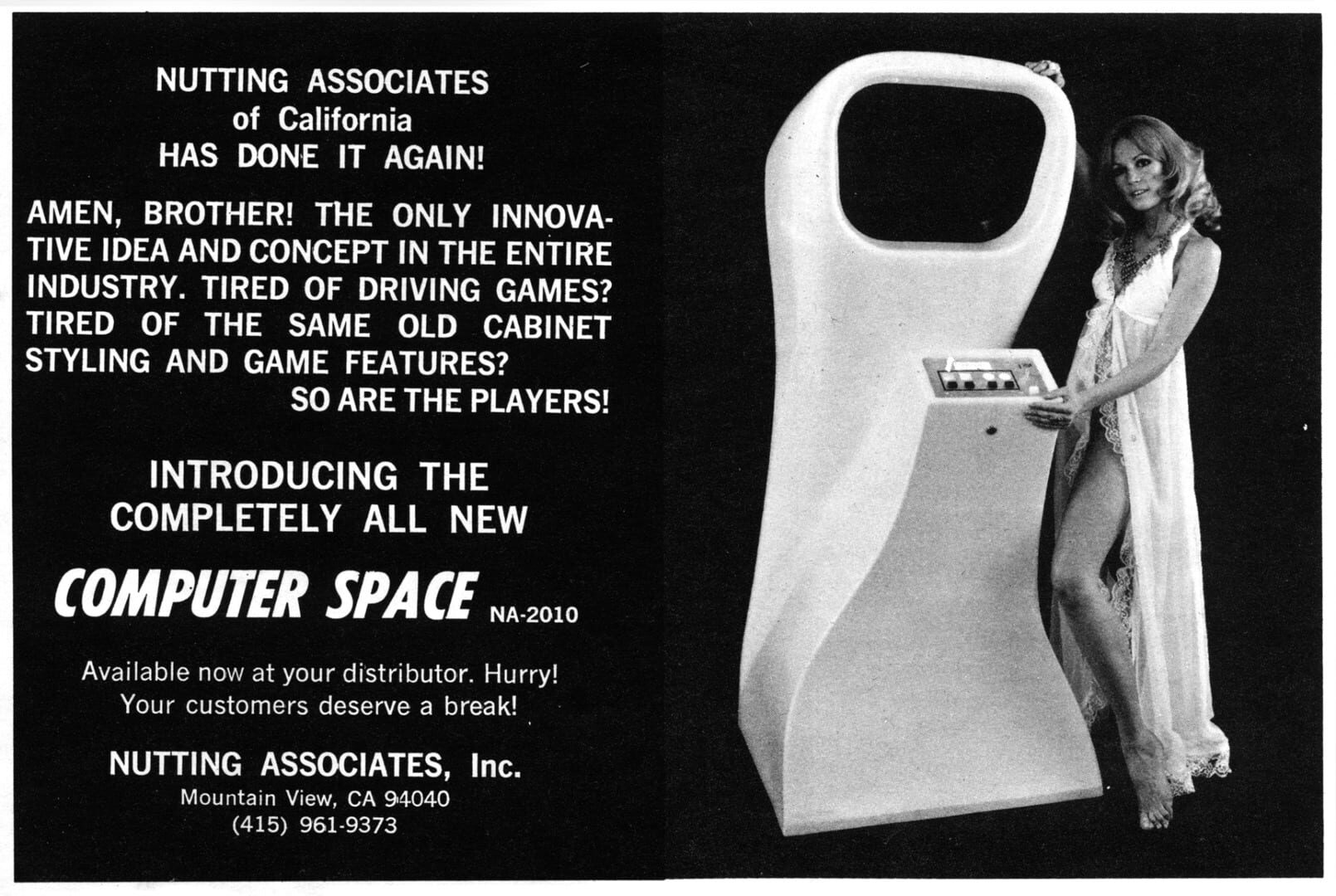
Computer Space is a video arcade game released in 1971 by Nutting Associates. Created by Nolan Bushnell and Ted Dabney, who would both later found Atari, Inc., it is generally accepted that it was the world's first commercially sold coin-operated video game of any kind, predating the Magnavox Odyssey's release by six months, and Atari's Pong by one year. It was first location tested at The Dutch Goose in August 1971, then debuted at the MOA show on October 15, 1971, and then officially released in November 1971. Though not commercially sold, the coin operated minicomputer-driven Galaxy Game appeared around the same time, located solely at Stanford University.

Shooter / Arcade / Action / Science fiction
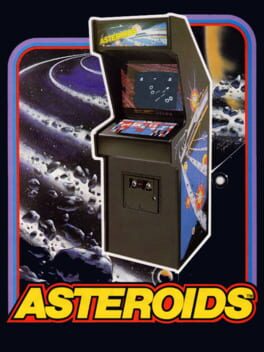
Asteroids is an arcade space shooter released in November 1979. The player controls a spaceship in an asteroid field which is periodically traversed by flying saucers. The objective of the game is to destroy both, asteroids and saucers. The triangular ship can rotate left and right, fire shots straight forward, and thrust forward. Once the ship begins moving in a direction, it will continue in that direction for a time without player intervention unless the player applies thrust in a different direction. The ship eventually comes to a stop when not thrusting. The player can also send the ship into hyperspace, causing it to disappear and reappear in a random location on the screen, at the risk of self-destructing or appearing on top of an asteroid.

Shooter / Arcade / Science fiction
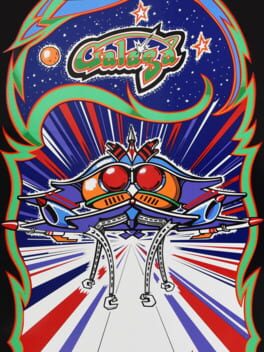
The objective of Galaga is to score as many points as possible by destroying insect-like enemies. The player controls a starfighter that can move left and right along the bottom of the playfield. Enemies swarm in groups in a formation near the top of the screen, and then begin flying down toward the player, firing bombs at the fighter. The game ends when the player's last fighter is lost, either by colliding with an enemy or one of its bullets, or by being captured. Galaga introduces a number of new features over its predecessor, Galaxian. Among these is the ability to fire more than one bullet at a time, a count of the player's "hit/miss ratio" at the end of the game, and a bonus "Challenging Stage" that occurs every few levels, in which a series of enemies fly onto and out of the screen in set patterns without firing at the player's ship or trying to crash into it. These stages award a large point bonus if the player manages to destroy every enemy. Another gameplay feature new to Galaga is the ability for enemies to capture the player's fighter. While the player is in control of just one fighter, a "boss Galaga" (which takes two shots to kill) periodically attempts to capture the fighter using a tractor beam. If successful, the fighter joins the enemy formation. If the player has more lives remaining, play resumes with a new fighter. The captured fighter flies down with the enemy that captured it, firing upon the player just like normal enemies, and can be shot and destroyed. The player can free the fighter by destroying the boss Galaga while in flight, causing the captured fighter to link up with the player's current fighter, doubling his or her firepower but also making a target twice as large. Galaga has an exploitable bug that can cause the attackers to stop firing bullets at the player, due to a coding error. In addition, similar to the famous "Split-Screen bug" in Pac-Man, a bug exists in Galaga in which the game "rolls over" from Level 255 to Level 0. Depending on the difficulty setting of the machine, this can cause the game to stall, requiring that the machine be reset or power-cycled in order to start a new game.
Shooter / Arcade / Action / Science fiction
Space Invaders Extreme combines the captivating essence of the original game with a stunning alliance of futuristic graphic design and cutting-edge audio. The gameplay experience has been developed to maximise on the consoles' abilities, offering players a whole new range of amazing features including a vast array of new power-ups.

Shooter / Arcade / Action / Science fiction
Moving from one room to the next within the studio/arena, players have to shoot down hordes of enemies as they advance from all sides, while at the same time collecting weapons, power-up items, and assorted bonus prizes until a final show down with the show's host where you are finally granted your prizes, your life and freedom. One of the enemies is fat and is named Mr. Shrapnel who roams aside of the walls of some rooms and after a short period of time he explodes.

Shooter / Arcade / Science fiction
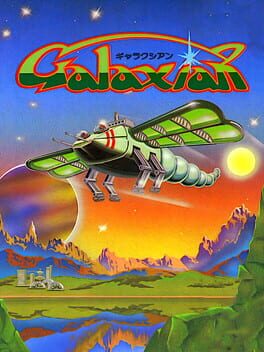
Galaxian is a shooter arcade game developed by Namco in 1979. It was released by Namco in Japan and a few months later by Midway Games in North America. The game was developed to compete with Taito Corporation's Space Invaders, released a year earlier, and featured a similar space theme. The player controls a space ship in the bottom part of the screen and shoots at enemies descending from the top of the screen. The game was received very well by the public and has continued to be a game with a competitive community to this day. It was followed by a successful sequel called Galaga in 1981 and two less known sequels called Gaplus in 1984 and Galaga '88 in 1987. Galaxian was one of the most popular games in the golden age of arcade video games.

Shooter / Arcade / Science fiction
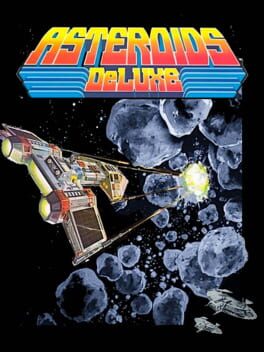
Like in the original Asteroids the objective is to score as many points as possible by destroying asteroids and flying saucers. The asteroids come in three different sizes. If the player fires at and hits a large asteroid, it breaks into medium size asteroids. If the player fires at and hits a medium asteroid, it breaks into small asteroids. If a player fires at and hits a small asteroid, it disappears. Different points are awarded for hitting each size of asteroid, and for hitting flying saucers. The player controls a ship that can rotate left and right, fire shots straight forward, and thrust forward. Asteroids Deluxe replaces the hyperspace feature with shields which deplete with use. Other differences include asteroids which rotate and a new enemy which is dubbed a "killer satellite" which would, when shot, break apart into three smaller ships that homed in on the player's position. The screen of the game is wrapped both vertically and horizontally so that if any object moves past the top edge of the screen it reappears on the bottom edge at the same lateral location, and if it moves past the left side of the screen, it reappears on the right side of the screen in the same vertical location. Asteroids Deluxe swaps vector graphics of the original for bitmaps. In 2007, AtariAge self-published a cart release of Asteroids Deluxe for the Atari 7800.

Shooter / Arcade / Action / Science fiction
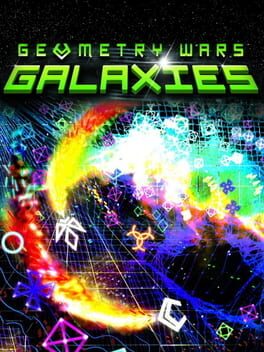
Geometry Wars: Galaxies is set in a space-like environment where the player must shoot geometrical shapes in order to score points, gain lives, acquire bombs and survive as long as possible. The game is played to an upbeat electro soundtrack.