Developed by Takumi Corporation for Virgin Interactive Entertainment (Europe) Ltd..
Shooter / Arcade / Action / Science fiction
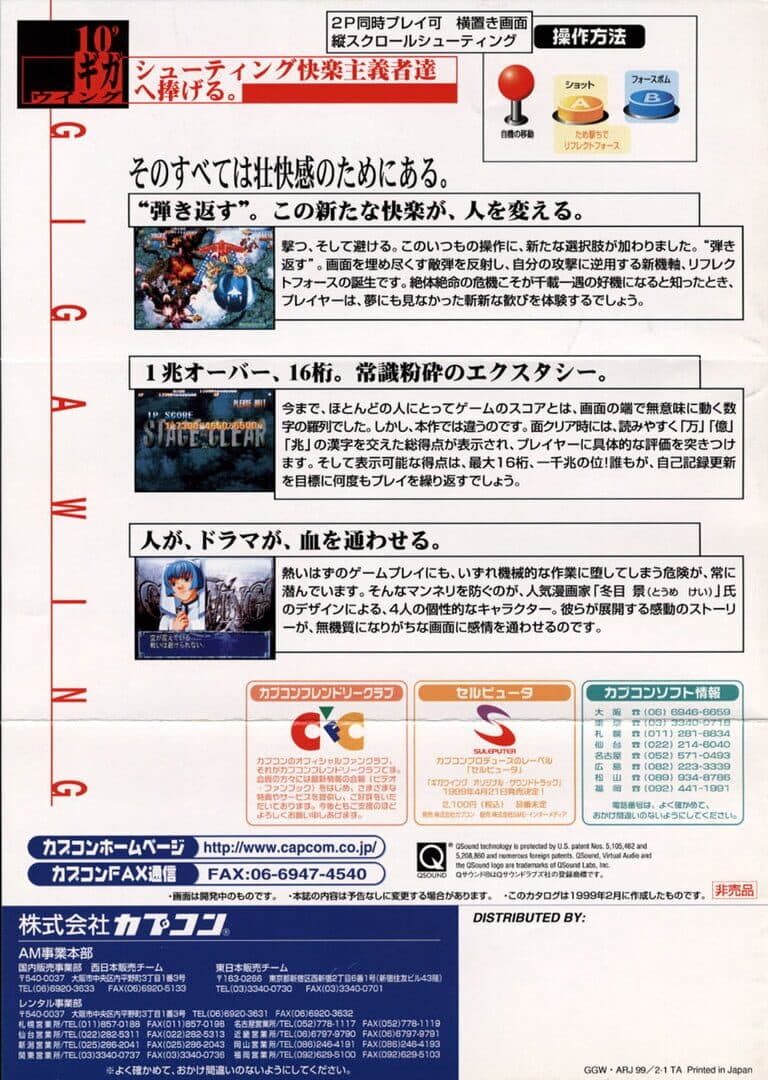
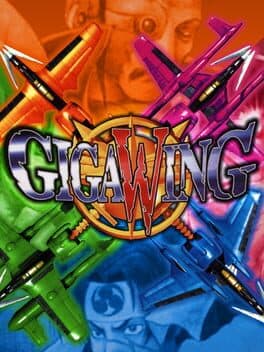
Vertically scrolling shooter arcade game developed by Takumi Corporation and published by Capcom on their CPS-2 arcade system board and ported later that year to the Dreamcast console.
Giga Wing takes place during a fictional war within a steampunk setting. The game is based on the player(s) trying to destroy a medallion which possesses great power. Many of the bosses use the medallion as a weapon. At the end, it shows that an evil man who pilots a ship called the "Stranger" is the real person who is in control of the Medallion, and was responsible for the war, as well as other conflicts in the past including World War II, and you fight him three times as a mini-boss and as the last boss. He appears to be a friend of Stuck 30 years ago when you fight him with Stuck. There are four different characters in the game: Sinnosuke, Ruby, Isha, and Stuck; and each of them has their own individual storyline. Players can also do team play mode that has two characters at once, creating a new storyline. In each storyline, there are two endings. In the bad ending, the character the player uses will sacrifice their life in a kamikaze attack that destroys the Medallion. In team up mode, generally one of the character does this, but sometimes both characters survive. In the good endings for either solo or team play, the characters do not sacrifice themselves.

Shooter / Puzzle / Indie / Action / Science fiction
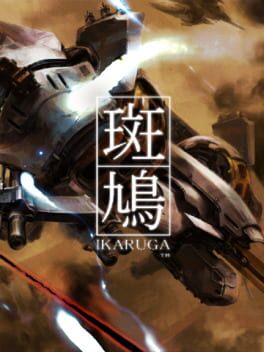
In this vertical scrolling spaceship shooter, you control a ship that can change its polarity at will. As blue/white, the ship can easily destroy red/black enemies, and vice versa. Bullets of your polarity can be collected to fuel your energy gauge, but those opposite will kill you. Destroying an enemy ship causes them to fire revenge bullets which can be absorbed and fired back by the player. Different difficulties exist to change exactly how you interact with polarized points, or how they appear. It is the spiritual successor to Radiant Silvergun, featuring similar level and boss design, as well as it's buddhism inspired themes and aesthetics. Both are directed by Hiroshi Iuchi, who also composed Ikaruga's soundtrack.

Shooter / Platform / Arcade / Action / Science fiction
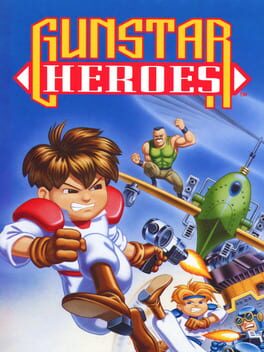
The Gunstar family are the protectors of the planet Gunstar 9. After many years of peace, vicious dictator Colonel Red kidnapped the Gunstar twins’ older brother and used mind control to make him his slave.

Shooter / Platform / Arcade / Action / Science fiction
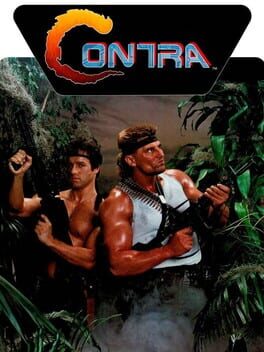
Contra (also known as Gryzor in Oceania and Europe), is a 1987 run and gun action game developed and published by Konami originally released as a coin-operated arcade game on February 20, 1987. The game had multiple ports, including for various computer formats. Several Contra sequels were produced following the original game.

Shooter / Arcade / Action / Science fiction
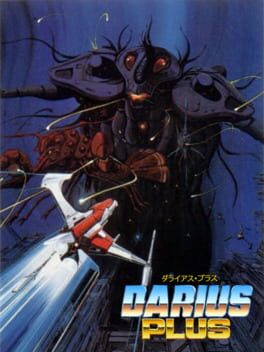
NOTE: "Darius Plus" is the TurboGrafx-16 PC-Engine port of the original Darius produced by Bits Laboratory and NEC Avenue. This is a different port than the title "Darius+", which was published by The Edge and developed by Softek for the Amiga, Atart ST, and ZX Spectrum. Amidst the clutter of arcade shooters in the late 1980s, companies needed to make their games stand out in some way. Simply flying a ship into outer space simply wasn't going to cut it anymore. Taito had an idea. Yes, there was still a spaceship. And yeah, that "outer space" part was still there too. But instead of the usual aliens, you fought fish. Yes, fish. Not even regular, aquatic fish, but robotic fish with lasers equipped to their fins, giant metal teeth and missiles firing from their gills. And not just fish either. There are squid, snails, and other undersea variations out for your blood as well. The requisite plot is about the people of the planet Darius, who are being terrorized by said intergalatic fish. Only the heroic pilots Proco Jr and Tiat Young can save the day. The constant star of the Darius series is the Silver Hawk. Much like Gradius, it has a primary, forward firing weapon, along with bombs that can be used to attack vertically, and the usual shield. The arcade game Darius games also used a unique system that attached three monitors together to create one massive horizontal playing field (also used in Taito's Ninja Warriors.) Naturally, this couldn't quite be replicated on the console system, so that nifty little gimmick is lost, but emulators can still replicate the dimensions of the screen, even if you end up looking at a tiny picture. Looking to further set itself apart from the crowd, every Darius game has multiple levels, with several branching paths throughout the game. It adds tremendously to the replay value, especially since there are usual multiple endings, depending on which final zone you end up at. Darius is a two-dimensional horizontally scrolling shoot 'em up set in a fictional future. Uniquely among shoot 'em ups, the game's screen was three times wider than conventional size, and the arcade cabinet used an arrangement of three screens to accommodate it. The player controls an ornate fighter spacecraft, named the Silver Hawk, and must navigate through scrolling terrain while battling a variety of fighter craft, ground vehicles, turrets, and other obstacles throughout the game's stages (referred to as zones in the game). The ship's arsenal consists of forward-firing missiles, aerial bombs and a protective force field, all of which can be upgraded by power-ups (in the form of large, colored orbs) that are dropped by specially-colored enemies throughout the game's zones. When the player reaches the end of a zone, a boss appears, which must be defeated to proceed. Once the boss of a zone is destroyed, the player is given a choice of which zone to play next via a branching path. While there are 28 zones in total, only seven can be played in a single run. When various ports of it were made for different consoles, Taito (and others) were forced to shrink the playfield to fit on one screen. The PC Engine saw three releases: - Darius Alpha (1990): A very rare beta release. This is one of the rarest Hu-Cards ever published. You could only get a copy of this hardcore shoot-em-up by buying Darius Plus and Super Darius and then mailing coupons to the publisher. 800 copies were made available, and names were drawn from those who mailed their info in. Some copies of the game were also given away as prizes by PC Engine Gekken and Marakatsu magazines. - Darius Plus (1990): The full game itself, again a PC Engine HuCard. The bosses that were removed in Alpha do not return here. Both Alpha and Plus were actually written for the PC Engine SuperGrafx and playing them on that console results in slightly improved graphics (less flicker and slowdown). - Super Darius (1990): A conversion of Darius for the PC Engine's Super CD-ROM, very close to the original arcade version other than being single-screen. Features new bosses, as well as a "boss rush" mode.
Shooter / Arcade / Action / Science fiction
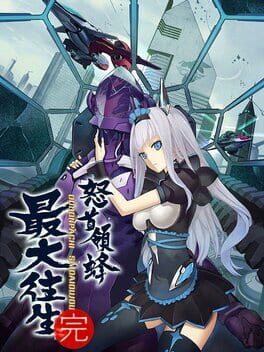
DoDonPachi SaiDaiOuJou is a vertical scrolling shoot 'em up arcade game released by Cave in 2012. It's the sixth chapter in CAVE's DonPachi series. A Japanese region-free release was released on May 30, 2013.

Shooter / Role-playing (RPG) / Simulator / Action / Science fiction
An early first-person role-playing shooter released by Arysis Software for the PC-88 and PC-98 in 1988, and later ported to the Sharp X68000 and Mega Drive/Genesis. Ahead of its time, it had 3D polygon graphics, FPS gameplay, strafing controls, open-world space exploration, and an epic sci-fi space opera plot.

Shooter / Action / Science fiction
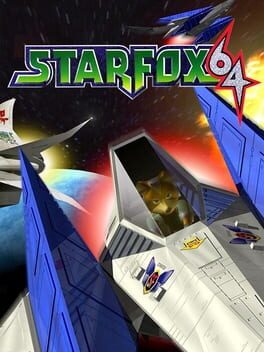
The update to the 16-bit Super NES title continues the original's on-rails 3D shooting action on the Nintendo 64. Starring Fox McCloud, Peppy Hare, Falco Lombardi, and Slippy Toad, this new 64-bit version contains 15 plus levels, easy, medium, and difficult paths, forward-scrolling levels as well as full 3D realms, and a three-part multiplayer mode using a four-player split screen. In addition to plenty of Arwing action, the game introduces a new hover tank and even features a submarine level. The 8-megabyte cartridge also boasts voice samples from 23 different characters instead of the original's animal noises. Star Fox 64 was the first game to feature Rumble Pak support. A Rumble Pak bundle and standalone version of the game were sold. Released in Europe under the name Lylat Wars.

Shooter / Platform / Adventure / Action / Science fiction
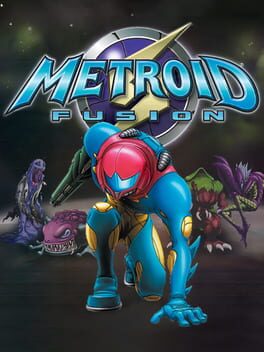
Metroid Fusion is a side-scrolling action-adventure game that combines exploration, combat, and progression within a structured environment. Players navigate distinct sectors, acquire new abilities, and unlock access to previously restricted areas as they advance. The game emphasizes guided objectives alongside ability-based traversal, with a focus on atmospheric tension, evolving threats, and progression through upgrades.