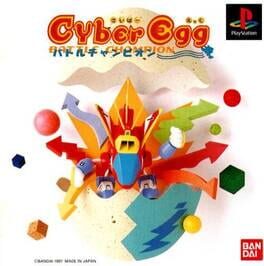
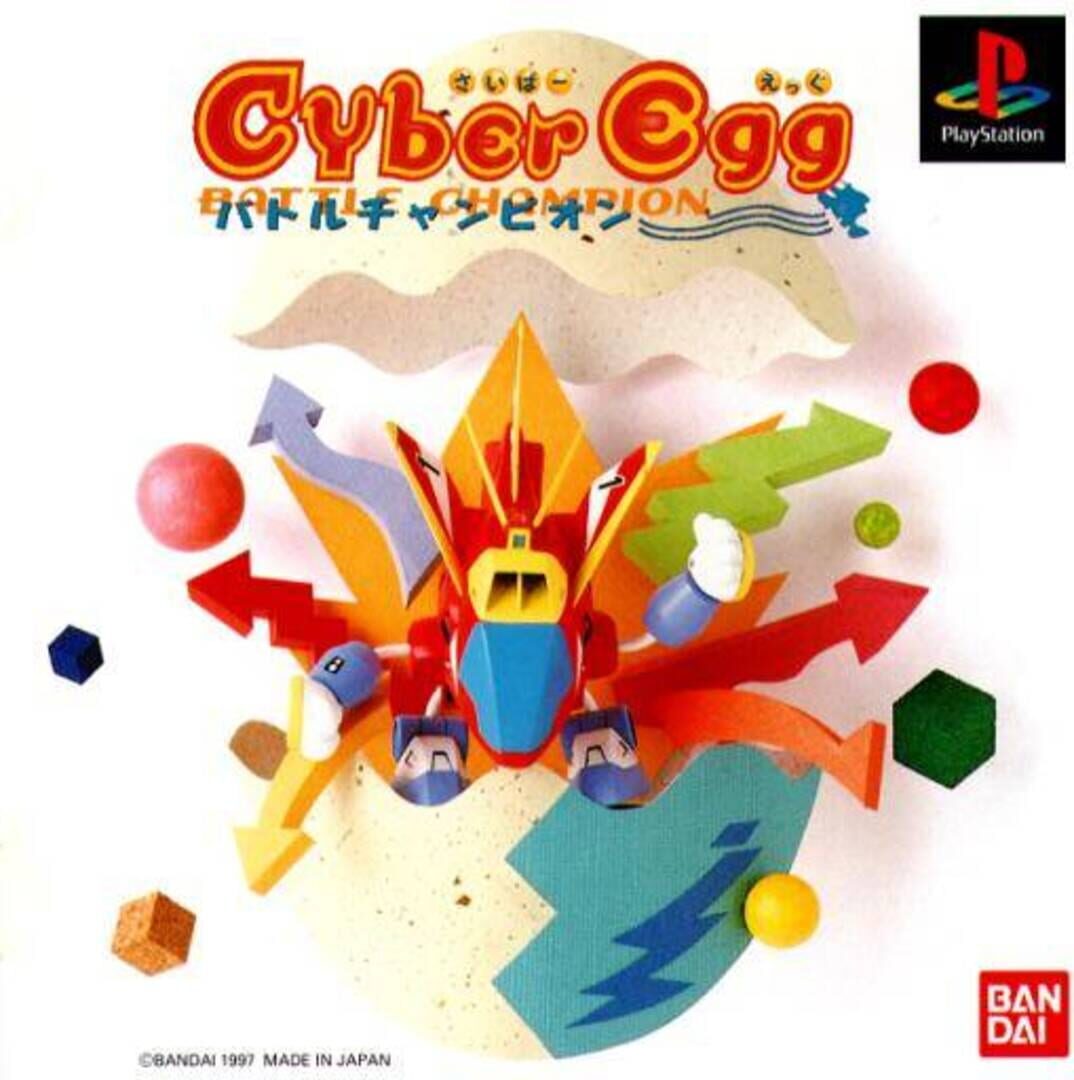
Cyber Egg - Battle Champion is a chunky yet funky 3D battle action title with all of Bandai's anime experience shining through in the vibrant cast. Players wrestle for domination of the 3D arenas in their crustacean inspired mecha suits. Varied arenas add to the longevity of a ship shape title.

Shooter / Platform / Action / Science fiction
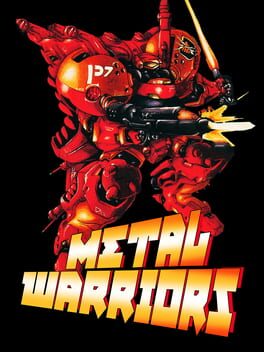
Metal Warriors is a 1995 action platformer video game developed by LucasArts and published by Konami for the Super Nintendo Entertainment System. The game was released exclusively in North America in April of 1995. Its gameplay mainly consists of action and shooting mixed with mission-based exploration using a main seven-button configuration.

Platform / Adventure / Action / Fantasy
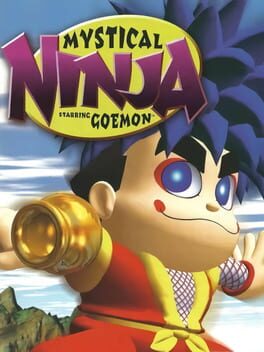
The story follows Goemon's struggles to prevent the Peach Mountain Shoguns gang from turning Japan into a Westernized fine arts theater. The plot calls for three cinematic musical features and battles between giant robots; like other Ganbare Goemon games, it is peppered with surrealist humor and anachronisms. The protagonist of Mystical Ninja is Goemon, a hot-blooded, kiseru-wielding ninja with blue, bushy hair based loosely on the legendary thief Ishikawa Goemon. The lord of Oedo asks him to find those who maimed Oedo Castle. Goemon lives in Oedo Town and is friends with Ebisumaru, a strange, gluttonous fat man who wears a blue bandana. Ebisumaru is defined as lazy and perverted. Their kunai-throwing friend Sasuke is a mechanical ninja (made by the Wise Man of Iga) who enjoys hot baths and Japanese tea. Rounding out the heroes is Yae, a fierce sword-wielding kunoichi, who happens upon Goemon's band in Zazen Town. The villains of the game hail from the organization Peach Mountain Shoguns and include a gang of four "weirdos" led by Spring Breeze Dancin' (Danshin Harukaze) and Kitty Lily (Margaret Ranko). They intend to transform Japan into a stage for their talents.

Shooter / Strategy / Action / Science fiction
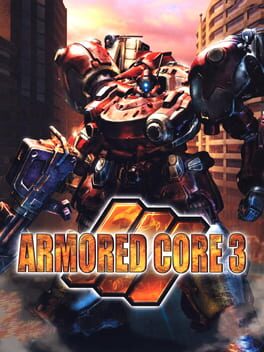
Armored Core 3 once again puts you in the shoes of a Raven mercenary, with the task of piloting your own battle machine to use in a range of tasks (from destroying other mechs to seek and destroy missions). After each missions, you are payed in full. The money raised can then go on towards the purchase of items for your mech. Weapon upgrades, better shields, even the opportunity to purchase what's called an Exceed Orbit, smaller robot gun emplacements that hover around your mech, giving you an added boost of fire power in the crunch. 4 player deathmatch modes are also included, where you each pit your supped-up mechs against each other to see who is the last robot standing.

Shooter / Action / Science fiction
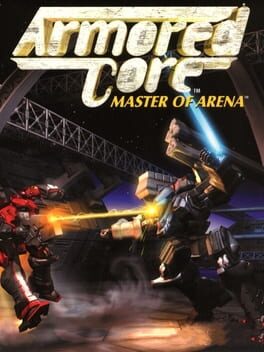
Armored Core: Master of Arena is a standalone sequel released for the PlayStation in 1999. It centres on a large, structured Arena mode where players progress by defeating ranked pilots. The game expands mech customisation, offering more parts and finer performance tuning. Story content is minimal and delivered mainly through short mission briefings and arena context. Its emphasis on competitive progression solidified the Arena as a core feature of the Armored Core series.

Shooter / Simulator / Tactical / Action / Science fiction
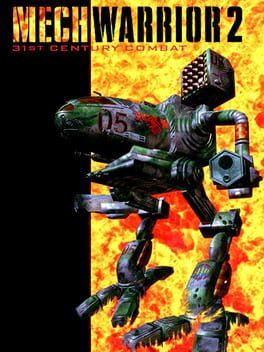
You are the genetically engineered Clan Mechwarrior. The Clans are invading the Inner Sphere. Join either the Wolf Clan or the Jade Falcon Clan as they pursue their own agenda against the Inner Sphere and other Clans. Take your advanced Omnimechs into battle against all comers. Win high warrior ratings (by using less mechs or smaller mechs than needed, completing secondary objectives, etc.) and you'll get chance at a promotion trial where you face superior odds in an arena. If you win, you advance in rank. If you are very successfully, you can make it all the way up to Khan, leader of the Clan! Mechwarrior II was developed in-house by Activision as the successor to their original Mechwarrior. While this time there are no dynamic campaign and mercenary actions, the Clan culture is integrated into the two campaigns. Different clans have different mechs and different rules, even different weapons. You can customize your mechs in order to use less than the "par" force in order to get a higher rating. The full 3D environment wasn't pretty as this was before the 3D accelerators made their debut, but it's still better than anything that came before. Let addition of NetMech allowed users to fight each other online. When 3D cards came along, special versions were created to take advantage of 3D texturing. While not QUITE as replayable as Mechwarrior, it's nonetheless a classic. If you want them now, get the Titanium Edition, which is 3D accelerated.
Shooter / Adventure / Arcade / Action / Science fiction
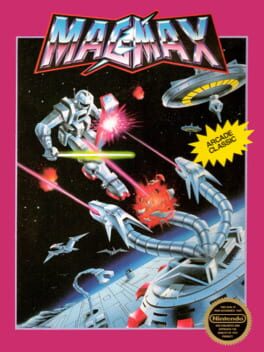
A horizontal scrolling shooter, players control the title hover ship in an attempt to completely construct the ship into a giant robot and to destroy any enemies attempting to stop it. The three-headed mechanical dragon found as a boss character in the game, known as Babylon, strongly resembles Mecha-King Ghidorah from the Godzilla franchise.

Shooter / Action / Science fiction
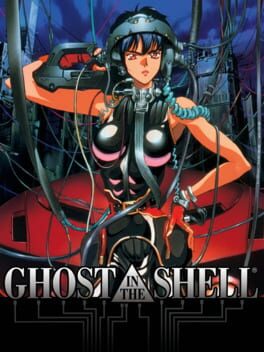
This is a cyberpunk-themed third-person shooter video game developed by Exact and Production I.G for the PlayStation. The game plot revolves around a recruit of Public Security Section 9 as he investigates and combats the Human Liberation Front. The player controls a Fuchikoma, a robotic fighting vehicle capable of traversing walls and ceilings.

Shooter / Adventure / Action / Science fiction
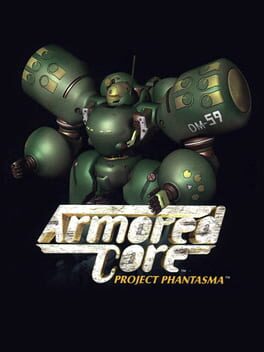
Armored Core: Project Phantasma is a standalone expansion to the original Armored Core, released for the PlayStation in 1997. It focuses on arena-based combat, introducing ranked one-on-one battles against rival pilots Players customise a humanoid mech using interchangeable parts that affect mobility, firepower, and energy use. The game places less emphasis on mission variety and more on mechanical optimisation and combat skill. Its structure and mechanics helped define competitive elements that became central to later entries in the series.