Developed by BEC for Namco Bandai Games.
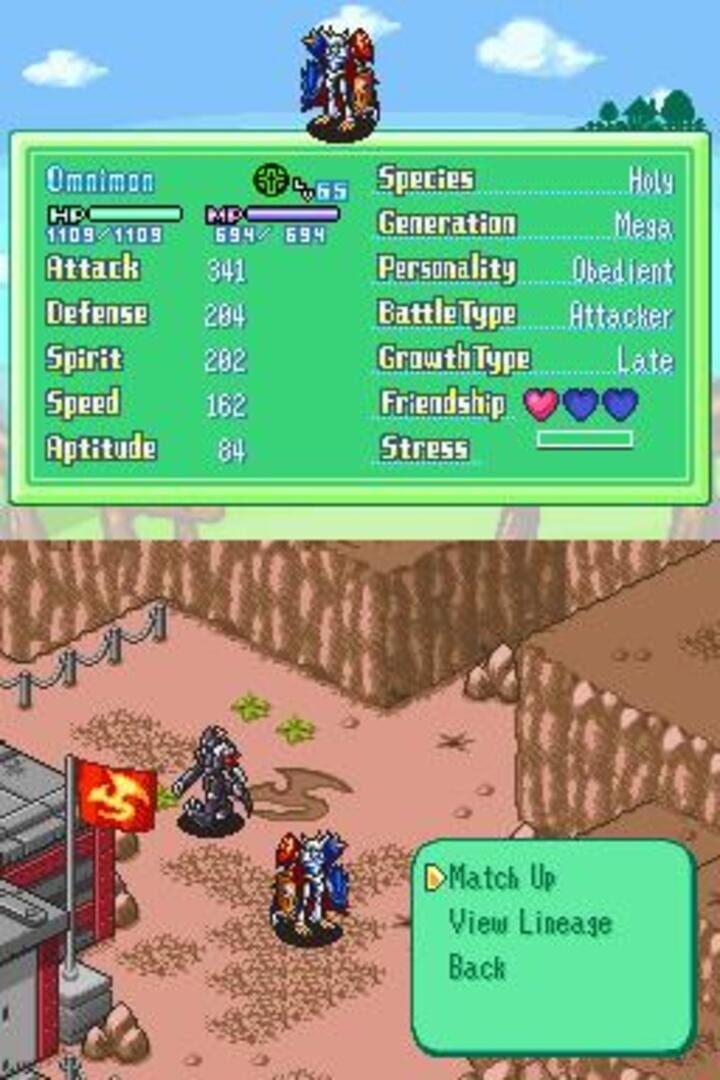
Digimon World DS, known in Japan as Digimon Story (デジモンストーリー Dejimon Sutōrī?), is a role-playing video game and the first Digimon game for the Nintendo DS. It is not part of the Digimon World series, as suggested by its localized title, but the game does bears a resemblance to Digimon World 3. In the game, the player assumes the role of a Digimon tamer and embarks on a journey to discover, tame, raise, train and command more than 230 unique Digimon. The player can build Digi-Farms to raise, evolve and communicate with the Digimon. Using Wi-Fi and local DS wireless connection, players can interact by exchanging Digimon, engaging in battles, and pooling resources to create rare types of Digimon. To date, the game has spawned four sequels in Digimon World Dawn and Dusk, Digimon Story Lost Evolution, Digimon Story: Super Xros Wars Red and Blue, and Digimon Story: Cyber Sleuth.

Role-playing (RPG) / Action / Fantasy
Gameplay is similar to the original Phantasy Star, the first game in the series. Its battle system is turn-based, allowing the player to choose commands for their party of up to four characters. Each of the eight characters has a different set of preferred weapons and armor, as well as techniques, suited to the character's job. The player must defeat enemies in the overworld and in dungeons to advance in the game. The game abandoned the first-person view that the first game used for dungeons and battles. Phantasy Star II instead uses a top-down perspective for exploration and a third-person view in battles.

Role-playing (RPG) / Adventure / Fantasy / Drama
Final Fantasy IX is the ninth main installment in the FF series. The title is a return to the series's roots, with gameplay features and references to the past games featuring throughout, as well as a medieval fantasy setting and cartoonish art style as a break from the sci-fi slant style of Final Fantasy VII and Final Fantasy VIII.

Role-playing (RPG) / Turn-based strategy (TBS) / Adventure / Fantasy / Sandbox
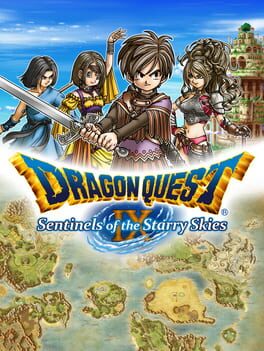
In Dragon Quest IX: Sentinels of the Starry Skies, players begin their adventure as a city guardian who is sent to retrieve a sacred trees fruits, which have the power to grant wishes. Players travel the world, conquer fearsome monsters and unravel an epic storyline. During their journey, players will encounter mighty opponents in fast-paced battles, and also interact with a colorful cast of characters.

Role-playing (RPG) / Turn-based strategy (TBS) / Adventure / Action / Fantasy
Pokemon Platinum is a role-playing game with adventure elements and an enhanced version of Pokemon Diamond and Pearl. Played from a top-down perspective, it has the player explore the Sinnoh region across towns, routes, and caves, catching and training Pokemon and battling them in turn-based combat. The core goals involve building a team, challenging Gym Leaders, and completing the Pokedex. This version adds new areas, expanded online features for trading and battling, and gives the Legendary Pokemon Giratina and its Distortion World a central role. It connects with other games in the generation to trade and transfer Pokemon.

Role-playing (RPG) / Adventure / Fantasy / Sandbox
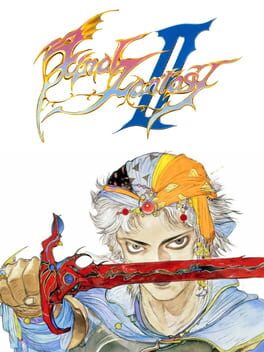
Final Fantasy II is the second installment in the Final Fantasy series, developed and published by Squaresoft. It was directed by Hironobu Sakaguchi, with Yoshitaka Amano designing the characters and Nobuo Uematsu composing the score. It was notable for being one of the first story-intensive RPGs released for console systems, and introducing many series staples, including chocobos and a character named Cid. Its story is unrelated to the original FINAL FANTASY, and its gameplay is a major departure from the previous title for eliminating the traditional experience-based progression system.

Role-playing (RPG) / Adventure / Fantasy
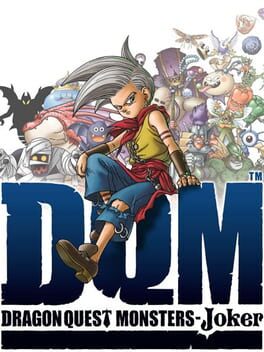
Players assume the role of a monster hunter as they capture, train and breed a powerful army from more than 200 classic Dragon Quest creatures in order to become the world's greatest monster trainer. Joker is a breakout title that combines the depth of a classic Dragon Quest RPG with the addictiveness of a monster catching adventure.

Role-playing (RPG) / Adventure / Action / Fantasy
Final Fantasy III is a remake and a complete overhaul of the 1990 version with the same title. This allowed western players to finally experience the classic Final Fantasy game localized for the very first time. The graphics are rendered in full 3D and various changes have been implemented.

Role-playing (RPG) / Strategy / Fantasy
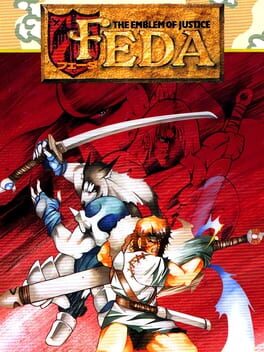
In a fantasy world, a soldier from the imperial forces deserts after witnessing the massacre of innocent villagers by his unit. He is sent to jail to be executed, but manages to escape with the help of two former unit colleagues. The group flees through the country-side, while being pursued by imperial soldiers. On their way, they join forces with other rebels to fight against the enemy, while uncovering hidden secrets and evil plots by the Empire. Feda: Emblem of Justice is a strategy RPG similar to Shining Force and other titles with preset characters and linear gameplay. The player commands a party of varying size and characters with diverse skills. In the main battle sections, the player and the CPU-controlled enemy take turns moving the troops and giving orders. A menu at the bottom of the screen shows all the possible actions, where soldiers can defend, move, attack, or use an inventory item on each turn. The range of their movements and weapons vary according to their nature. A crossbow character can shoot from the back, while most sword and knife users have to be adjacent to their targets. Magic offensive powers have different ranges as well, reaching enemies that are far away from the attacking character. Health points can be recovered by eating rations or by magic, where a healer can restore points to several characters at once. Each party member has separate health and magic points, as well as other statistics like defense and attack power. They receive experience points after slaying an enemy or casting a spell, and extra points at the end of the battle. Their skills increase after surpassing 100 points. The map screen shows the party and groups of enemies traveling through the landscape in turns. The menu has options for moving the group or camping. In the encampment, one of the characters around the fire pit saves the game, while another inside the tent provides system options to change the interface color, adjust sound volume and rename the party members. In some locations like temples, villages and towns, the party has to explore the place and talk to the citizens to move on to the next section. In later battles, the player has to make a moral choice about attacking mutated humans. At the end of each battle, the party is assigned a dark or light emblem, and certain party members choose to leave or stay in the group based on its alignment.