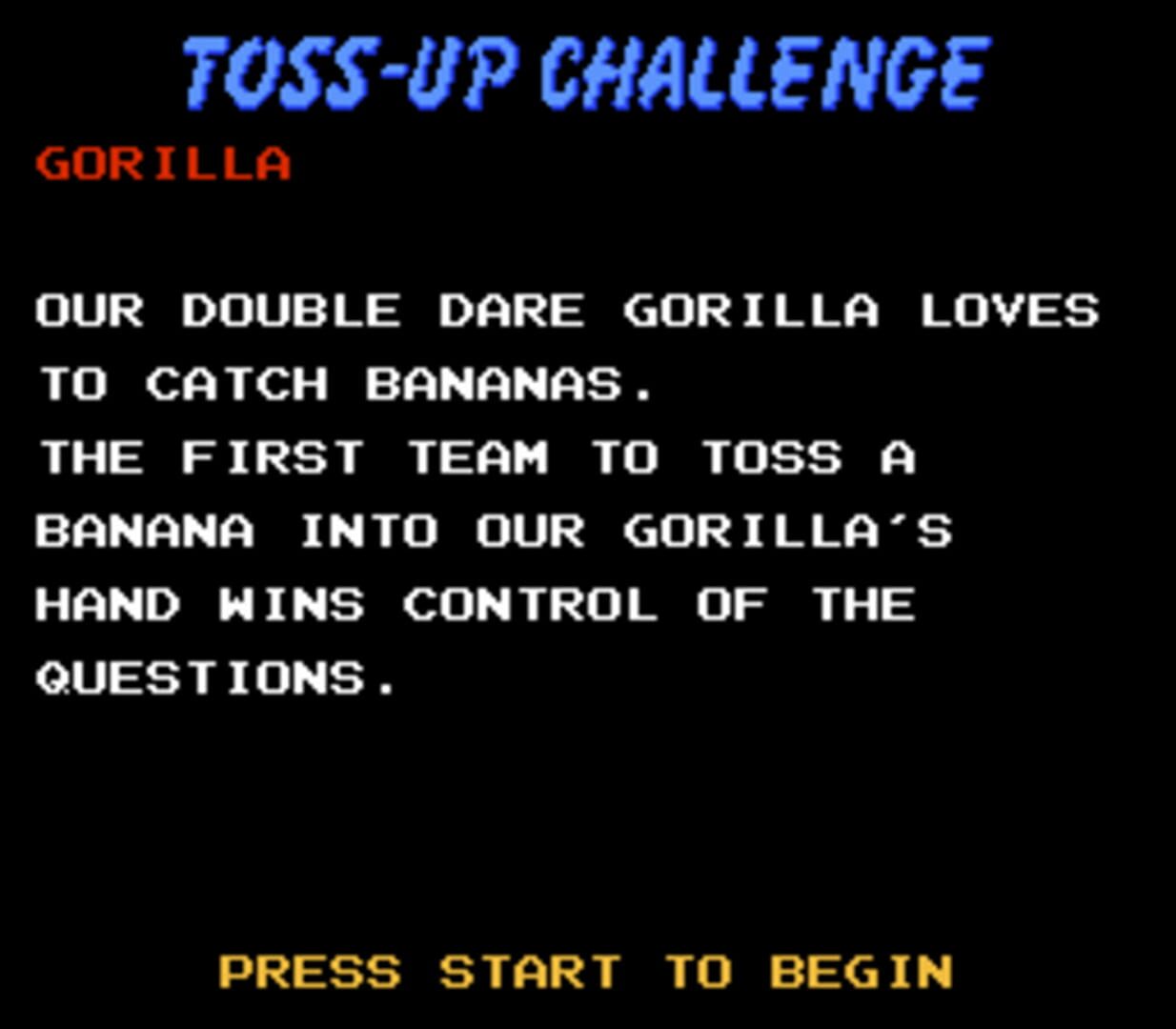
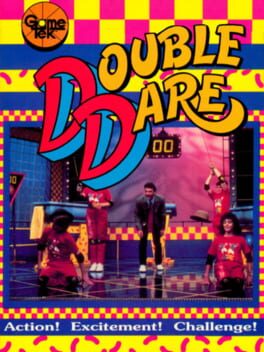
Double Dare is the computer version of the game show originally hosted by Marc Summers. Like the TV show, the game is basically a trivia game with the added enhancement of being able to answer the question, or take a dare. Dares consist of the Toss-up Challenge, the Physical Challenge, and in the last round, the Obstacle Course. Questions are varied, and in large enough number to avoid excessive repetition even over several games worth of play.


Puzzle / Simulator / Sport / Action / Science fiction
A compilation of the classic arcade games Millipede, Super Breakout, and Lunar Lander brought to the Game Boy Advance.

Sport / Arcade / Non-fiction
Get your ball and rack up the pins, as one of America's favorite sports makes its Windows 95 debut in PBA Bowling. The official computer game of the Professional Bowlers Association, PBA Bowling brings the excitement of one of America's best-loved pastimes to your PC. With a realistic physics model, digitized players and full-motion video, you'll think it's Friday night at the local lanes!.

Fighting / Sport / Arcade / Non-fiction
WWF In Your House is a successor to WWF WrestleMania: The Arcade Game. Like its predecessor, it is a hybrid of wrestling game and arcade versus fighter, with over-the-top, unrealistic moves. Concept and presentation are similar to Mortal Kombat games: digitized sprites are used to represent the wrestlers, and the game features finished moves that are performed before the final pin. There are a total of ten WWF wrestlers in the game: The British Bulldog, Goldust, Bret Hart, Owen Hart, Hunter Hearst Helmsley, Ahmed Johnson, Shawn Michaels, The Ultimate Warrior, The Undertaker, and Vader. A new four-player mode is available.

Point-and-click / Puzzle / Quiz/Trivia / Educational / Kids
Benjamin Blümchen: Ein Tag im Zoo is a german only Nintendo DS game


Sport / Arcade / Non-fiction
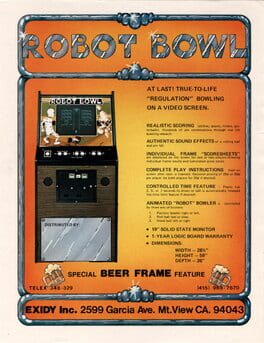
Robot Bowl was a black & white bowling alley game designed and programmed by Edward Valeau and Howell Ivey of Exidy. The game featured one or two robot bowlers playing with the standard bowling rules. To control the outcome, the game had five buttons: left, right, shoot, hook left, and hook right. "Hooking" the ball was the key to getting a good score, as you could only hook the ball after it had been thrown. This made it easy to pick up a spare, but the game made up for it by making splits very common. Robot Bowl was available in two different dedicated cabinets, an upright and a cocktail, both of them used the same internal hardware. The Robot Bowl upright was of the common 1970s 'short cabinet' design, as the machine had no marquee and was only as tall as the monitor. Some machines also had a decorative 'ball return' on the front at the very bottom of the cabinet. There is an interesting story behind that. At the time the game was created, Exidy had just purchased Fun Games and had a number of cabinets left over from one of Fun's driving games. They used these cabinets to get Robot Bowl into production quickly. The only problem was that the cabinets had a hole in the front where the gas pedal had been. Michael Cooper-Hart suggested that they silk-screen the words 'Ball Return' over the hole. The Robot Bowl cocktail was a square box with a perfectly round top. The player controls were on either side of the monitor (and you actually had to look at the game sideways to play). This machine had no decoration of any kind.
Puzzle / Sport / Strategy / Action / Kids
Silly Bandz have been stolen and it’s up to you to get them back! Knock out enemies and destroy the cages holding your Silly Bandz hostage, and they’re yours! Catapult a variety of colorful Silly Bandz to destroy everything in your way in order to collect your Bandz, but beware of enemies trying to sabotage your rescue – with 200 Silly Bandz on the line, they aren’t willing to let them go without a fight!