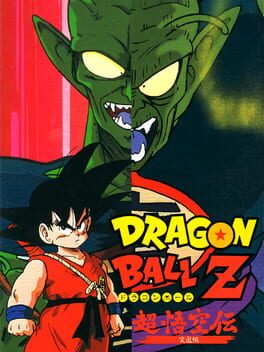
Meet a naive young monkey-tailed boy named Goku, whose quiet life changes when he meets Bulma, a girl who is on a quest to collect seven "Dragon Balls." If she gathers them all, an incredibly powerful dragon will appear and grant her one wish. But the precious orbs are scattered all over the world, and Bulma needs Goku's help (and his super-strength)! With a magic staff for a weapon and a flying cloud for a ride, Goku sets out on the adventure of a lifetime...

Role-playing (RPG) / Strategy / Turn-based strategy (TBS) / Action / Fantasy
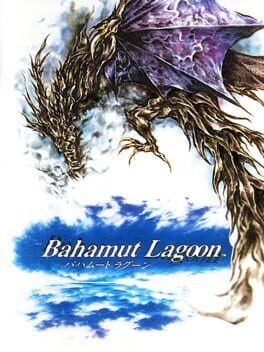
Bahamut Lagoon combines RPG mechanics with squad-based combat. Characters have HP, MP (SP for fighter characters), EXP, equipment, stats and class-specific, SP-draining special elemental abilities very much like traditional console RPGs. The player can explore his surroundings, talk to people and visit shops when not in battle, though to a limited degree as there is no world map and no way to leave the current area. The game's core is its turn-based battles fought on a 2d grid. Characters are assembled into parties of four and the player allowed a maximum of six parties, which are usually well outnumbered. The two opposing sides act in alternating turns so that each party can move once and/or attack once a turn. Attacks are divided into distant and close-up combat. In the former, a party uses a special ability (e.g. casting fireballs, throwing lightning, healing allies) of one of its members at a distance. The range and possible area of effect damage vary per ability. If the attacking party has two or more characters with the same ability, they join in the action to multiply its effectiveness. Distant combat results in less money and generally less damage, but the target cannot retaliate. Distant attacks can also affect the field; fire and ice ignite or extinguish forests and melt or freeze ice, etc. Close-up, each unit in two adjacent opposing parties can act once. Very much like Final Fantasy SNES combat, they can attack an enemy, use an item or a special ability (though these can't be combined and most only affect one target instead of all) or defend. Dragons are the player's ace in the hole. They have their own stats and gain experience like normal characters do. In battle, each party has a dragon attached to it and draws a large portion of its strength from that of its dragon: if a party's dragon is slain, the party will lose the ability to use special attacks and class-specific abilities for the remainder of the map. The beast acts as a very powerful autonomous unit that moves after its party does and it cannot be controlled beyond very simple commands, e.g. "Come!" Out of battle, dragons will eat anything and raising them by feeding them items is an important part of the game. Feeding can improve their stats as well as affect their behavior on the field, and the dragons develop into new forms as they grow. The player can change the characters in each of the parties, their formation as well as what dragon represents them at will.
Role-playing (RPG) / Strategy / Turn-based strategy (TBS) / Action
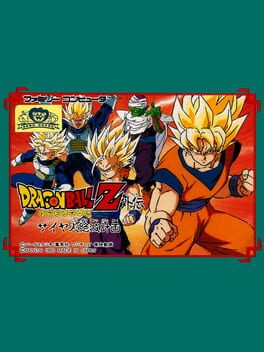
You control five various Dragon Ball characters in this game: Son Goku, Son Gohan, Piccolo, Vegeta, and Future Trunks. The game is based on training your characters, and fighting with them. The outcomes of the fights are determined by the player choosing different cards he has at his disposal, and combining them to create various attacks.

Role-playing (RPG) / Action / Fantasy
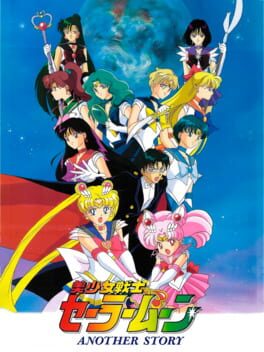
In the future Crystal Tokyo, a small band of discontent citizens have come together to form an rebel team of Senshi called the Oppositio Senshi, who feel that the Sailor Senshi and the Silver Crystal are the source of all of Earth's past battles. Together with a mysterious woman named Apsu, they desire to twist time and change the destiny of the Earth. In the present day, the Sailor Senshi are enjoying peace now that the Death Busters have been defeated. However, strange things begin happening in the city. Previously defeated Daimons, Droids and Youma appear throughout the city. A visit by Ryo Urawa reveals a cryptic statement that the past and future are being replaced. Rei sees strange apparitions in the fire, and then the four Inner Senshi, along with Chibiusa go missing. Sailor Moon meets up with Uranus, Neptune, and Saturn to go look for the missing Senshi.

Role-playing (RPG) / Strategy / Action
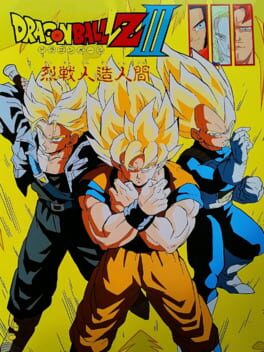
Dragon Ball Z III: Ressen Jinzou Ningen is the sequel of Dragon Ball Z II: Gekishin Freeza. The game starts off in the Frieza Saga as Super Saiyan Goku fighting Frieza, and it ends in the Imperfect Cell Saga in the battle of Piccolo against Imperfect Cell. The game also features characters from the movie Dragon Ball Z: Cooler's Revenge. It is the first game in the Gokuden series where power levels are not stated.

Role-playing (RPG) / Adventure / Action / Fantasy
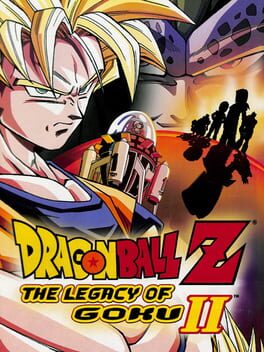
Dragon Ball Z: The Legacy of Goku II was released on June 17, 2003. The plot of the game picks up where The Legacy of Goku left off, and continues until the end of the Cell Games Saga when Gohan defeats the evil android Cell. The game introduced several new concepts to the series. The first was transformations, which allowed characters to become temporarily stronger, at the cost of slowly draining their energy. It also introduced the scouter, which allowed players to look up the stats of other characters in the game, as well as basic information about them. The game also introduced charged melee attacks, which allowed characters to unleash a powerful physical strike after a short charging period. The game also allowed characters to further supplement their stats with capsules that were scattered around the game world. Despite being titled "The Legacy of Goku" this game featured the most limited play as the character Goku. Due to the game's success, a second version was released titled Dragon Ball Z: The Legacy of Goku II International exclusive to Japan on July 23, 2004. In this version all characters were given new profile images and their names were reverted to their original Japanese. However, Mister Satan still retains his English name "Hercule" on the front of his parade float. [Source] - Wikipedia.

Role-playing (RPG) / Adventure / Action
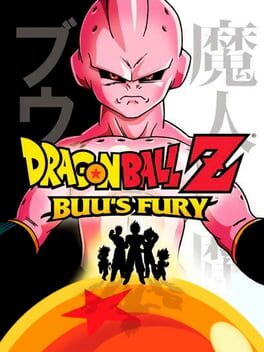
Dragon Ball Z: Buu's Fury is the third and final game in the series. It was released on September 14, 2004 in North America. The game focuses on the final parts of the Dragon Ball Z series (season 7), namely the battles with Majin Buu. The game added several new additions to the series. First, the game added equipment, which could be equipped to characters to alter their stats and provide various other benefits. The game also allowed players to allocate their own stat points, of which three were given per level. Also added was the ability to block by holding the R button, and also to energy block by holding the B button while blocking. Using the energy block slowly drains the user's energy gauge. Both techniques greatly decrease the amount of damage that is received from attacks. The game also added various other features such as fusions and the ability to transform into a Super Saiyan 3. Although many features were added, the ability to use charge attacks by holding and releasing the A button was eliminated. The dialogues used in the English edition of the game are very similar, and sometimes identical, to the ones used in the English dubbed animated series.

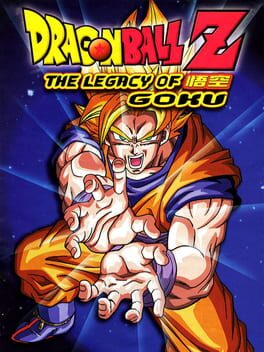
Dragon Ball Z: The Legacy of Goku takes you on an incredible journey to protect the universe from the evil Frieza once and for all. The game follows an RPG style, with battle elements designed similarly to the style of the cartoon, with fireballs, quick moves and more. As the story progresses, you will learn more about the history of the cartoon, meeting a collection of crazy characters and fighting one-on-one battles over long distances as well as close combat. The ten hour quest will take you to Master Roshi's Island, throughout Earth and beyond. Plus an in-game clock keeps tabs on your time limit to complete the game.

Role-playing (RPG) / Adventure / Action
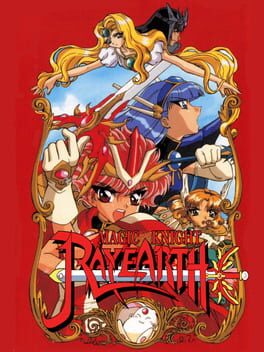
Magic Knight Rayearth is a Role-playing game released by Tomy; released in 1995 in Japan for the Super Famicom (SNES), based on the 1994 anime by Clamp of the same name, Magic Knight Rayearth.