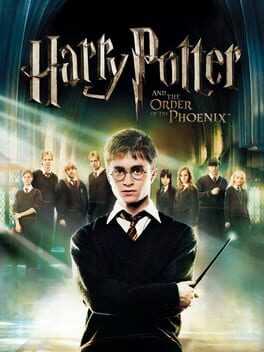
Harry Potter and the Order of the Phoenix is the fifth installment of the popular Harry Potter series. Players take control of Harry Potter in this 3D adventure as he faces the dangers of his fifth year of Hogwarts, avoiding the malicious Professor Dolores Umbridge, builds Dumbledore's Army, and faces off with Voldemort himself as the prophecy continues to unfold. Players will navigate through the castle of Hogwarts and beyond, learning fifth year spells, solving multiple puzzles, avoiding traps, and even get a chance to play as the Weasley brothers, Sirius Black and Dumbledore himself. All versions are the same with the exception of the Wii. Players can use the Wiimote as Harry's wand to cast spells, allowing a new level of control never before possible in a Harry Potter game.
Puzzle / Adventure / Action / Fantasy
The Legend of Zelda: Ocarina of Time is the fifth main installment of The Legend of Zelda series and the first to be released for the Nintendo 64. It was one of the most highly anticipated games of its age, and is listed among the greatest video games ever created by numerous websites and magazines. The gameplay of Ocarina of Time was revolutionary for its time, it has arguably made more of an impact on later games in the series than any of its predecessors even though they had the same cores of exploration, dungeons, puzzles and item usage. Among the gameplay mechanics, one of the most noteworthy is the time-traveling system. The game begins with the player controlling the child Link, but later on an adult Link becomes a playable character as well and each of them has certain unique abilities. Ocarina of Time also introduces the use of music to solve puzzles: as new songs are learned, they can be used to solve puzzles, gain access to new areas and warp to different locations. Dungeon exploration is somewhat more puzzle-oriented than in earlier games but they are not too complex.
Role-playing (RPG) / Strategy / Turn-based strategy (TBS) / Fantasy
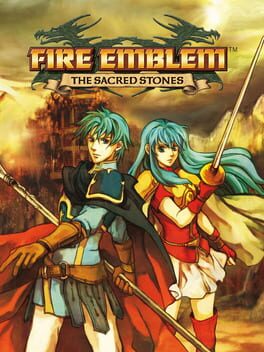
In Fire Emblem: The Sacred Stones, you must help protect the nation of Renais from the invading Grado Empire. Plan your strategy, choose your units, and then lead your soldiers in to battle. The more experience your soldiers gain, the more you can upgrade their abilities. This time, your soldiers can gain experience by fighting new monsters in the Tower of Valni.
Point-and-click / Adventure / Fantasy / Comedy
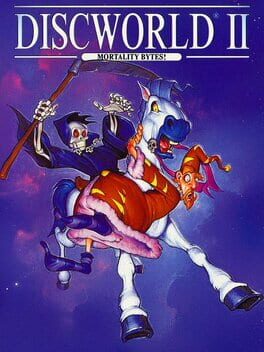
Discworld II: Mortality Bytes! is the second point-and-click adventure game based on Terry Pratchett's series of fantasy novels set on the mythical Discworld. The game was developed and produced in 1996 by Perfect Entertainment for the PC, and ported in 1997 for the PlayStation and Sega Saturn. It was published by Psygnosis for the PC and PlayStation, and by Sega for the Saturn (only in Europe). In Discworld II the player controls Rincewind the "wizzard" (voiced by Eric Idle, as in the previous game) who has been burdened with the task of coercing Death out of his impromptu retirement and back into his regular duties. The plot borrows from a number of Discworld books, most notably Reaper Man, Moving Pictures and Lords and Ladies. It all begins in a quiet Ankh-Morpork street, where Rincewind and The Librarian inexplicably fail to die from a nearby cart-bomb explosion. The odd event is not shared by them alone however: occurrences of the newly dead re-awakening and disturbing the populace are being reported all over the city, prompting the Archchancellor of Unseen University to halt his usual activities of feasting and merrymaking, and to take charge of the situation. Much to Rincewind's despair, the entirety of this process involves appointing him to the task of finding Death and convincing him to resume his work.
Role-playing (RPG) / Adventure / Fantasy / Drama
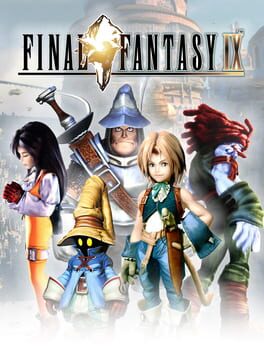
Final Fantasy IX is the ninth main installment in the FF series. The title is a return to the series's roots, with gameplay features and references to the past games featuring throughout, as well as a medieval fantasy setting and cartoonish art style as a break from the sci-fi slant style of Final Fantasy VII and Final Fantasy VIII.
Role-playing (RPG) / Turn-based strategy (TBS) / Adventure / Fantasy / Party
Dragon Warrior IV differs from the rest of the series by breaking up the game into five distinct chapters, each of which focuses on a different protagonist or protagonists. The first four are told from the perspective of the Hero's future companions and the fifth one, from the hero's perspective, brings all the characters together as they begin their journey to save the world.
Role-playing (RPG) / Hack and slash/Beat 'em up / Adventure / Action / Fantasy
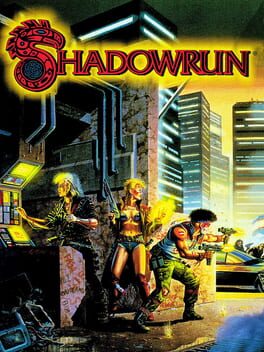
Shadowrun is an action role-playing game.It was adapted from the cyberpunk role-playing game Shadowrun.The game is the second video game adapted from Shadowrun, and has a more open ended style of gameplay than its 1993 Super NES counterpart, Shadowrun by Beam Software. The game is set in the Shadowrun universe, in the 2050s. A time where the blending of technology and human flesh is common; it is around the time the Matrix, a huge computer network, came online, with the ability to jack into its cyberspace directly. It was also a time of magic renewal: a phenomenon known as The Awakening occurred, where magic returned into the world. Sorcery was once again possible, and slowly and seemingly at random humans began to mutate into orcs, dwarves, elves or trolls. This time of upheaval was not without political conflicts: mega-corporations began to control the world. But with their magic, native shamans threatened them and the world geography came to a complete change. The Amerindians and Elves reclaimed an area called Salish-Shidhe, close to the free city of Seattle, a major city in the newly formed United Canadian and American States.
Racing / Role-playing (RPG) / Turn-based strategy (TBS) / Fantasy
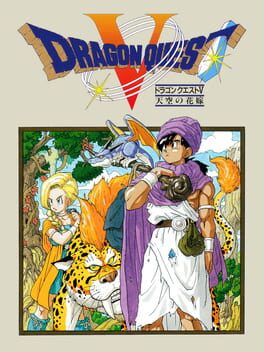
Dragon Quest V: Tenkuu no Hanayome is a role-playing video game and the fifth installment in the Dragon Quest video game series, second of the Zenithian Trilogy. Originally developed by Chunsoft and published by Enix Corporation, Dragon Quest V was the first title in the series to be released for the Super Famicom video game console in Japan in September 1992. Dragon Quest V was the first game in the series to not be released outside Japan due to programming issues at the time.