Developed by Now Production for Namco.
Platform / Role-playing (RPG) / Hack and slash/Beat 'em up / Action / Historical
Dragon Valor is a 1999 action role-playing game developed by Now Production and published by Namco for the PlayStation. It is the second sequel to Dragon Buster. In the Dragon Valor world, dragons are powerful monsters. The player's role as a Dragon Valor is to slay them with a magical sword passed down through successive generations. Similar to Phantasy Star III, Dragon Valor differs from other platform action games of the time because who the protagonist marries changes future playable characters, plot events, and which ending the player receives.
Dragons and gods waged war against each other at the cost of everyone else's lives. Four magic swords were created to both stop the war and prevent others. Azos, Kadum, and Soul were created from angels while Igunis was created from a god. Dragons lost the war and many were killed off. Dragons found a way to survive through an unusual form of shape shifting. They can manifest themselves from the "evil in the human heart." When a person is consumed with hate this allows a dragon to manifest itself by turning that person into a dragon or dragon halfling. This creates an internal struggle for humans which is overcome by thinking of their loved ones. The most powerful dragon and main antagonist-Dahaka-could not be killed and was imprisoned behind the Gates of Gehenna. These Gates can only be unlocked using Azos, Kadum, and Soul together. Each generation of playable characters follows a similar plot. The protagonist has an external threat (either a human political rival or a dragon) where they use a magic sword to eradicate it. If they do not have a magic sword they go out in search of one. If they already have one they will often search for additional magic swords. As they travel from one location to another the protagonist will face a variety of enemies. Some enemies are one-offs (animal-, fungi-, humanoid- and plant-based in design) while others are re-occurring, such as the dragon halfling Halfas. Re-occurring enemies are after political power, the power of Dahaka, or both. Re-occurring enemies are working to get the magic swords for Dahaka's release from the Gates of Gehenna. Multiple protagonists struggle with their hatred from the harm several antagonists cause and have to fight against turning into a dragon. Once their goals are achieved the protagonist goes home and puts in to place who will be the next protagonist. Some protagonists will have the option to save a damsel-in-distress mid-adventure. If they choose to save her she will marry him and their child will be the next chapter's protagonist. If they choose not to the protagonist will choose another woman from their chapter to marry or will adopt a child.
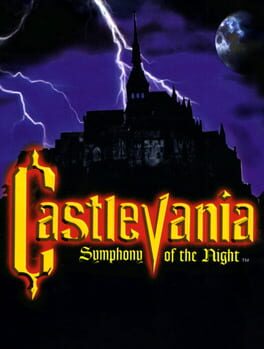
Platform / Role-playing (RPG) / Adventure / Action / Horror
Having been awoken from his eternal slumber by the reappearance of Castlevania, Alucard must once again face the evil minions of darkness. Use your vampiric powers, along with weapons, potions, and other magical relics to change the tide of battle. A mixture of platform and role-playing action with many hidden areas and secrets. Can you discover them all?

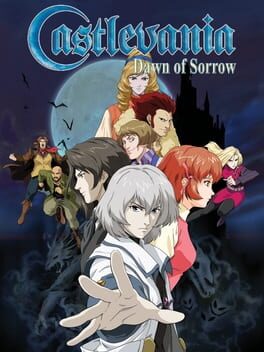
Platform / Role-playing (RPG) / Adventure / Action / Fantasy
Draw the correct magic seal quickly, or your enemies will never die! Fight and explore through one of the largest castles ever seen in the series! Race another player through custom-made castle rooms in versus mode! A year has passed since Soma Cruz discovered the evil of Dracula hidden inside his body. Now, a mysterious cult wants to release the power of the Lord of Darkness. As Soma, you must do everything in your power to stop them before it's too late.

Role-playing (RPG) / Hack and slash/Beat 'em up / Adventure / Action / Fantasy
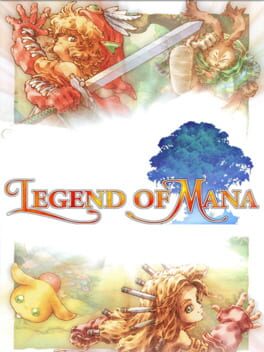
While incorporating action role-playing game elements from the three games which preceded it, Legend of Mana has its own distinct style of gameplay. Most notably, it gives the player the ability to shape the game's world of Fa'Diel according to his or her desires, a system which was incorporated through the use of "artifacts," which are gained as the player progresses through the game. The player uses the artifacts to create different towns, dungeons, etc., called "Lands", to venture to and explore. This creates a non-linear gameplay, since the game is driven by a series of what would be considered side-quests in other games. Legend of Mana features three different plots which can occur simultaneously, and which do not necessarily need to be completed for the player to finish the game. Legend of Mana was a financial success in Japan. While the game garnered considerable praise for its graphics and presentation, many critics and fans were turned off by the game's lack of a main storyline.

Platform / Puzzle / Hack and slash/Beat 'em up / Action / Horror
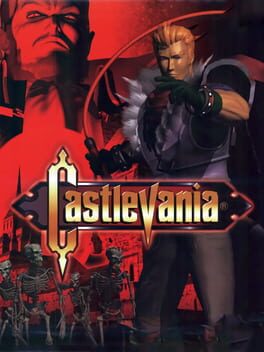
Take control of Reinhardt Schneider, a whip-toting Vampire Killer who has waited his whole life to meet his destiny, or Carrie Fernandez, a young girl with a strong magical presence who is mysteriously drawn to Dracula's evil Castlevania. It is their duty to seek out Castlevania and put an end to its residents' plans. What is your destiny?

Platform / Puzzle / Role-playing (RPG) / Action / Fantasy
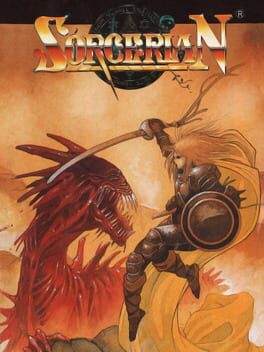
Sorcerian is a side-scrolling action-RPG. The player can create up to ten characters, from whom up to four members can be present in a party at the same time. Each character is highly customizable, with four different classes/races (fighter, wizard, elf, and dwarf) and over 60 possible jobs/occupations (ranging from clown to exorcist) available for them to perform; each has its own strengths and weaknesses, affecting the seven primary attributes (strength, intelligence, protection, magic resistance, vitality, dexterity, and karma) in different ways, as well as different equipment limitations. The player can choose from fifteen different scenarios, or quests, to play through in the order of their choice. The party must battle enemies and perform tasks within the given levels to clear each scenario, before moving onto another scenario of their choice. The player controls the entire party at the same time, with all four members running in a line, jumping in sequence, and attacking in unison. The party members follow behind in a manner similar to the Options in the arcade shooter Gradius (1985). Sorcerian also employs class-based puzzles, such as using a high-strength character to force open doors. All the characters have a default starting age of 16. Each time a player begins a new scenario, a year passes by, while additional time passes by in towns as a character goes through training or enchants items. The characters age at different rates depending on their race, with humans reaching old age at 60, dwarves at 100, and elves at 200. Upon reaching old age, for every year that passes, a character can die permanently at a random time. There is also an “Advance Time” to speed up the flow of time. Another new feature of Sorcerian was its episodic format that extended across various expansion packs. Besides the default fifteen scenarios that come with the game, there were a number of additional scenario packs released. The aging system was created with the additional scenario packs in mind.

Platform / Adventure / Action / Fantasy
Crash Bandicoot: Warped is the third game in the Crash Bandicoot series and the first to feature Coco as a playable character. The player takes control of Crash and Coco Bandicoot, who must travel back and forward in time and gather 25 crystals before Uka Uka and Doctor Neo Cortex can do so. Much of the game takes place in the Time Twister which acts as the hub area of the game. The Time-Twister is split up into five chambers, each chamber has five buttons that open portals to different levels. The goal in each level is to find and obtain the crystal hidden in the level. Crash Bandicoot: Warped was lauded by critics in many areas, and the game has been considered one of the best video games of all time.

Platform / Role-playing (RPG) / Adventure / Action / Fantasy
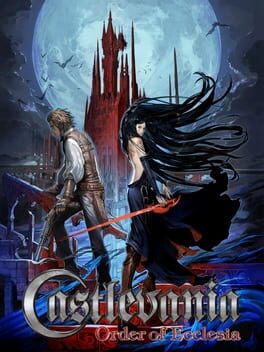
In the absence of the Holy Whip, those who live in fear of Dracula seek a replacement, which takes the form of the Order of Ecclesia, an organization that holds the secret to manipulating Glyphs. Shanoa, a young woman possessed with a unique ability to channel Glyphs, is chosen as our protector. This is her destiny and the story of the sacred Order of Ecclesia. Use the brand new Glyph system with over 100 different attack combinations to battle Dracula and his minions throughout 20 explorable areas! Take part in side quests and collect items to power up! Experience a gripping storyline featuring new characters!

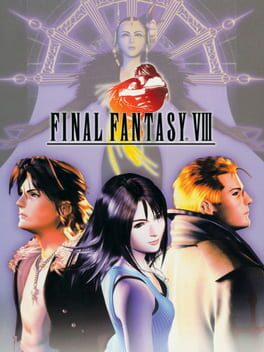
Role-playing (RPG) / Adventure / Card & Board Game / Fantasy / Science fiction
Final Fantasy VIII is the eighth main installment in the Final Fantasy series. The gameplay makes a departure from many series standards. While it still uses the Active Time Battle system, it deviates from the series' traditional means of boosting a character's power via leveling, although levels are not completely abandoned as they were in Final Fantasy II. In addition, it does not have a Magic Point-based system for spell-casting. Instead, magic is collected, drawn, and created from items, and is used to power up the characters via the junction system.