
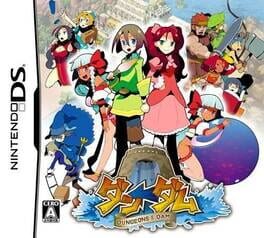
Dun-Dam: Dungeons & Dam is an Action game, developed by RideOn and published by Acquire, which was released in Japan in 2009.
Screenshots
Featured in
Dun-Dam: Dungeons & Dam is an Action game, developed by RideOn and published by Acquire, which was released in Japan in 2009.
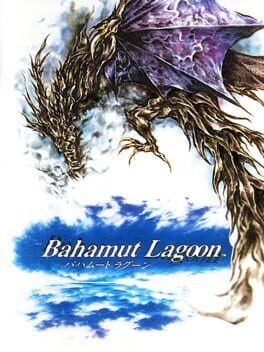
Role-playing (RPG) / Strategy / Turn-based strategy (TBS) / Action / Fantasy
Bahamut Lagoon combines RPG mechanics with squad-based combat. Characters have HP, MP (SP for fighter characters), EXP, equipment, stats and class-specific, SP-draining special elemental abilities very much like traditional console RPGs. The player can explore his surroundings, talk to people and visit shops when not in battle, though to a limited degree as there is no world map and no way to leave the current area. The game's core is its turn-based battles fought on a 2d grid. Characters are assembled into parties of four and the player allowed a maximum of six parties, which are usually well outnumbered. The two opposing sides act in alternating turns so that each party can move once and/or attack once a turn. Attacks are divided into distant and close-up combat. In the former, a party uses a special ability (e.g. casting fireballs, throwing lightning, healing allies) of one of its members at a distance. The range and possible area of effect damage vary per ability. If the attacking party has two or more characters with the same ability, they join in the action to multiply its effectiveness. Distant combat results in less money and generally less damage, but the target cannot retaliate. Distant attacks can also affect the field; fire and ice ignite or extinguish forests and melt or freeze ice, etc. Close-up, each unit in two adjacent opposing parties can act once. Very much like Final Fantasy SNES combat, they can attack an enemy, use an item or a special ability (though these can't be combined and most only affect one target instead of all) or defend. Dragons are the player's ace in the hole. They have their own stats and gain experience like normal characters do. In battle, each party has a dragon attached to it and draws a large portion of its strength from that of its dragon: if a party's dragon is slain, the party will lose the ability to use special attacks and class-specific abilities for the remainder of the map. The beast acts as a very powerful autonomous unit that moves after its party does and it cannot be controlled beyond very simple commands, e.g. "Come!" Out of battle, dragons will eat anything and raising them by feeding them items is an important part of the game. Feeding can improve their stats as well as affect their behavior on the field, and the dragons develop into new forms as they grow. The player can change the characters in each of the parties, their formation as well as what dragon represents them at will.
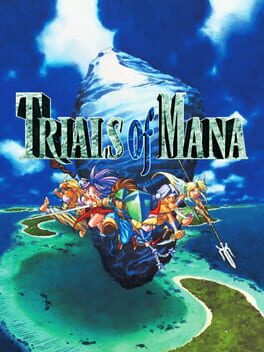
Role-playing (RPG) / Adventure / Action / Fantasy
Trials of Mana is the third installment of the Mana series, developed by Square under the direction of series creator Koichi Ishii. The game takes place in a new world where, once again, the Mana Tree is under threat from an ancient evil thought sealed away. Players choose three from among six heroes as the chosen wielder of the Mana Sword and their two companions on the journey to claim the holy blade and preserve what remains of the Mana power.
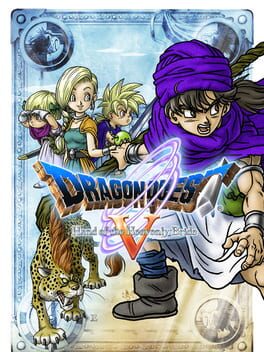
Role-playing (RPG) / Adventure / Action / Fantasy
Dragon Quest V uses basic role-playing video game mechanics seen in the rest of the series, which includes leveling up by gaining experience points through battle, first person turn-based battles, and equipping weapons and armor. Something new to the Dragon Quest series is the ability to tame monsters into the player's party. The monsters can be used in battle and level-up like the human characters. Monsters sometimes request to join the Hero after battles if the party is strong enough. There are a total of 71 monsters that are capable of joining the Hero's party
Role-playing (RPG) / Adventure / Action / Fantasy
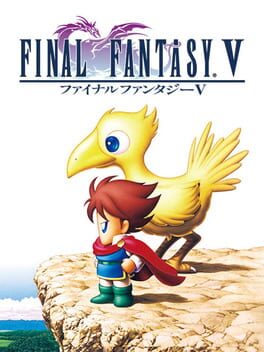
Final Fantasy V is a fantasy role-playing video game developed and published by Square in 1992 as a part of the Final Fantasy series. The game first appeared only in Japan on Nintendo's Super Famicom (known internationally as the Super Nintendo Entertainment System). It has been ported with minor differences to Sony's PlayStation and Nintendo's Game Boy Advance. An original video animation produced in 1994 called FINAL FANTASY: Legend of the Crystals serves as a sequel to the events depicted in the game. It was released for the PlayStation Network on April 6, 2011, in Japan. An enhanced port of the game, with new high-resolution graphics and a touch-based interface, was released for iPhone and iPad on March 28, 2013, and for Android on September 25, 2013. FINAL FANTASY V has been praised for the freedom of customization that the player has over the characters, achieved through the greatly expanded Job System. Despite being released only in Japan, the Super Famicom version sold more than two million copies. The PlayStation version has earned "Greatest Hits" status, selling more than 350,000 copies.
Role-playing (RPG) / Action / Fantasy
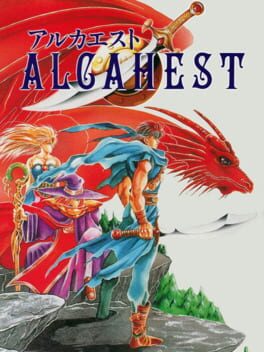
Alcahest is an action role-playing game with a top-down perspective that plays similar to The Legend of Zelda. It is divided into 8 stages that are progressed by finding items that aid the protagonist Alen on his quest, and end with a boss battle. After specific boss fights, the player will gain the abilities of one of the four elemental Guardians. Alen will also find five allies that will join him at predetermined points of some levels. They are the young wizard Garstein, the princess Elikshil, the knight Sirius, the android Magna and the shape-shifter dragon goddess Nevis. Though they cannot be controlled directly, allies will attack and use special moves when the corresponding button is pressed.
Role-playing (RPG) / Turn-based strategy (TBS) / Tactical / Action / Fantasy
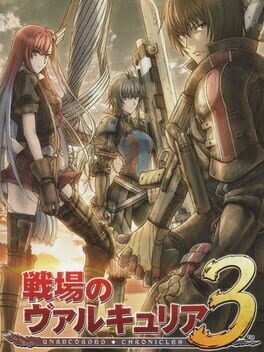
Senjou no Valkyria 3: Unrecorded Chronicles, usually referred to as Valkyria Chronicles III, is a tactical role-playing game developed and published by Sega for the PlayStation Portable. It is the third game in the Valkyria Chronicles series and was released on January 27, 2011 exclusively in Japan. An expanded version of the game, subtitled Extra Edition was released in Japan on November 23, 2011. The game features an opening song Moshimo Kimi ga Negau no Nara sung by Japanese singer May'n. Occurring in the same time frame as the first game, Valkyria Chronicles III is a side story that follows the exploits of an unwanted and castigated Gallian Army squad during the Imperial invasion of 1935. Contrasting the previous games' bright outlook and recognition for their protagonists, Valkyria Chronicles III explores the themes of being outcast and the search for redemption. As described by its catchphrase, the game tells "The tale of nameless soldiers who, on the verge of despair, changed history." The game was the first in the series to not officially be translated into English by Sega. However, an unofficial fan translation for the Extra Edition was eventually released in December 2013.

Role-playing (RPG) / Adventure / Action / Fantasy
King's Field is a first-person 3D RPG which takes place in the underground tomb of the kingdom of Verdite. The player takes the role of Jean who explores 3D dungeons all alone in this dark fantasy-world with his sword and magic spells. A lot of challenges await Jean. The player will gain a great sense of accomplishment when overcoming tough situations in the game.
Role-playing (RPG) / Strategy / Turn-based strategy (TBS) / Action / Fantasy
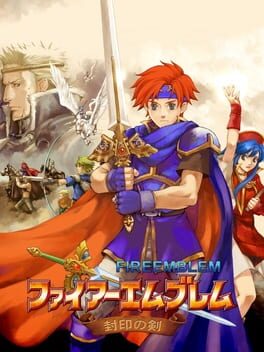
Fire Emblem: The Binding Blade is a Japanese tactical role-playing game developed by Intelligent Systems and published by Nintendo. The game was released on March 29, 2002 in Japan, is the sixth game in the Fire Emblem series, and the first of three games in the series that have appeared on Nintendo's Game Boy Advance handheld. It was the last Fire Emblem game to be released exclusively in Japan until the release of Fire Emblem: New Mystery of the Emblem. The Binding Blade was followed by a prequel, Fire Emblem: The Blazing Blade, set twenty years earlier.