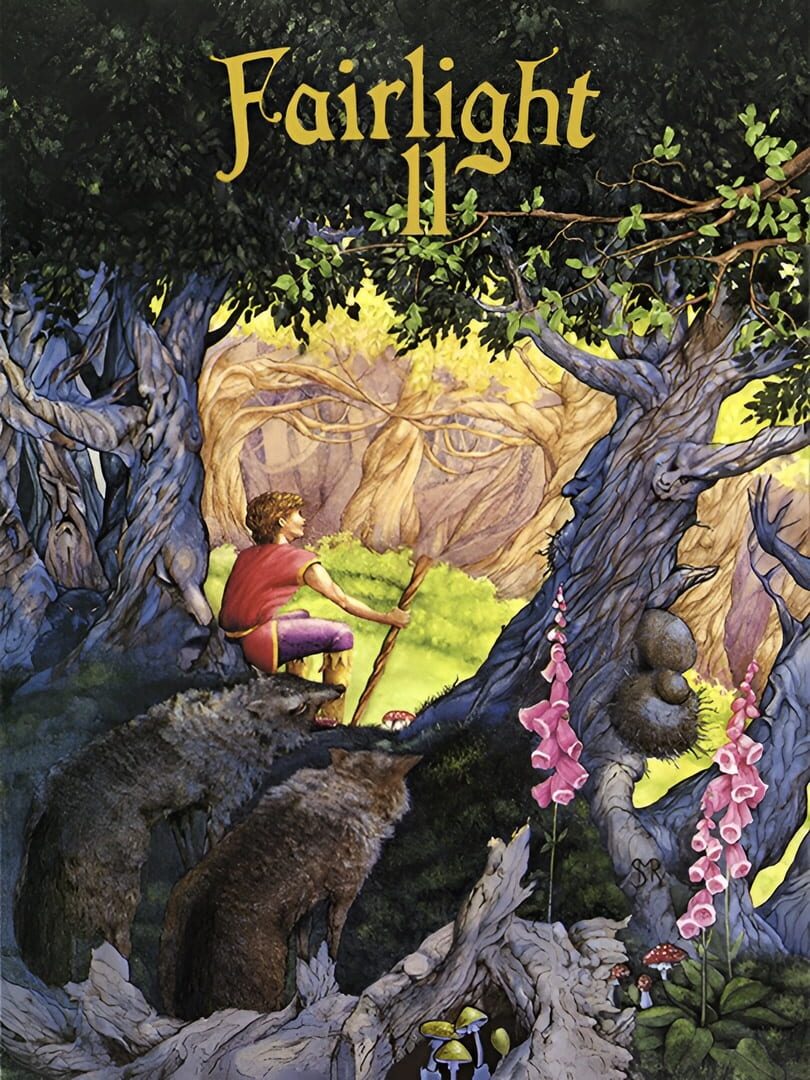
An isometric 3D action-adventure and the second series in the Chronicles of the Land of Fairlight.
Featured in
An isometric 3D action-adventure and the second series in the Chronicles of the Land of Fairlight.
Platform / Puzzle / Role-playing (RPG) / Action / Fantasy
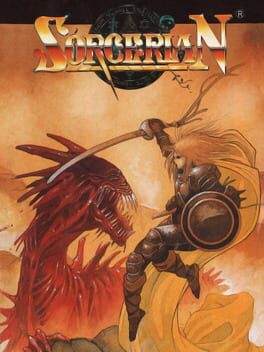
Sorcerian is a side-scrolling action-RPG. The player can create up to ten characters, from whom up to four members can be present in a party at the same time. Each character is highly customizable, with four different classes/races (fighter, wizard, elf, and dwarf) and over 60 possible jobs/occupations (ranging from clown to exorcist) available for them to perform; each has its own strengths and weaknesses, affecting the seven primary attributes (strength, intelligence, protection, magic resistance, vitality, dexterity, and karma) in different ways, as well as different equipment limitations. The player can choose from fifteen different scenarios, or quests, to play through in the order of their choice. The party must battle enemies and perform tasks within the given levels to clear each scenario, before moving onto another scenario of their choice. The player controls the entire party at the same time, with all four members running in a line, jumping in sequence, and attacking in unison. The party members follow behind in a manner similar to the Options in the arcade shooter Gradius (1985). Sorcerian also employs class-based puzzles, such as using a high-strength character to force open doors. All the characters have a default starting age of 16. Each time a player begins a new scenario, a year passes by, while additional time passes by in towns as a character goes through training or enchants items. The characters age at different rates depending on their race, with humans reaching old age at 60, dwarves at 100, and elves at 200. Upon reaching old age, for every year that passes, a character can die permanently at a random time. There is also an “Advance Time” to speed up the flow of time. Another new feature of Sorcerian was its episodic format that extended across various expansion packs. Besides the default fifteen scenarios that come with the game, there were a number of additional scenario packs released. The aging system was created with the additional scenario packs in mind.
Puzzle / Role-playing (RPG) / Adventure / Fantasy / Historical
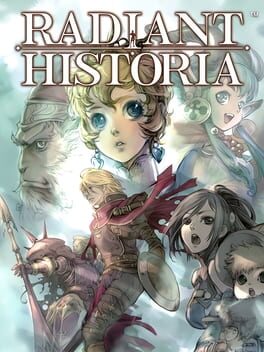
In the midst of an unending war for dominance between two super-powers, Special Intelligence Agent Stocke is assigned to a routine escort mission that goes horribly awry. However, wielding a mysterious book called the White Chronicle, Stocke discovers a way to travel to the intersection of time itself: Historia. With this power in his hands, he must travel back and forth through key events and an entirely alternate timeline to right the world's ill-fated course. The lives of his companions, the fate of nations, and the resolution of an impending disaster that now threatens the land all depend on Stocke's ability to discern the one "true" history.
Puzzle / Adventure / Action / Fantasy
The Legend of Zelda: Link's Awakening is the first title in the series to be released on a handheld system and the only Zelda title on the original Game Boy. The gameplay is mostly similar to its predecessor with a top-down perspective, however there are short sections in dungeons where the game switches to a side-scrolling view with platforming elements. For this new adventure, Link must go onto each of the 7 temples to retrieve a musical instrument that will help awaken the Wind Fish. Along the way, he must search the land and uncover hidden treasures and items that will allow him to progress on his journey. Since its release, Link's Awakening has been popular among fans and critics.
Point-and-click / Puzzle / Adventure / Fantasy / Thriller
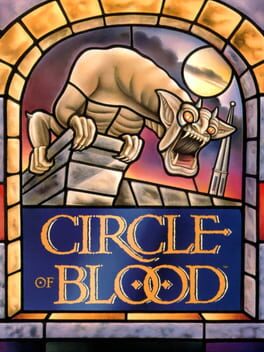
Circle of Blood is a 2D adventure game played from a third-person perspective. The player uses a point-and-click interface to interact with the environment and to guide protagonist George Stobbart through the game's world. To solve puzzles and progress in the game, the player collects items that may be combined with one another, used on the environment, or given to non-player characters. The protagonist converses with NPCs via dialogue trees presented through "conversation icons" to learn about the game's puzzles and plot. Clues and other information are obtained by clicking on items in the inventory and on objects in the environment. The player navigates with a map, to which new locations are added as the story unfolds. Unlike in most adventure games at the time, the protagonist's death is possible, after which the player starts from the last save point.
Puzzle / Adventure / Action / Fantasy
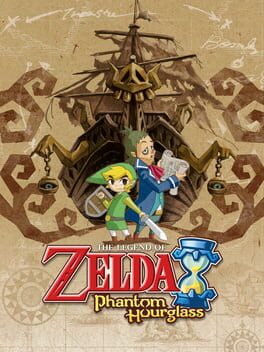
The Legend of Zelda: Phantom Hourglass is the first Zelda game for the Nintendo DS and a direct sequel to The Wind Waker. The art direction is the same cel-shaded style as the Wind Waker but is displayed from a classic top-down perspective. The gameplay is structured similarly to other games in the series and is divided into two major gameplay sections: sailing between islands and exploring the islands and their dungeons on foot. The touch screen is used to make Link move and attack instead of buttons, you can also make notes of secret treasures and items on the map simply by writing them down. The game received critical acclaim from reviewers, who agreed that the game was a worthy sequel to The Wind Waker.
Puzzle / Adventure / Action / Fantasy
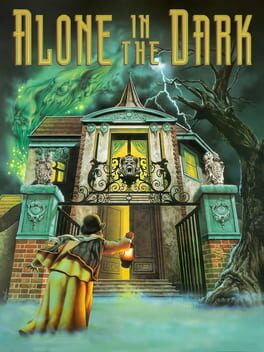
Alone in the Dark is one of the first survival horror games and the first to utilize 3D models superimposed on pre-rendered backgrounds, which would become a key inspiration for upcoming horror games at the time, like the Resident Evil franchise. The player can use various weapons, such as pistol, rifle, swords and knives, though it is possible to kill most enemies with melee attacks. Some opponents can be beaten by solving a particular puzzle, while a significant number of opponents cannot be killed at all or only with certain weapons.
Puzzle / Adventure / Action / Fantasy
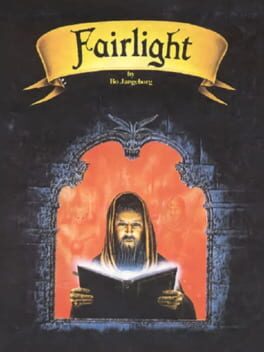
The player controls an adventurer named Isvar that can be moved in a castle which is not only three-dimensional isometric view, but realistic in terms of the way objects behave. Each object has its own physical properties and resultant characteristics in terms of how much else can be carried alongside it. Certain objects have special uses (e.g. keys open certain doors), and there is a puzzle element to the game to discover how some of these objects relate to the world in order to help the player solve the game. In addition to carrying objects, they could also be stacked on top of each other to enable Isvar to climb up to rooms above him or to reach important objects perched high above on platforms. There are also a number of secret areas in the castle that are not visually obvious to the player and can only be discovered through exploration. During Isvar's exploration of the castle he is accosted by its guards and monsters - trolls, monks, guards, tornadoes, man-eating plants, bubbles, etc. all of which weaken Isvar's energy. The castle also contains food and magical potions which will restore his health. In addition, certain game objects can affect the enemies, (by either killing them, distracting them, or freezing them, depending on the object and the type of enemy they are used upon) Once defeated in combat a guard disappears leaving only his helmet behind. Helmets can be picked up and carried by Isvar, and placed somewhere else out of harms way (or into the path of a tornado, that destroys any object it touches). If Isvar leaves the room, the guard will regenerate from the helmet.
Platform / Puzzle / Role-playing (RPG) / Action / Fantasy
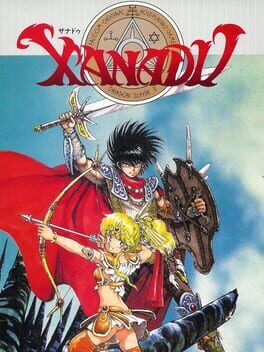
In Legend of Xanadu, the player controls a young adventurer named Areios. Monsters attack his homeland, and he is forced to flee. After traveling by ship and arriving at the town Bolda, Areios finds out that strange things have been happening in the North Cave near the town. His first mission will be to venture to the North Cave and investigate the matter. Of course, soon Areios finds himself involved in a battle against sinister forces, and commences the longest and most dangerous adventure of his life! The game is an action RPG set in the Dragon Slayer universe, with a gameplay style similar to Falcom's other popular series, Ys. Controlling Areios, the player explores the top-down world, visiting towns and fighting monsters in vast outdoor areas and dungeons. Like in Ys series, it is sufficient to "bump" into a monster in order to inflict damage. Areios gains hit points and becomes stronger by sustaining damage from enemies and resting. His weapons and armor can gain experience and level up. In many areas, companions will join Areios and help him in combat, controlled by the computer AI. The game is divided into chapters; the final stage of each chapter is a side-scrolling/platform level, which Areios has to navigate in order to reach the boss enemy, defeat him, and end the chapter. In such stages, the combat turns into a more familiar action-oriented style, with the player being required to press buttons in time in order to execute attacks and jump. There is a day/night cycle in the game, manifested not only in graphical changes, but also in the schedules of townspeople: when it's dark, people will return to their homes and go to sleep, etc.