Developed by Tose for Bandai.
Role-playing (RPG) / Hack and slash/Beat 'em up / Action / Fantasy
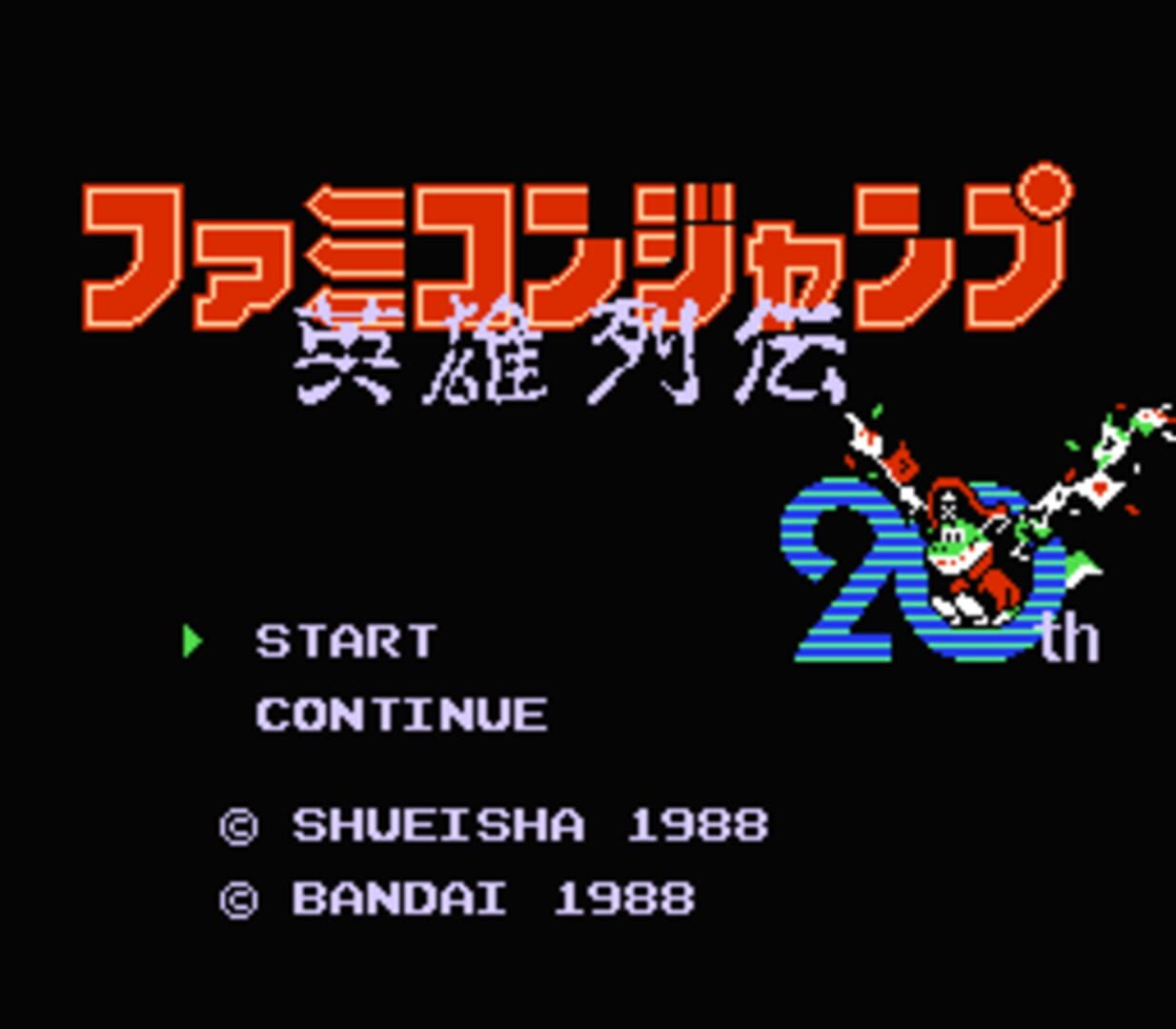
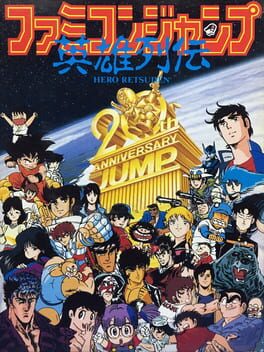
Famicom Jump: Hero Retsuden is a 1989 role-playing video game for the Family Computer published by Bandai. The game commemorates the 20th anniversary of Shueisha's manga anthology Weekly Shōnen Jump. Set in a world that brings together many of the long-running titles that had appeared in the magazine, both of the past and present at the time of its release. The game consists of a main character wandering and encountering the many Jump heroes as they try to save the world from an alliance of many of the most powerful and evil of the Jump villains.

Shooter / Platform / Role-playing (RPG) / Action / Fantasy
He has been summoned by Daikak, the great leader of the Summit Temple, to stop a war between factions of warlords. The player explores temples and defeats enemies like ghosts, ninja, and feral beasts. There are also villages to explore and people to talk to as the player assembles clues on who desecrated his home town's temple and killed its guardians. The quest takes the player across medieval Japan and to the Underworld. Unlike most games, death does not lead to game over or even a loss of money or experience points. Instead, the player has to use a password in order to resurrect themselves from the dead. The game is a port of the Japanese game Kujaku-ou, removing the anime license.

Role-playing (RPG) / Hack and slash/Beat 'em up / Adventure / Action / Science fiction
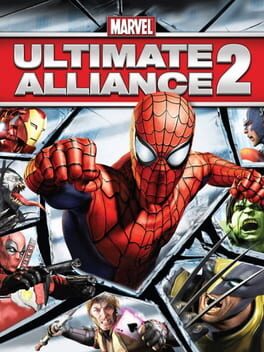
Marvel: Ultimate Alliance 2 is the second game in the Marvel: Ultimate Alliance series, and is loosely based on the events of the Civil War comic book story line. It brings with it a larger roster of heroes and villains to play as, as well as more ways to utilize your team in battle.

Shooter / Racing / Role-playing (RPG) / Action / Fantasy
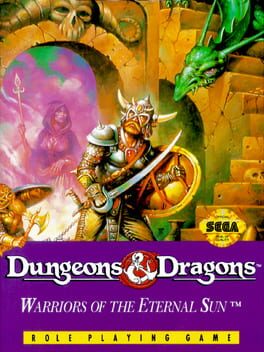
Dungeon & Dragons: Warriors of the Eternal Sun is set in the world of Mystara, a setting of the Dungeons & Dragons game. The characters find themselves in a strange, red-hued world in which the horizon slopes upward in all directions, eventually vanishing into a crimson haze at the limits of sight. Their mission is to find and make allies in this new world or else the kingdom and its culture will perish. The player leads a party of four characters (either the default party or one that the player has created). Characters and races can be chosen from the normal D&D options. The gameworld is viewed from an isometric perspective and the characters can roam around in realtime. Battles are turn based. Like most role-playing games, the gaming experience focuses on exploration, inventory management and character development.

Role-playing (RPG) / Hack and slash/Beat 'em up / Adventure / Action / Fantasy
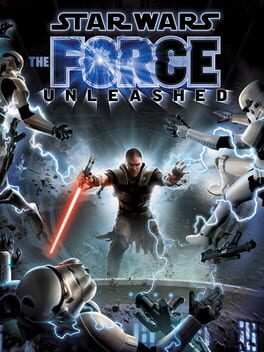
Star Wars: The Force Unleashed is a Star Wars video game that takes place between the films Star Wars: Episode III Revenge of the Sith and Star Wars: Episode IV A New Hope. It is the centerpiece of the Star Wars: The Force Unleashed multimedia project, Star Wars: The Force Unleashed completely re-imagines the scope and scale of the Force and casts players as Darth Vader’s "Secret Apprentice," unveiling new revelations about the Star Wars galaxy seen through the eyes of a mysterious new character armed with unprecedented powers. The game showcases Digital Molecular Matter (DMM), an extremely detailed and realistic material physics engine developed by Pixelux, and Euphoria, a realistic bio-mechanical A.I. engine by NaturalMotion

Platform / Role-playing (RPG) / Hack and slash/Beat 'em up / Action / Fantasy
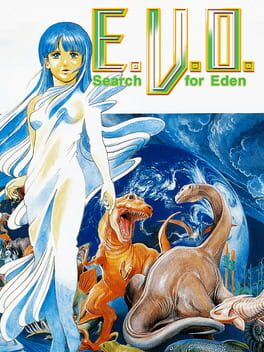
The storyline of E.V.O.: Search for Eden follows the same patterns as modern Evolution theories. The players first controls a prehistoric sea organism, and fights to gain evolution points with which he can improve his fish's body parts and upgrade his attack/defense abilities. The gameplay is not completely linear, which means that certain choices of paths and stages will affect the player's success. The game is composed of a series of stages, in which the sea organism slowly evolves into an amphibian, and later a land-only creature. The physical changes are fairly scientifically accurate which gives the game a semi-educational purpose as well.

Role-playing (RPG) / Hack and slash/Beat 'em up / Action / Fantasy
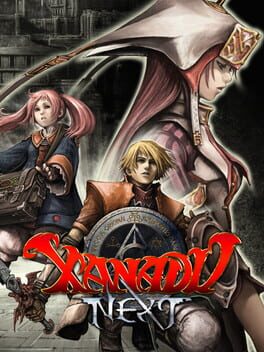
Xanadu Next is an exploration-centric action RPG from Nihon Falcom, the acclaimed creators of the Ys and The Legend of Heroes RPG franchises. A late entry in their immensely popular Dragon Slayer series and a spiritual follow-up to the late ‘80s cult classic Faxanadu, Xanadu Next puts players in the shoes of a gravely injured knight given a new lease on life through ancient magic who must now seek a legendary sword called “Dragon Slayer” to ensure his survival.

Role-playing (RPG) / Hack and slash/Beat 'em up / Arcade / Action / Fantasy
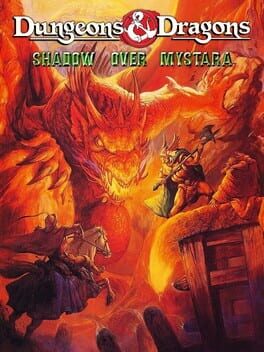
Shadow over Mystara is a side-scrolling beat-'em-up with role-play elements that make it stand out from other similar games released at the time. In addition to the original four heroes found in its predecessor, Dungeons & Dragons: Tower of Doom (Cleric, Dwarf, Elf and Fighter), Shadow of Mystara adds a Thief and a Magic-User to the selection. Furthermore, with the inclusion of two separate versions of each character's sprite set, the game allows up to two players to select the same character (in Tower of Doom each of the characters could only be selected once), effectively giving the game 12 "different" characters to choose from. The two Clerics and two Magic Users also have subtle differences within their spell books. The controls are using four buttons: Attack, Jump, Select (brings up a small inventory ring around the character allowing the player to choose what item is set in the Use slot) and Use. The Cleric, Elf and Magic-User also have two extra rings for their spells, with the Jump button used to switch from ring to ring. While the game uses the same kick harness as the previous game, the Select and Use buttons are reversed. Shadow over Mystara also introduced a selection of special moves which are executed by moving the joystick and tapping the buttons in certain combinations, in a way similar to the Street Fighter series. The characters (except for the Magic-User) have a Dashing Attack as well as a Rising Attack which can be used to combo monsters or even juggle them in the air. Most characters (again, with the exception of the Magic-User and also Cleric) also have a Megacrush, a move common to nearly all of Capcom side-scrollers, which damages all enemies standing close enough to the character but in turn also damaging the player themselves.
Fighting / Role-playing (RPG) / Hack and slash/Beat 'em up / Action / Fantasy
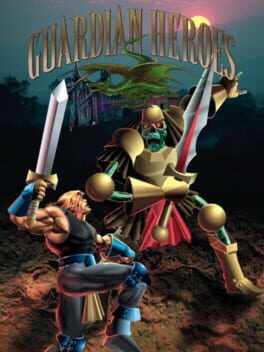
Guardian Heroes is a 2D side-scrolling beat 'em up video game with RPG elements developed by Treasure and released in 1996 for the Sega Saturn. A band of young adventurers begin a quest to change the fate of their kingdom after an enchanted sword falls into their hands. Players may choose between four characters, each with their own unique fighting style, and embark on many different paths in the game's story mode. The game also includes a special versus mode wherein up to six players can compete against each other in arena combat.