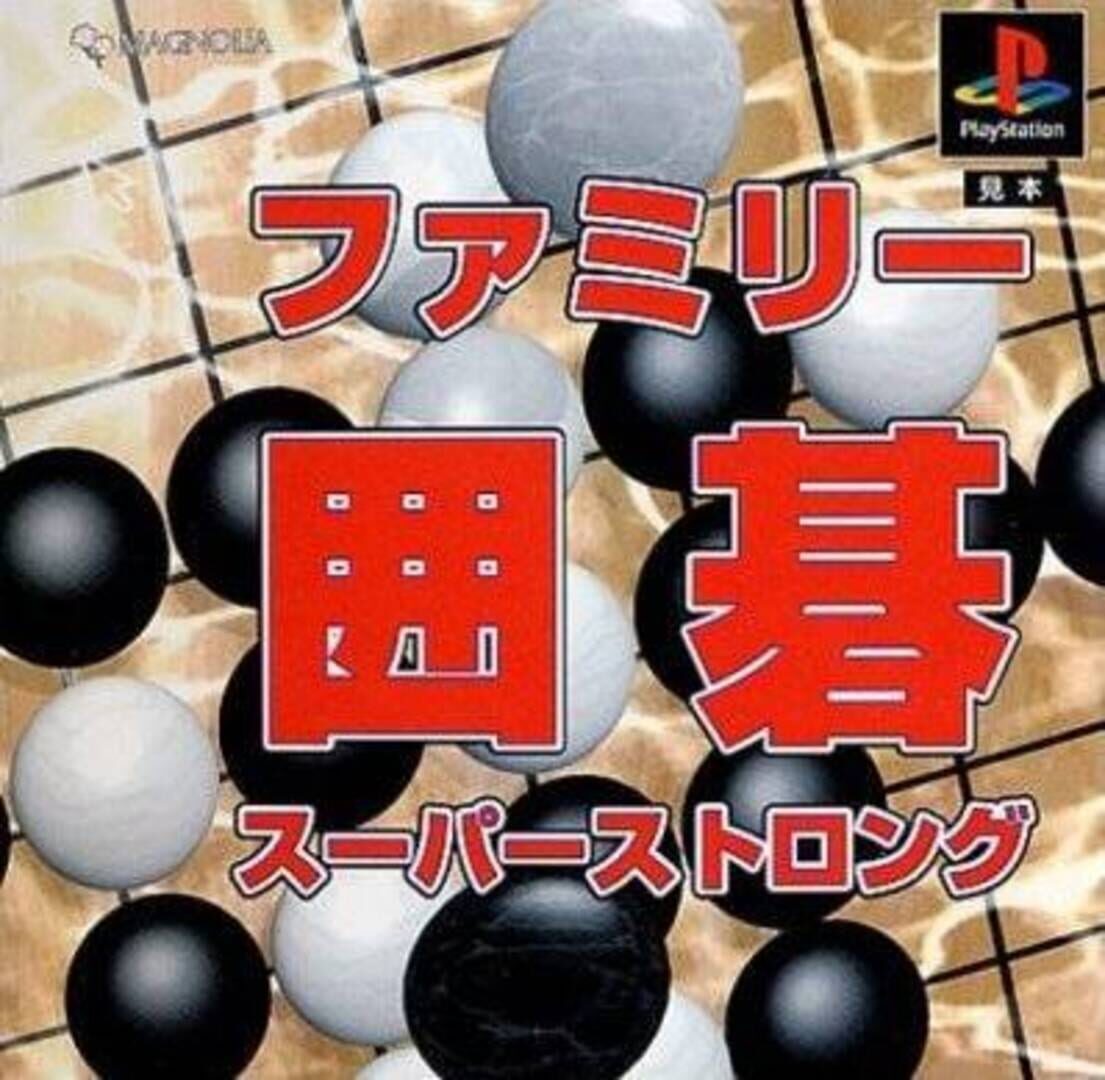
A PlayStation go game from Magnolia.
Featured in
A PlayStation go game from Magnolia.
Strategy / Card & Board Game / Historical / Warfare
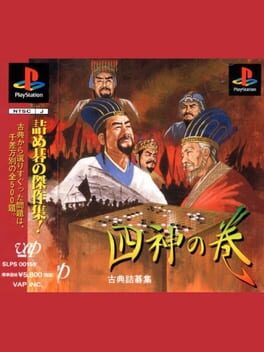
Koten Tsumego Shuu - Shijin no Maki (Also known as Shikami no Maki or Koten Tsugoshuu: Shijin no Kan) is a go game in which the player to gain territories have to play go games, and defeat the opponents that way. Depending of the move the game will end, if the move is the right one the match will continue.
Sport / Quiz/Trivia / Card & Board Game
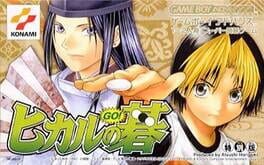
The first game based on the eponymous anime series, which centers on the strategic board game Go.
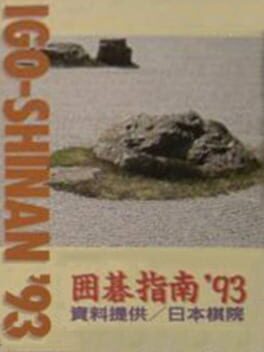
1993 edition of the popular go teaching game.

Puzzle / Card & Board Game / Survival
Taikyoku Igo: Heisei Kiin is a board game, developed and published by Success, which was released in Japan in 2000.
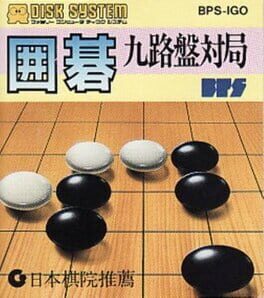
A Japan-only Go game developed and published by Bullet-Proof Software for the Famicom Disk System. Igo: Kyuu Roban Taikyoku ("Go: 9 Row Grid Boardgame") is a Go video game that was originally released for the Famicom Disk System on August 11, 1987 in Japan. It was the first Famicom game developed by Bullet-Proof Software: a development studio operating out of Hawaii that would later be responsible for Nintendo's version of Tetris, among other games. This version of Go is better suited for beginners, as it contains simpler 9x9 grids rather than the regulation 19x19. Igo: Kyuu Roban Taikyoku has a credit for Edge Computing on its title screen; it is assumed some of the game's coding was taken from Edge's C64 game Micro Go.
Puzzle / Strategy / Card & Board Game
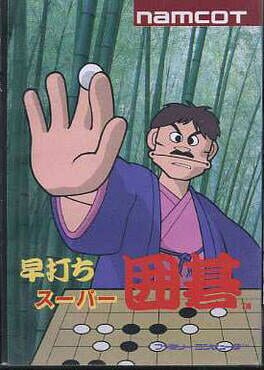
Hayauchi Suupaa Igo (Hayauchi Super Go) is a game of "Go" for the Nintendo Famicom. Released only in Japan.
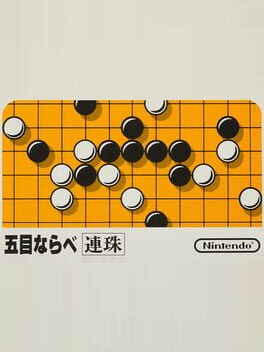
A board game simulation for the Famicom. The goal is to line up five pieces in a row. Gomoku Narabe Renju is a video game simulation of a traditional Eastern board game that uses the board and pieces from the popular board game Go. It plays a lot like the American board game Connect Four, in which the goal is to line up a series of five tiles horizontally, vertically or diagonally before the other player can do the same. Two players take it in turns to place a single Go tile on the board, attempting to craft their own lines while strategically placing tiles that blocks the opponent from finishing theirs. While the normal board game is simply referred to as "Gomoku Narabe" (Five Pieces in a Row, occasionally translated as Gobang), the Renju modifier is an additional rule that makes it harder for the player with the black pieces to win. Because the black player always begins each game (like how the white player always begins each game of Chess), this additional rule is thought to even the playing field. The rule is that the black player will lose if they build a line of six or more pieces: this counts as going "overlong" and counts as a loss. Gomoku Narabe Renju is the fourth video game ever released on the Famicom, and the first original game produced for the system (the previous three - Donkey Kong, Donkey Kong Jr. and Popeye - were all ports of arcade games). It was released the same day (August 27th, 1983) as the Famicom version of Mahjong, another board game adaptation.
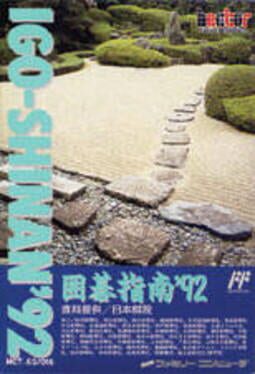
The third release in the popular Famicom Go series.