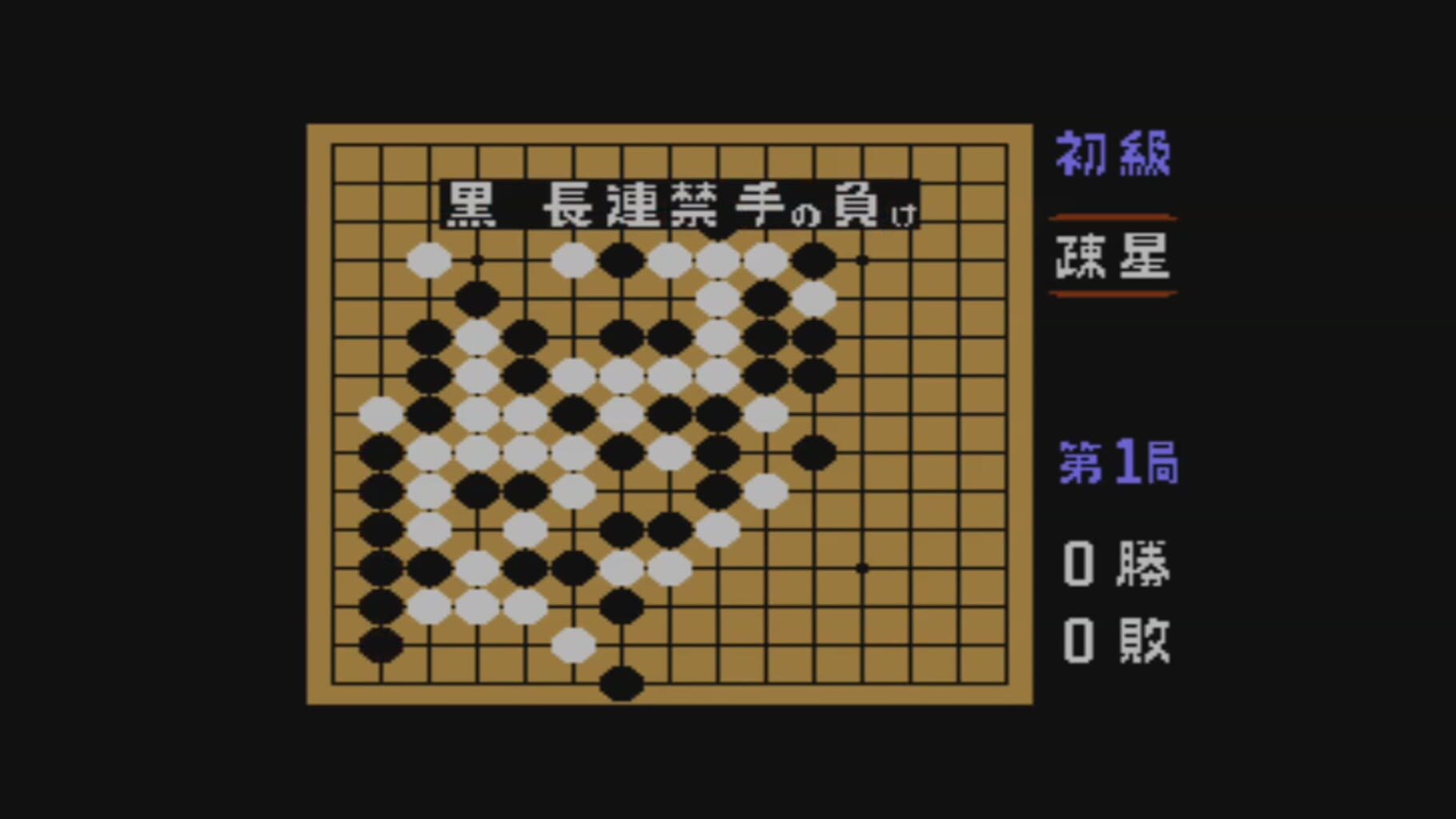
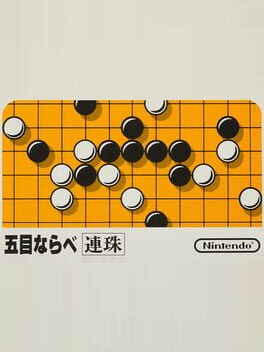

A board game simulation for the Famicom. The goal is to line up five pieces in a row. Gomoku Narabe Renju is a video game simulation of a traditional Eastern board game that uses the board and pieces from the popular board game Go. It plays a lot like the American board game Connect Four, in which the goal is to line up a series of five tiles horizontally, vertically or diagonally before the other player can do the same. Two players take it in turns to place a single Go tile on the board, attempting to craft their own lines while strategically placing tiles that blocks the opponent from finishing theirs. While the normal board game is simply referred to as "Gomoku Narabe" (Five Pieces in a Row, occasionally translated as Gobang), the Renju modifier is an additional rule that makes it harder for the player with the black pieces to win. Because the black player always begins each game (like how the white player always begins each game of Chess), this additional rule is thought to even the playing field. The rule is that the black player will lose if they build a line of six or more pieces: this counts as going "overlong" and counts as a loss. Gomoku Narabe Renju is the fourth video game ever released on the Famicom, and the first original game produced for the system (the previous three - Donkey Kong, Donkey Kong Jr. and Popeye - were all ports of arcade games). It was released the same day (August 27th, 1983) as the Famicom version of Mahjong, another board game adaptation.
Quiz/Trivia / Card & Board Game / Action / Party
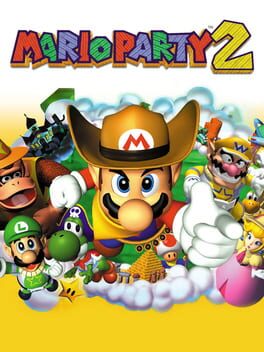
Mario and the gang are back for another round of Bowser-bashin' party action! Watch as your favorite Nintendo characters don different duds for each of the five all-new Adventure Boards! A slew of new tricks and devices bring new levels of challenge and excitement to board game play. New board maps, new Mini-Games, new action and new surprises means a whole new batch of fun! Get ready to unleash your best Hip Drops, hammer swings and high-flying high junks for another round of frenzied multi-player action!

Adventure / Card & Board Game / Fantasy / Kids
Your goal in life is to become a Pokemon Card Master. In order to do that, you must pick a deck from three starter packs of cards based on Charmander, Squirtle, and Bulbasaur and travel to the eight card clubs and defeat their leaders. Along the way, you will challenge many players to collect new cards and the helpful Professor Mason will aid you by giving you cards as well. While becoming a card master is a laudable accomplishment, the real goal of the game is to collect all of the cards over 200 in all. If you want to collect all of the cards, you must play human opponents in the Pop mode to get a chance to earn rare cards. All of the complexity of the real-world game has been captured here. Play Pokemon Trading Card Game and become a Pokemon Card Master.

Simulator / Strategy / Card & Board Game / Non-fiction
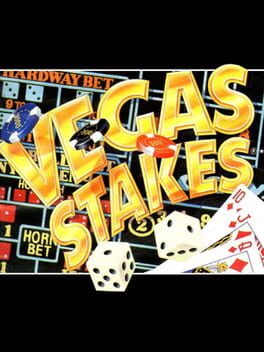
In this Casino simulator, you have decided to be a high roller. Followed by four friends, their main objective is to risk the Lady Luck and become a high roller in Las Vegas, place of luxurious and refined gambling houses. With only $1000 in your pocket, feel free to explore five different casinos (The Hideaway, Golden Paradise, Buffalo Head, The 2020 and later, the Laurel Palace), making the possible and impossible to increase its banking account and reach the goal of $ 10 million. To be successful in this millionaire-journey, you'll have different options of how to earn lots of money: Blackjack, Slots, Roulette, Craps or Seven-Card Stud Poker. Randomly, some people will chat with you, asking for some borrowed money, selling value objects and many other goodies: depending of the chatting, you'll be able to gain benefits (money increased) or damages (have half of its money stolen). During this tough "mission", a friend (chosen by you in the Casino room) will help you, explaining in details the rules of the current game or offering some wager advices.

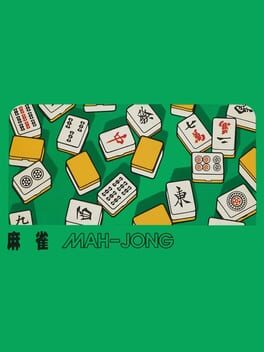
Mah Jong is a game based on the popular Chinese table game of the same name. It was released by Nintendo for the Famicom and Famicom Disk System, and was one of the earliest titles for both systems. The game allows for two players to play at once, which is two less than the regular Mahjong game. The game was released for the NES in Hong Kong only, featuring an English manual.

Strategy / Card & Board Game / Historical / Warfare
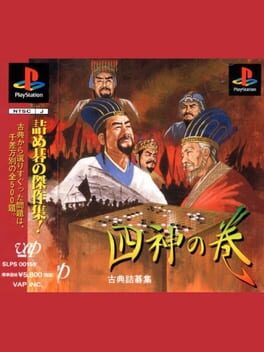
Koten Tsumego Shuu - Shijin no Maki (Also known as Shikami no Maki or Koten Tsugoshuu: Shijin no Kan) is a go game in which the player to gain territories have to play go games, and defeat the opponents that way. Depending of the move the game will end, if the move is the right one the match will continue.

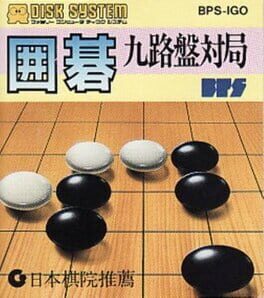
A Japan-only Go game developed and published by Bullet-Proof Software for the Famicom Disk System. Igo: Kyuu Roban Taikyoku ("Go: 9 Row Grid Boardgame") is a Go video game that was originally released for the Famicom Disk System on August 11, 1987 in Japan. It was the first Famicom game developed by Bullet-Proof Software: a development studio operating out of Hawaii that would later be responsible for Nintendo's version of Tetris, among other games. This version of Go is better suited for beginners, as it contains simpler 9x9 grids rather than the regulation 19x19. Igo: Kyuu Roban Taikyoku has a credit for Edge Computing on its title screen; it is assumed some of the game's coding was taken from Edge's C64 game Micro Go.

Card & Board Game / Educational
Minna Atsumore! Igo Kyoushitsu is a learning game that teachs players how to play go, the game features hundreds of different situations and depending of the player movement the game will say it the movement is the right one or not. The game features different background images.

Puzzle / Arcade / Comedy / Kids
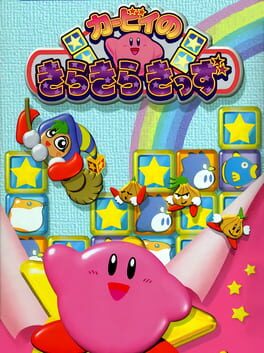
Kirby's Star Stacker is the official English title given to a puzzle Kirby game that was originally released on Japan's Super Famicom system on February 1, 1998. It is a remake of Kirby's Star Stacker, which is known in Japan under exactly the same name as the remake. The game was originally released as a new title for the Nintendo Power flash RAM service, but was released in standard cartridge form a year later. It was intended for international release, but the SNES's lifespan ended in North America and Europe before the game could be localized in either region. The standard cartridge release of the game also came out in the exact year of the SNES's discontinuation in North America, further compounding its isolation. The game was the final title in the Kirby series officially published for Super Famicom. A North American and European release would eventually be seen through the Nintendo Switch Online service in September 2023.