

Dizzy's back! In Fast Food, Dizzy must run around mazes scoffing loadsa food - chickens, burgers, pizzas, milkshakes but there's a complication...look out for the monsters.
Screenshots
Featured in
Dizzy's back! In Fast Food, Dizzy must run around mazes scoffing loadsa food - chickens, burgers, pizzas, milkshakes but there's a complication...look out for the monsters.
Puzzle / Strategy / Arcade / Action
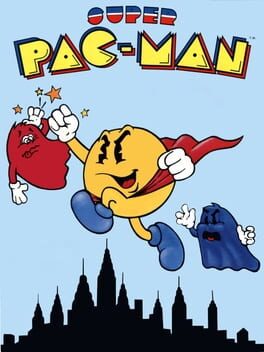
Super Pac-Man is a game in Namco's Pac-Man family, but instead of gobbling up dots, Pac is required to eat fruit and prizes, such as apples, bunches of bananas, doughnuts, hamburgers, fried eggs, ears of corn, sneakers, pieces of cakes, raspberries, limes, cups of coffee, mushrooms, Galaxians, bells, and shamrocks. Most of these items are hidden in passages that have locked doors at either entrance, and in order to unlock the doors, Pac needs to eat the key that is closest to the passage that he wishes to unlock. As usual, ghosts will keep chasing Pac around the maze until he has lost all his lives. However, Pac can enter the warp tunnels at either side of the maze to lose the ghosts quickly. There are two types of power pellets in the maze: green and yellow. Yellow power pellets cause ghosts to turn blue, allowing Pac to eat them for points, whereas green ones cause Pac to enlarge and will also cause the ghosts to become much thinner and wider, allowing him to fly over them. He can also break open the doors without the need of keys. The effects of the pellets, unfortunately, only last for a number of seconds. During the time that he is enlarged, a flashing star will appear besides two boxes that are located in the middle of the maze. The first box will display the current fruit or prize, and the other will display a rotating selection of them. If Pac manages to eat the star when they match there will be a large bonus score. Occasionally, after three or more stages, there will be a bonus stage where Pac automatically gets enlarged. The object of these stages is to eat everything in the maze before the time runs out and, during these stages, there will be no ghosts to pursue him.
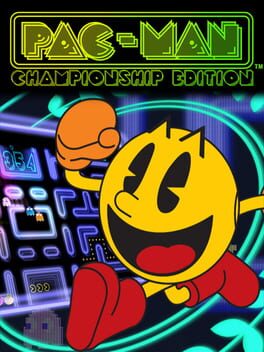
Pac-Man Championship Edition is similar in basic gameplay to the original 1980 Pac-Man: players have to eat dots, while avoiding the four ghosts that roam around the maze. Championship Edition, however, also brings many gameplay differences. The game was designed by Tōru Iwatani, the creator of the classic original 1980 arcade game Pac-Man, and it was Iwatani's final game before his retirement.
Puzzle / Arcade / Action / Educational
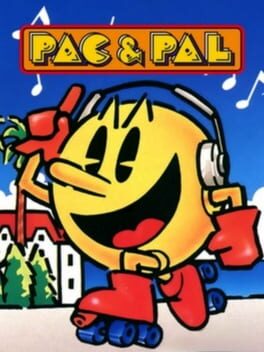
Pac & Pal is an arcade game that was released by Namco on July 30, 1983 exclusively in Japan. It runs on Namco Super Pac-Man hardware, and the object of the game is for Pac-Man to eat all the items before he is caught by the ghosts. Most of the items are fruits from the original Pac-Man game, with a few new additions. Their value varies, starting with cherries at 50 points, and ending with keys from 700 to 5000 points. The items had to first be unlocked by turning over cards distributed around the maze (instead of eating keys like in Super Pac-Man). Very few cabinets still exist today, and this is possibly one of the rarest Pac-Man titles to find in playable format outside Japan.
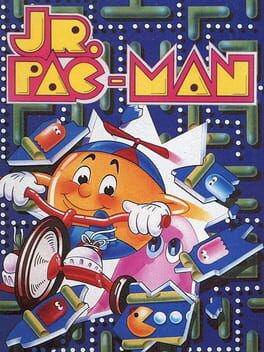
The gameplay of Jr. Pac-Man is similar to that of its predecessors: The player controls the titular Jr. Pac-Man and scores points by eating all of the dots in the maze. Four ghosts roam the maze and attempt to capture him. The player can eat an energizer to turn the ghosts blue, making them vulnerable for a short time and allowing the player to eat them, sending their eyes back to their home base. When all the dots are cleared, a new maze is presented and gameplay resumes.
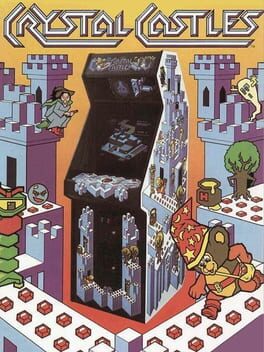
Puzzle / Arcade / Action / Fantasy
Crystal Castles is an arcade game released by Atari, Inc. in 1983. The player controls a cartoon bear by the name of Bentley Bear, who has to collect gems located throughout trimetric-projected rendered castles while avoiding enemies out to get him as well as the gems. Crystal Castles is notable for being one of the first arcade action games with an actual ending, whereas most games of the time either continued indefinitely, ended in what was termed a "kill screen" or simply just restarted from the first level, and to contain advance warp zones.
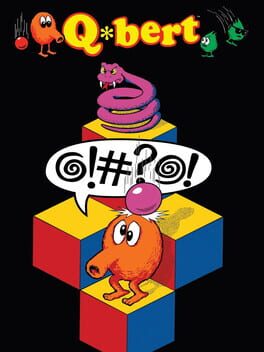
Platform / Puzzle / Arcade / Action / Comedy
Q*bert was a popular arcade game that was released on a large number of consoles in the early 1980s. It was developed and published by Gottlieb, and became their most successful game. The concept serves as a precursor to the isometric platformer genre, where the title character must work to turn all cubes to a certain colour in a psuedo-3D world, made 3D through isometric graphics in the same way that the Penrose Stairs was made. The game was widely successful and has become a highly recognizable brand of the 1980s gaming era.
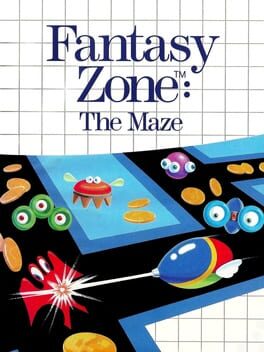
Puzzle / Strategy / Arcade / Action
The evil Menons have returned... in multi-level bases which are hidden in seven different planets! The brave Opa-Opa has been called to battle their evil threat. And joining him in the fight is his younger brother, Upa-Upa. Your Mission: Guide this brave team of brothers through level after level of treacherous mazes. Get the golden coins stolen by the Menon hoard and use them to purchase powerful weapons. The Fantasy Zone is counting on you! Don't let them down.
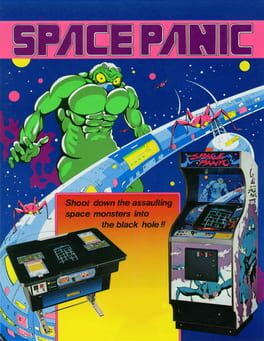
Platform / Puzzle / Arcade / Action / Science fiction
A game remarkably similar to Lode Runner, you play an astronaut with limited oxygen (time) chased around by various space aliens. Your only method of dealing with these multicolored threats from space is to dig a hole, lure it into a hole and then manually fill up the hole with the alien in it. Dropping aliens on top of other aliens earns you extra points and eliminates both. Levels get progressively harder and enemies grow faster.