The Game & Watch game Fire Attack, released March 26, 1982, was a game where your character is a civil war-looking general, trying to defend his fort from an onslaught of Native Americans attacking with flaming torches.

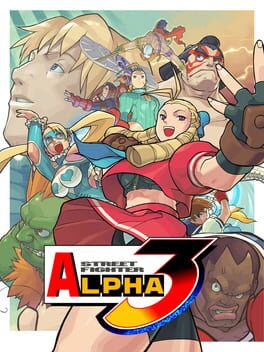
Street Fighter Alpha 3 is the third game in the Street Fighter Alpha series. It features a complete gameplay overhaul with the addition of three selectable fighting styles, new stages, over seven new and returning characters and an exclusive soundtrack. The game's illustrations, select screens, soundtrack and sound effects all have a similar style to the Final Fight series, unlike the previous games.

Fighting / Adventure / Arcade / Action
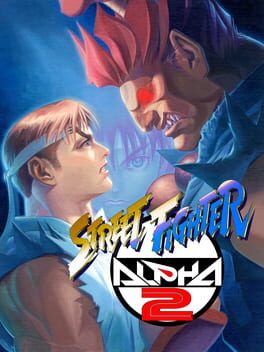
Street Fighter Alpha 2 is both a sequel and a remake to the previous year's Street Fighter Alpha: Warriors' Dreams. The game features a number of improvements over the original, such as new attacks, stages, endings, and gameplay features. New characters in this version include Gen, Rolento and Sakura. Dhalsim and Zangief also return to the fight with some new moves.

Gun.Smoke is very similar to Commando, another Capcom game, but with several differences. Whereas Commando is a run and gun game, this game is a scrolling shooter in which the screen scrolls upward automatically and players only have three ways to shoot, using three buttons for left, right, and center shooting. However, a player can also change the way the gunman shoots through button combinations. A player can still die by getting shot or struck by enemies like in Commando but improve protection by getting special items, including a horse, for protection up to three hits; boots, for speed of movement; bullets, for faster shots; and rifles, for shot length. These items are found by shooting barrels and rifles, boots, and bullets can stock up to five. It was brought to the Sega Master System in South Korea without a license by Prosoft in 1990.

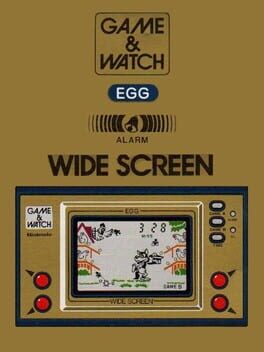
Egg is a Game & Watch video game released in 1981. The game was similar to the previously released Mickey Mouse game, though due to copyright issues which prevented them from using the brand in some countries, they replaced Mickey Mouse with a wolf, though the gameplay remains essentially the same. The countries where Mickey Mouse was replaced by Egg include some Asian countries and Australia. In the Soviet Union there were the wolf and the hare from Soviet animated TV series Nu, Pogodi!. Egg was never released in Japan. Within the box were LR43 batteries, a caution leaflet, and battery stickers. The game sold an estimated 250,000 units worldwide. The game's model number is EG-26. Interestingly, Egg was included in the Game Boy Color video game Game & Watch Gallery 3 in 1999.

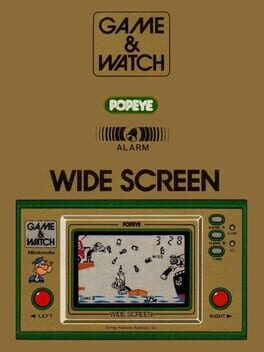
Popeye is a Panorama and Tabletop Game & Watch game released in August of 1983. The games' model number are PG-74 for the Tabletop game and PG-92 for the Panorama game. PG in the model number stands for Popeye Game. The Panorama game took and came with two LR44 batteries, while the Tabletop version came with two C batteries. Nintendo manufactured 250,000 versions of both games in America and Europe. It's unknown how many were manufactured in Japan. The game is based on the lucrative Popeye franchise, and in it you control Popeye. Nintendo was known during that era to create games based off on the Popeye franchise. Brutus has kidnapped Olive, and as Popeye you have to knock him out and punch him into the ocean to save Olive. The directional pad controls Popeye left and right. When Brutus tries to punch your character, move Popeye right to make him avoid the punch, then counter with one of your own. If Brutus move Popeye to the very right hand part of the pier, Popeye can still stay on by moving the control pad right at just the right moments, then counter-attack to move Brutus back to the left. Once Popeye moves Brutus to the very left hand corner of the pier, he will have to attack him a certain amount of times (the exact amount depending on your score) before he punches him into the ocean. In Game B a swordfish will occasionally try and poke Popeye. If it succeeds, then Popeye will move back a bit. After Brutus gets out of the ocean for the third time, Olive, who's at the top tied up, will kick cans of spinach down to Popeye for him to eat. If done so successfully, Popeye will gain so much strength that he knocks Brutus all the way up to the hook at the upper left hand corner. Following that, Popeye goes up to where Olive Ollie is and saves her, thus ending the game. After the game ends, it starts over again. If Popeye misses the Spinach, then he'll have to knock Brutus back into the ocean before she'll be able to kick more spinach down towards him.

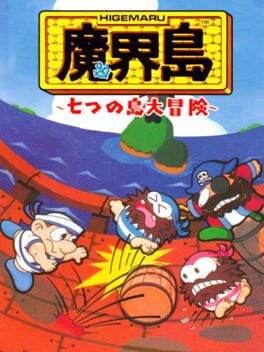
Higemaru Makaijima (魔界島 七つの島大冒険 Makaijima Nanatsu no Shima Daibōken?, lit. Hell Island: Great Adventure of 7 Islands) is an action-adventure game developed for the Famicom and MSX home computer, and released by Capcom in 1987. It is a sequel to a 1984 arcade game developed by Capcom known as Pirate Ship Higemaru. Neither the arcade game, nor this adventure adaptation were released outside Japan, although a prototype exists for a canceled North American NES release, where it was to be renamed "Makai Island". In Higemaru Makaijima, the hero from Pirate Ship Higemaru named Momotaru must now pilot his own sailing vessel around the ocean surrounding seven islands. His goal is to find the greatest treasure. To do this, he must collect the keys which open the dock gates to each of the islands by invading several pirate ships and defeating the captain on board in combat. The gameplay on these pirate ships are taken directly from the arcade predecessor, with some small modifications. Once Momotaru has collected a key from a pirate ship, he must then sail around the islands in search of the correct dock gate which the key corresponds to. Once there, the player embarks on an exploration of the island to find items, defeat a boss, and collect treasures before heading off in search of another island key. The island exploration sections are extremely reminiscent of dungeon exploration aspects of The Legend of Zelda, to which the game is often compared to.

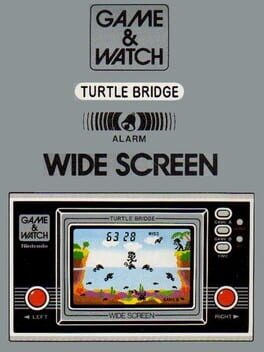
Turtle Bridge is a widescreen Game & Watch video game released in 1982 by Nintendo. In the game, you must get the character from one side of a lake to the other by jumping on the shells of turtles that are protruding from the water. If you jump on a turtle at the wrong time, then you will have to go back to the beginning. The fact that the turtles gain your character access to the other side of the lake is where the game's name originates from.

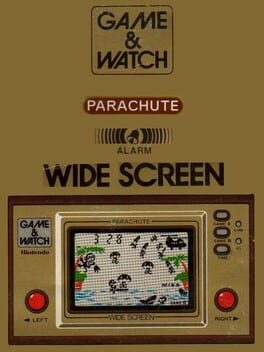
Parachute is a game for the Game & Watch where you have to save people from a helicopter and make them land in your boat. You will direct your boat under the person try and let them land safely. If they land in the water, a shark will come and eat them- if this happens three times you will lose and will have to start over.