Developed by Namco Limited for Carry Lab.
Shooter / Arcade / Action / Science fiction
Gaplus is a fixed shooter arcade game that was released by Namco in 1984. It was the only other game to run on Namco Phozon hardware, and in the US, a modification kit was later released to change the name to Galaga 3, possibly to increase recognition among fans of the games even though there was no "Galaga 2". Since Gaplus is a sequel to Galaga, it has similar gameplay. The player controls a spaceship, that can now move vertically (limited to halfway up the screen, much like Atari's Centipede) as well as horizontally, and shoots at swarms of incoming insect-like aliens which fly in formation above it and swoop down to attack it in akamikaze-like dive. In this sequel, the level starts over if the player gets killed before all the enemies have come in. When all enemies are killed, the player moves on to the next level. By obtaining certain powerups, it is possible to shoot sixty bullets per screen, the most any Galaxian-related game has.

Shooter / Arcade / Action / Science fiction
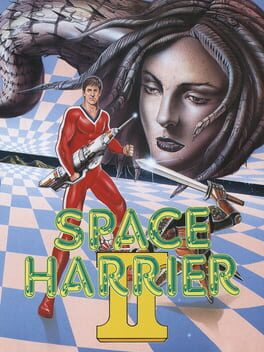
A call for help comes from deep in the universe. Fantasyland has been taken over by destructive forces. Quick on the scene is Space Harrier equipped with his laser, who must attempt to outwit and outmanoeuvre the hoards and prevent Fantasyland from being blown into oblivion!

Shooter / Arcade / Action / Science fiction
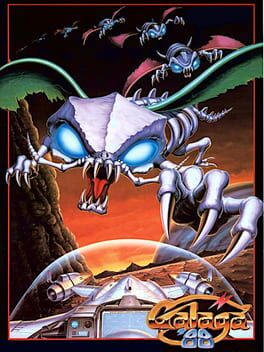
The gameplay in Galaga '88 is built on the same premise as that of the original Galaga game, but is in many ways more complex and more difficult. The game is divided into a series of 29 Stages distributed through eight Worlds. The starship Galaga accelerates between Stages and Worlds and even to higher dimensions (go to the section on Dimensional Travel below to find out more). With the exception of the third and eighth, each World culminates in a Challenging Stage. There are six such stages to engage in any full game, and each begins with the on-screen announcement "That's Galactic Dancin'!" and has its own YM2151-generated song to which the enemy formations dance. In any given Challenging Stage, both the design of the enemies and their dancing formations shall vary according to the player's current Dimension. As in Galaga, the objective is to destroy all forty enemies before they fly away off the screen. However, refraining completely from touching any controls for the duration of a Challenging Stage awards a "secret bonus" ranging in value from 10000 to 25000 points, and equal to the "special bonus" which would have been awarded for destroying all forty enemy aliens instead. Galaga '88 introduces a variety of new enemies and behaviors. Most of these special enemies are worth varying amounts of bonus points when destroyed. Some enemies can combine into larger enemies which take multiple hits to destroy, while others arrive in eggs, explode in a shower of fireworks, grow with multiple hits, or sport armor which makes them invincible while in formation. Certain enemies drop small formations of tiny creatures that wiggle their way down the screen, and still others can act as escorts to incoming groups of enemies and then quickly dive at the player before leaving the game. Most stages also include various obstacles which appear once the enemy formation has been assembled. These can be destroyed with either one or several shots, and the first one on each stage will leave a "Warp Capsule". At the start of the game, the player can select how many Galaga starships to start with (one or two), affecting their number of remaining lives. The game ends after the final boss is defeated (or when the player's last ship is destroyed or captured) - in the latter case, the player can continue the game for an additional credit. The Game Over screen shows the player's hit-miss ratio and a visual representation of their progress. If the player reaches Stage 27, the game also shows a picture of the final boss (damaged if defeated, but silhouetted if not). If the arcade operator has set the "continue" option to "on", the player also cannot continue if he is defeated on Stages 27-29.

Shooter / Platform / Arcade / Action / Science fiction
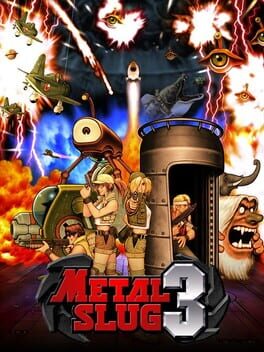
“METAL SLUG 3”, the masterpiece in SNK’s emblematic 2D run & gun action shooting game series, still continues to fascinate millions of fans worldwide to this day for its intricate dot-pixel graphics, and simple and intuitive game controls!

Shooter / Arcade / Action / Science fiction
Space Invaders Extreme combines the captivating essence of the original game with a stunning alliance of futuristic graphic design and cutting-edge audio. The gameplay experience has been developed to maximise on the consoles' abilities, offering players a whole new range of amazing features including a vast array of new power-ups.

Shooter / Arcade / Action / Science fiction
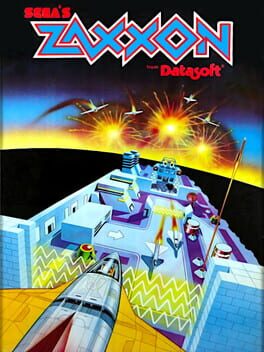
Zaxxon is a 1982 isometric shooter arcade game developed and released by Sega. The game gives the player the experience of flying a fighter craft through a fortress while shooting at enemy entities (missiles, enemy gunfire, etc.) The object of the game is to hit as many targets as possible without being shot down or running out of fuel, which can be replenished paradoxically, by blowing up fuel drums.

Shooter / Arcade / Action / Science fiction
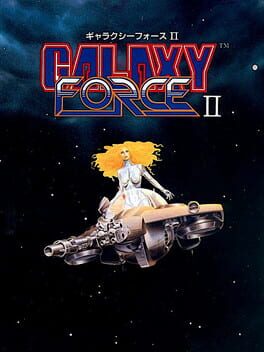
The peaceful and prosperous solar system Junos was located at the end of the Milky Way. Those who called its five planets home had no idea what was about to happen... Halcyon, ruler of the Fourth Empire, had Junos marked as its final target in the galactic massacre, and had sent the bulk of his attacking force in with a single purpose – the elimination of all life forms in the system, and the construction of a gigantic fortress on each of the five planets from which to rule the galaxy. Galaxy Force II is not a true sequel to the orginal game but a an enhanced version of the original. It was released roughly two months after the release of the first part thus making it obsolete.

Shooter / Arcade / Action / Science fiction
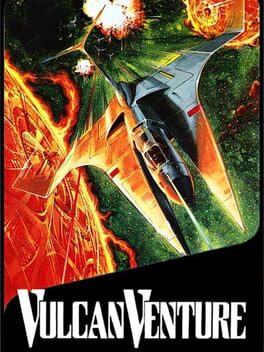
Vulcan Venture (also known as Gradius II: Gofer no Yabo) is a side-scrolling shoot ’em up developed by Konami and released in arcades in 1988. Players control the Vic Viper spacecraft as it battles the Bacterion Empire, now led by Gofer. The game builds on the original Gradius by retaining the power-up bar system while introducing selectable weapon configurations and expanded abilities such as different missiles, double, and laser options. It also incorporates elements from Salamander (Life Force) and introduces a stage focused entirely on consecutive boss encounters.

Shooter / Arcade / Action / Science fiction
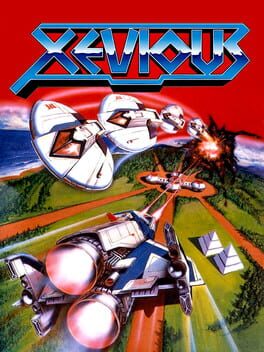
It's a nightmare, but it's true! Research shows that we are the actual aliens on Earth, and the ruthless Xevions are the original inhabitants. Now the Xevions want Earth back -- minus humans! Their invasion forces are fierce -- the land is crawling with deadly Domogram Rovers; the sky is black with Toroid Patrol Fleets and Zoshi Death Squads. Our puny weapons offer no defense. Earth's only hope is our powerful new Solvalou Fighter Plane. Its pilot will have a single mission: Penetrate the enemy ranks and destroy the Xevious Mother Ship. The mission is dangerous. We can't guarantee success. But at this point, it's do or die! One small problem. We still need a pilot. Any volunteers?