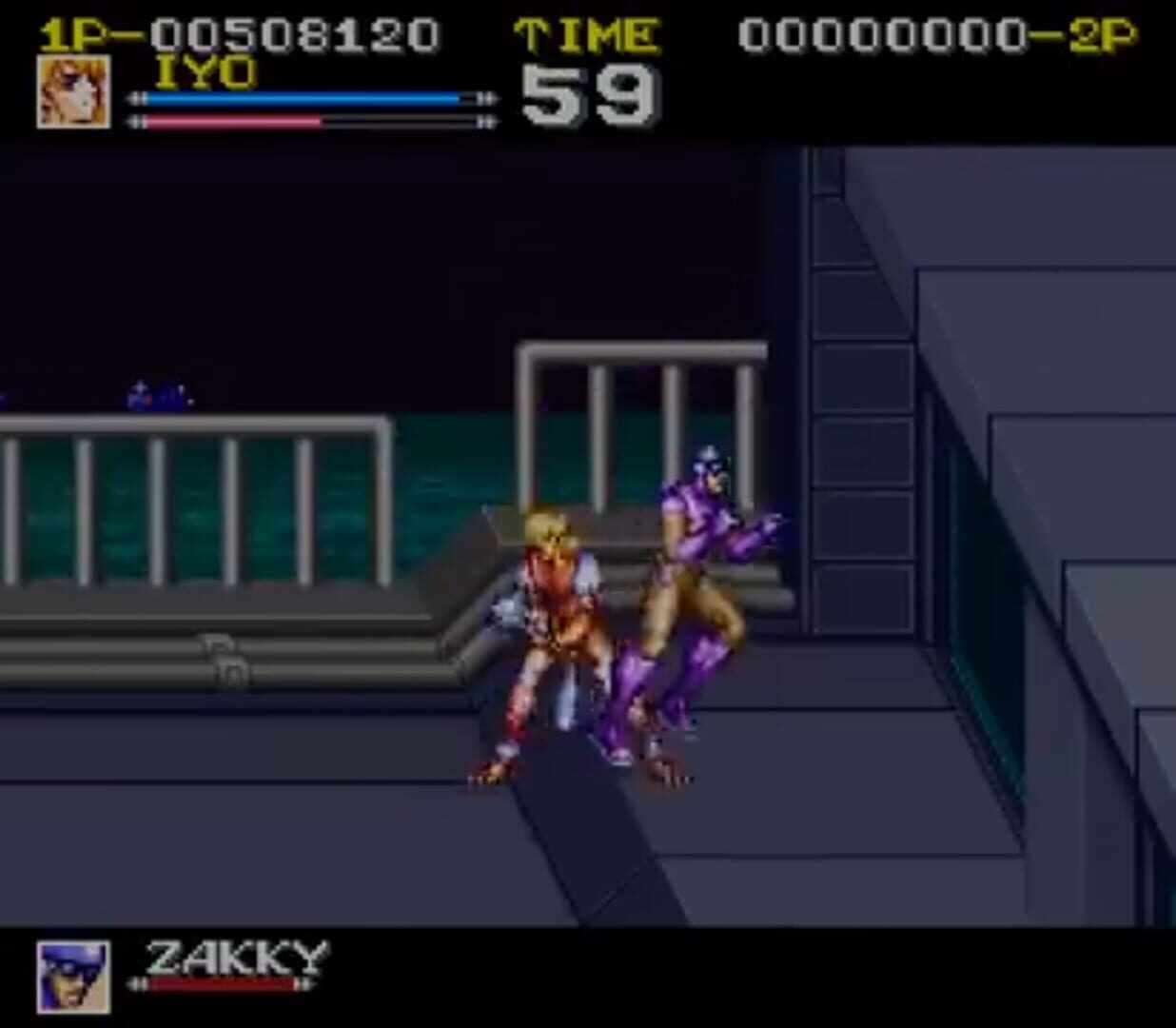
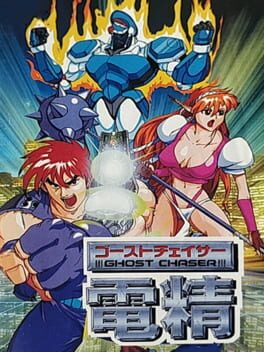

Ghost Chaser Densei doesn't take any dramatic departures from the standard scrolling-brawler plot-line. A city twenty minutes in the future must be saved from a terrorist organization, and between salvation and you is a long, straight line full of goons who must be punched. Aside from receiving orders from your boss before each level, and the quick conversation with a boss or rare NPC, the story won't attempt to get in the way of beat-downs. There are three playable characters in Ghost Chaser Densei: the martial artist Makai, the mace wielding cat-girl Iyo, and the autonomous robot Belva. Each has unique moves as well as the basic abilities of attacking, jumping, blocking, throwing, and using a special if attack and jump are pressed together. Unlike most brawlers these special moves deplete a recharging special bar, not your health. Makai can throw fireballs and do a flying kick in midair, Iyo can triangle jump and preform a spinning piledriver, and Belva can double jump and preform a grapple special. Characters also have a team up special if playing in two player mode. Enemies range from armored soldiers to lizard men to robots, but most break down into the same hierarchy: weaker types will rush at you while stronger types will shoot projectiles then rush at you. Each level ends with a unique boss with multiple short and long range attacks.
Platform / Role-playing (RPG) / Hack and slash/Beat 'em up / Action / Fantasy
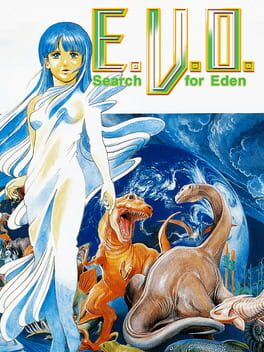
The storyline of E.V.O.: Search for Eden follows the same patterns as modern Evolution theories. The players first controls a prehistoric sea organism, and fights to gain evolution points with which he can improve his fish's body parts and upgrade his attack/defense abilities. The gameplay is not completely linear, which means that certain choices of paths and stages will affect the player's success. The game is composed of a series of stages, in which the sea organism slowly evolves into an amphibian, and later a land-only creature. The physical changes are fairly scientifically accurate which gives the game a semi-educational purpose as well.

Fighting / Hack and slash/Beat 'em up / Adventure / Action / Fantasy
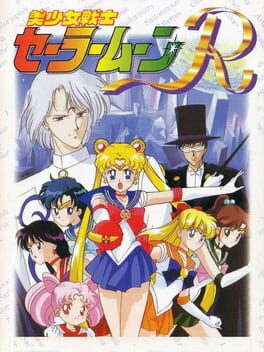
Bishoujo Senshi Sailor Moon R is a video game released for the Super Famicom by Bandai in 1993. It serves as a sequel to Bishoujo Senshi Sailor Moon. Upon starting the game, the player can choose one of 5 characters (2 can be selected for co-op). The game is divided into four levels; each level being divided further into two sub-levels. The player will fight numerous enemies, mostly consisting of default Droids based on their manga incarnations. At the end of each level, a boss must be defeated to proceed. Pressing a special button makes the character use a devastating attack that kills all lesser enemies on screen and causes significant damage to a boss character, although the use of the attack is limited. Bonus items can be picked up from the ground or found in breakable objects, usually in the form of food items that replenishes the life meter to varying degrees. Chibiusa Mode is synonymous with an "Easy Mode". Chibiusa's sprite is too short to be hit by most attacks, and the enemies are also made easier to beat. There is also bonus Battle Mode, which acts as a 1v1 arcade fighter for 2 players. Selecting this mode with only one player allows it to work as a training mode, with the other character remaining motionless.

Platform / Hack and slash/Beat 'em up / Action / Fantasy
Akumajou Densetsu is the Japanese version of Castlevania III: Dracula's Curse. This version has many differences in gameplay and level layout, making the overall experience easier than its western counterpart.

Role-playing (RPG) / Hack and slash/Beat 'em up / Arcade / Action / Fantasy
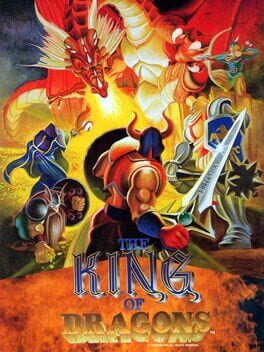
The game has 16 levels, though many are quite short. Much like Capcom's Knights of the Round, King of Dragons features an role-playing video game-like level advancement system. Points scored for killing monsters and picking up gold count towards experience, and the character gains levels at regular intervals. With each level, the character's health bar increases, other attributes such as range improve, and the character also becomes invulnerable for a few seconds. Along the way, different weapon and armor upgrades for each character may also be picked up. King of Dragons features a simple control system that consists of a single attack button, and a jump button. By pressing both buttons, the character unleashes a magical attack that strikes all enemies in screen (its strength varies according to the character used) at the expense of losing energy. The fighter, cleric and dwarf can also use their shield to block certain attacks by tilting the joystick back right before the impact. This is one of the many Capcom games to feature the yashichi power-up item. There are three such power-ups hidden throughout the game, each giving the player an extra continue.

Platform / Role-playing (RPG) / Hack and slash/Beat 'em up / Action / Fantasy
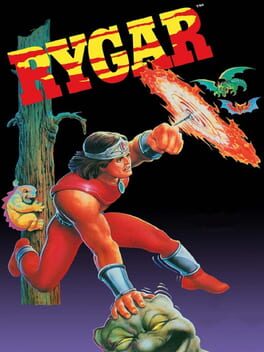
An open-world action-adventure game for the Nintendo Entertainment System that features a barbarian warrior with a distinctive "diskarmor" weapon. It is distinct from the original 1986 Arcade game Rygar, which saw numerous home console ports.

Platform / Hack and slash/Beat 'em up / Action / Fantasy
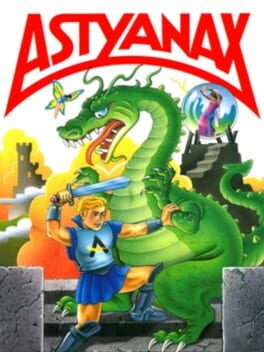
It is a 2D action platform game focused on hack and slash and spell casting. The game consists of six linear levels of which each has two sub-levels meaning the game consists of 12 level in total. After every level there is a cut-scene pushing the story forward. There are three weapons - an axe, a spear and a big sword. An axe is a basic weapon the hero holds at the beginning of the game. The player can upgrade the axe using a power-up which has the shape of a small axe. The spear is the second stage of the weapon upgrade system and the big sword is the final stage. The big sword is the most powerful melee weapon in the game. The player can cast three magic spells which using is limited by the magic meter. The first is "Bind", which stops the time altogether with the enemies in the level. The second is "Blast", which casts fire balls destroying all enemies visible on the screen at the time of the casting. The third is "Bolt", which has the form of a lightning strike and acts similarly to "Blast".

Platform / Hack and slash/Beat 'em up / Action / Fantasy
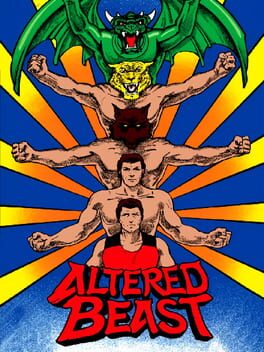
Altered Beast is a 1988 beat 'em up video game developed by Team Shinobi and published by Sega for arcades. Set in Ancient Greece, the game follows a Roman centurion who is resurrected by the Olympian god Zeus to rescue his daughter Athena from Neff, the demonic ruler of the underworld. By collecting three power-ups in a level, the player character can transform into one of five mythical beasts. In the original arcade, the end credits are interspersed with images of actors in costumes for the different characters and monsters of the game, implying the whole game was a film production.

Hack and slash/Beat 'em up / Action / Fantasy
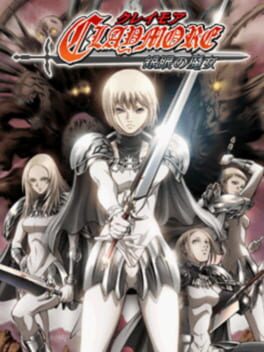
The silver eyed witches, a mix between demons and humans are the only ones who can fight against the demons that ravages the land.With the sword Claymore in hand, release the demonic powers in your blood, but stop before this power corrupts the you. An over-dependence on it may turn you into the monster that you are fighting. The game system is easy to master, with a few taps on the touch screen panel, you can unleash the powers in your blood and launch sure kill attacks.Besides Claire, the heroine, you can to take control of other characters and test out their skills and limits. Sink deeper into the dark, dangerous world of Claymore no longer as a spectator, but as a warrior.