
Released only in Japan, Groove Adventure Rave is the first action RPG game based on the Rave Master manga series written and illustrated by Hiro Mashima. This action RPG includes a original story with a new character created by the original author Mashima-sensei, featuring the RPD system where your companions trust changes based on the aciton you make.
In 0015, fifty years before the story's start, the world was being corrupted by Dark Bring, evil stones that bestowed incredible powers to their owners. The Dark Bring were used by the Raregroove Kingdom, and the Symphonia Kingdom fought against them with their Holy Bring. Shiba, the first RAVE Master, attempted to destroy Sinclaire, the "mother" of the Dark Bring, with his Decaforce Sword. The aftermath caused the massive explosion known as "Overdrive" that destroyed one-tenth of the known world. Shiba, protected from the disaster by Plue, a special guardian "dog" who shielded him from the blast, held onto the RAVE required to power his sword. Plue and the remaining pieces of RAVE, however, scattered around the world. Fifty years later Haru Glory, a teenager living on the peaceful Garage Island, fishes Plue up by accident. Several events soon follow, including Shiba's arrival and his desire to reclaim Plue, as well as the appearance of a mysterious organization known as Demon Card, whose members possess Dark Bring and aim to rule the world. After Haru battles one of its members, Shiba discovers he is the second RAVE Master, and entrusts his RAVE, Plue, and the Decaforce Sword to Haru. Haru embarks upon an adventure to find the other pieces of Rave and to save the world.
Role-playing (RPG) / Adventure / Action / Fantasy
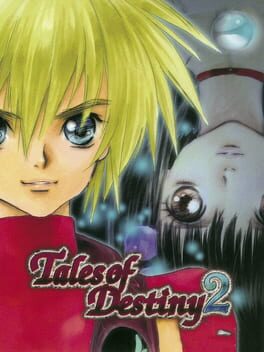
Tales of Destiny 2 is a direct sequel to the Playstation's Tales of Destiny. The game's battle system retains the same fluid, fast-paced action combat of its predecessor Tales of Eternia, but adds a range of experimental features including a stamina gauge and a fairly high level of character, equipment, and skill customisation.

Role-playing (RPG) / Strategy / Turn-based strategy (TBS) / Action / Fantasy
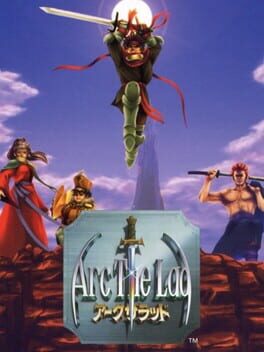
Arc the Lad is a tactical role-playing video game developed by G-Craft for the PlayStation and is the first game in the Arc the Lad series. It was released in 1995 in Japan, and released in North America on April 18, 2002, as part of Arc the Lad Collection. The Japanese released was published by SCEI, while the North American release was published by Working Designs. It was the best-selling Japanese PlayStation game of 1995 with over a million copies sold. Arc the Lad was followed by two direct sequels and many games that make up the series.

Role-playing (RPG) / Adventure / Action / Fantasy
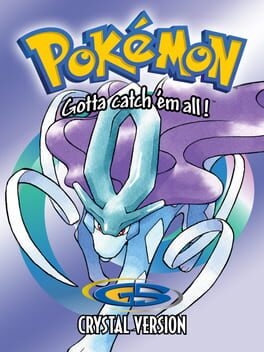
Pokemon Crystal is an enhanced version of Pokemon Gold and Silver and a role-playing game played from a top-down perspective. As in the earlier versions, the player explores the Johto region, catches and trains Pokemon, and battles other Trainers in turn-based combat while earning Gym Badges and filling out the Pokedex. Crystal keeps the same core adventure while adding refinements, including the option to play as a female character and animated Pokemon sprites. It retains series staples such as a real-time clock, Pokemon breeding, and trading and battling with other games via a link connection.

Role-playing (RPG) / Strategy / Turn-based strategy (TBS) / Action / Fantasy
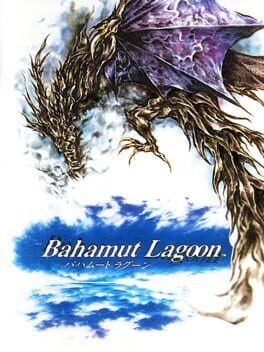
Bahamut Lagoon combines RPG mechanics with squad-based combat. Characters have HP, MP (SP for fighter characters), EXP, equipment, stats and class-specific, SP-draining special elemental abilities very much like traditional console RPGs. The player can explore his surroundings, talk to people and visit shops when not in battle, though to a limited degree as there is no world map and no way to leave the current area. The game's core is its turn-based battles fought on a 2d grid. Characters are assembled into parties of four and the player allowed a maximum of six parties, which are usually well outnumbered. The two opposing sides act in alternating turns so that each party can move once and/or attack once a turn. Attacks are divided into distant and close-up combat. In the former, a party uses a special ability (e.g. casting fireballs, throwing lightning, healing allies) of one of its members at a distance. The range and possible area of effect damage vary per ability. If the attacking party has two or more characters with the same ability, they join in the action to multiply its effectiveness. Distant combat results in less money and generally less damage, but the target cannot retaliate. Distant attacks can also affect the field; fire and ice ignite or extinguish forests and melt or freeze ice, etc. Close-up, each unit in two adjacent opposing parties can act once. Very much like Final Fantasy SNES combat, they can attack an enemy, use an item or a special ability (though these can't be combined and most only affect one target instead of all) or defend. Dragons are the player's ace in the hole. They have their own stats and gain experience like normal characters do. In battle, each party has a dragon attached to it and draws a large portion of its strength from that of its dragon: if a party's dragon is slain, the party will lose the ability to use special attacks and class-specific abilities for the remainder of the map. The beast acts as a very powerful autonomous unit that moves after its party does and it cannot be controlled beyond very simple commands, e.g. "Come!" Out of battle, dragons will eat anything and raising them by feeding them items is an important part of the game. Feeding can improve their stats as well as affect their behavior on the field, and the dragons develop into new forms as they grow. The player can change the characters in each of the parties, their formation as well as what dragon represents them at will.

Role-playing (RPG) / Adventure / Action / Fantasy
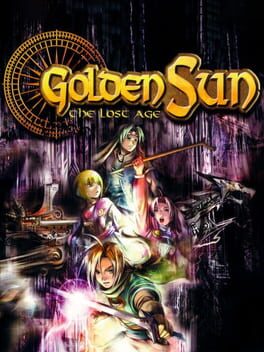
The story of Golden Sun: The Lost Age picks up right near the end of the first game. Golden Sun veterans will be surprised to learn that The Lost Age is played from the point of view of the party being chased as they try to light the remaining two lighthouses, which will unlock the power of alchemy for the world--or will it instead unlock the world's destruction? * LAN PVP mode via GBA Game Link Cable

Role-playing (RPG) / Adventure / Action / Fantasy
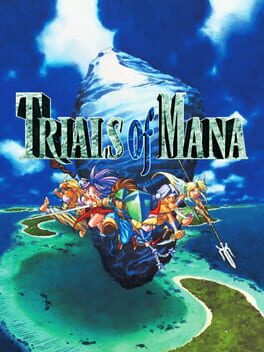
Trials of Mana is the third installment of the Mana series, developed by Square under the direction of series creator Koichi Ishii. The game takes place in a new world where, once again, the Mana Tree is under threat from an ancient evil thought sealed away. Players choose three from among six heroes as the chosen wielder of the Mana Sword and their two companions on the journey to claim the holy blade and preserve what remains of the Mana power.

Role-playing (RPG) / Turn-based strategy (TBS) / Adventure / Action / Fantasy
Pokémon Gold, along with Pokémon Silver, are the sequels to Pokémon Red and Blue. They offer 100 new Pokémon to capture and train, 8 more Gyms to take on and a new Pokémon League challenge. Featuring an expanded post-game, Pokémon Gold and Silver additionally offer extra content from the previous entries in the series.

Role-playing (RPG) / Turn-based strategy (TBS) / Adventure / Action / Fantasy
Pokémon Emerald Version is a sister game to Pokémon Ruby and Sapphire. Emerald Version provided the main storyline with more depth and length, as well as making small aesthetic changes to the world and adding unique animations for each Pokémon.