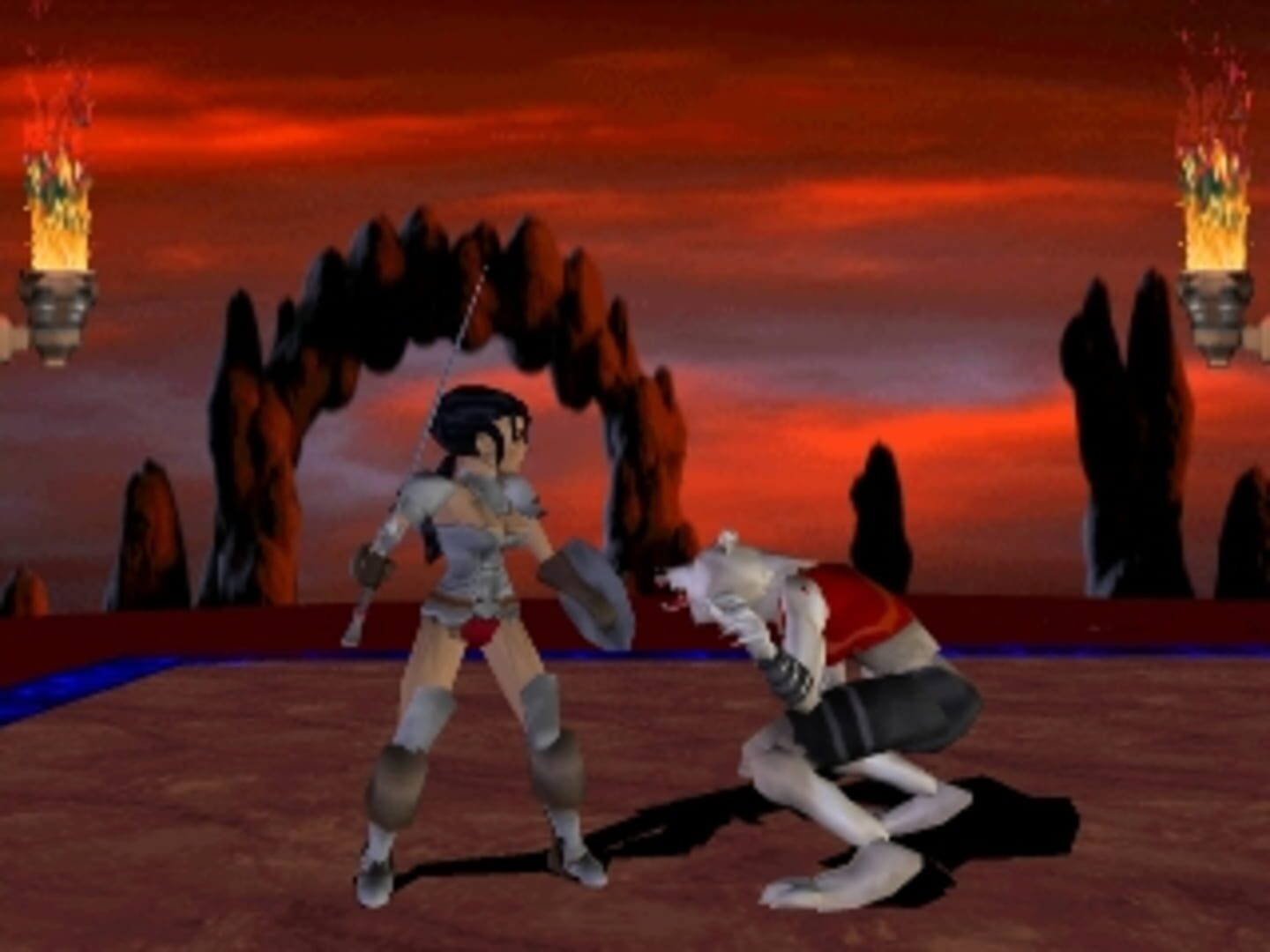
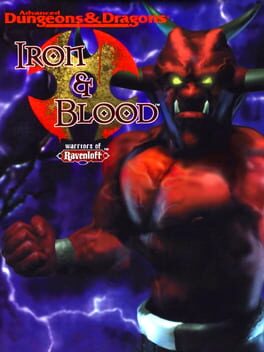
In IRON & BLOOD: Warriors of Ravenloft, you and your party are trying to pass through the realm of Ravenloft. However, you are caught in the conflict between Strahd von Zarovich and Lord Soth. In order to escape Ravenloft and continue on your way, you must fight the most malicious and evil monsters in all the land. Choose from any of the 16 playable characters including warriors, mages, elves, and other classes to lead the fight. With over 250 moves and combos, there is plenty ADVANCED DUNGEONS AND DRAGONS action.

Fighting / Arcade / Action / Fantasy
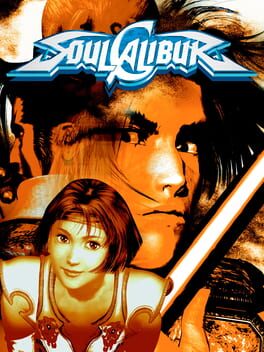
SoulCalibur is a weapon-based 3D fighting game developed by Project Soul and produced by Namco. It is the second game in the Soul series, preceded by Soul Edge (1996). Originally released in arcades in 1998, it ran on the Namco System 12 hardware. In 1999 it was ported to the Dreamcast with improved graphics and new features. The North American version was released in September 1999 as a launch title for the Dreamcast and was part of the successful launch of the new console. It became available as a downloadable title on Xbox 360's Xbox Live Marketplace in 2008. The title brought many innovations to the fighting game genre that include a heavy emphasis on weapons and a unique eight-way movement system. Soulcalibur is widely regarded as one of the best Dreamcast titles and is one of the most critically acclaimed fighting games of all time.

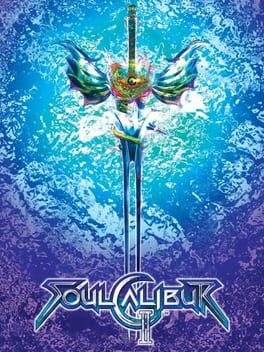
SoulCalibur II is the third installment in the Soul series and continues the tradition of his predecessors with improved graphics, new characters and new levels. A majority of the action takes place in Weapon Master mode where you have to choose a character and travel a set map to fight the many other warriors through different levels and challenges. Console ports were released, including guest characters from other franchises. The Arcade version has a unique mode called "Conquest Mode". This mode, which uses a name and password system to save data, allows the player to select one army among four. The player then fights against enemies in a series of eight 1-round battles, win or lose (the first seven are based on the player's rank, and the eighth is chosen by the player – this can only be interrupted by a Versus challenger.) After each round, the player earns EXP and can be promoted, and the game also rates the player in four categories: Soul, Power, Wisdom and Skill. The game also keeps track of which moves the player knows and uses most often. After the eight battles, territory control is updated and the player has the option to fight a bonus round against their character played by the AI.

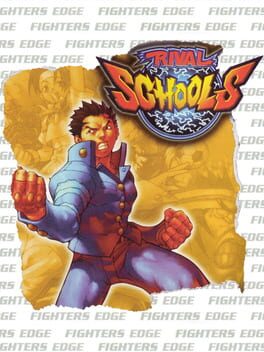
The main fighting game is best described as a polygonal Marvel vs. Capcom game, with some notable differences. Control wise, the game varies from other Capcom fighting games by only having four buttons (two punches and two kicks, which is closer to the SNK game format) rather than the standard six. A player chooses a team of two characters, and fights against another two character team. The actual fights, however, are one-on-one fights, with the partner only participating by being called in when a player has enough 'vigor' for a Team Up attack, done by pressing a punch and kick button of the same pressure. The Team Ups would be some kind of double team attack by the character and partner, or (for most female characters' Team Ups) would heal the main character or give them more vigor. After the end of a round, a player (win or lose) has a choice to fight the next round with the partner from the previous round, or to keep their main character in play. The 'vigor' meter (essentially a super meter) could go up to 9 levels, with Team Ups costing two levels and super moves from a single person all costing one level of vigor. Much like the Marvel vs. Capcom games, launchers can be done that allow air combos to be performed, with all characters having universal low and high launchers. The game also had a few defensive techniques. Tardy Counters acted much like Alpha Counters from Street Fighter Alpha, allowing a player to immediately counter-attack from a blocking position. However, the restrictions on Tardy Counters are very lax; any hard normal, special or super attack can be used to Tardy counter (Alpha counters are only limited to certain special moves for each character), and Tardy Counters do not cost any extra vigor to perform (Alpha Counters required at least a level of Super Combo gauge to do). Attack Cancels allowed a player to cancel an incoming hit simply by timing their own hit with the attack, which would cancel out both attacks (though it does not nullify the remaining hits of a multi-hit move). Also, one additional level of vigor is awarded.
Fighting / Hack and slash/Beat 'em up / Arcade / Action / Fantasy
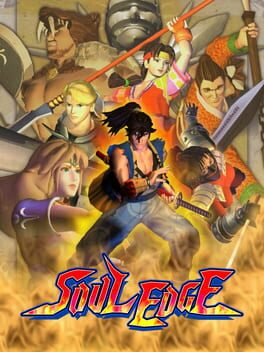
Soul Edge is a 3D arcade fighting game and the first in the Soul series, it is one of the first 3D fighting game in history that place a particular emphasis on the story of the fighters. Each character have their own weapon, allowing for a wide range of play styles. The slower, longer ranged characters try to deliver their heavy blows from a distance whereas the quicker, faster characters try to get in as close as possible and deliver quick-hitting attacks.

Fighting / Role-playing (RPG) / Hack and slash/Beat 'em up / Action / Fantasy
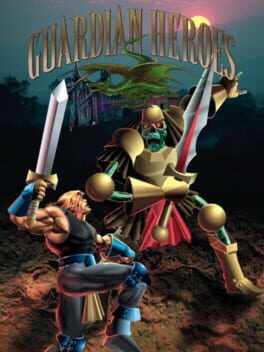
Guardian Heroes is a 2D side-scrolling beat 'em up video game with RPG elements developed by Treasure and released in 1996 for the Sega Saturn. A band of young adventurers begin a quest to change the fate of their kingdom after an enchanted sword falls into their hands. Players may choose between four characters, each with their own unique fighting style, and embark on many different paths in the game's story mode. The game also includes a special versus mode wherein up to six players can compete against each other in arena combat.

Fighting / Arcade / Action / Fantasy
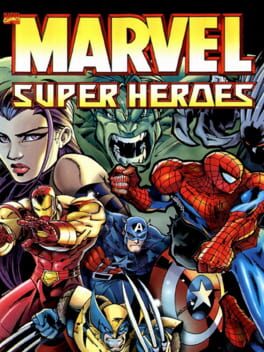
Marvel Super Heroes is a 2D fighting game and the second Capcom title to feature characters from the Marvel comic universe. Each character starts with a set of gems. These can be activated during a fight to improve speed, power and defence, or provide special abilities to create crushing stone walls, open up a rift in space, or reverse the opponent's controls. The use of the gems is inspired by the The Infinity Gauntlet comic book series.

Fighting / Sport / Action / Fantasy
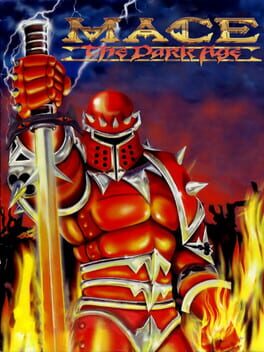
Mace: The Dark Age is a fighting video game released by Atari for arcade machines in 1997 and ported by Midway to the Nintendo 64 in 1997. The game is similar to Bio F.R.E.A.K.S. and the Mortal Kombat series. Like in Mortal Kombat, when a character wins both rounds, they can perform an execution move on the enemy. Methods included severing an opponent's limbs and torso (Al Rashid), beheading (The Executioner), repeated stabbing (Koyasha), impaling the opponent with a sword (Lord Deimos), breaking an opponent's back by hoisting them on top of a Viking helmet and throwing them to the ground, causing their body to explode (Ragnar), and some more far-fetched methods including pulling out an opponent's heart (Xiao Long), shrinking (Namira), transforming the opponent into a chicken (Taria), and entering an opponent's body and bursting them from inside (Dregan). Note: Heavily borrowing from the arcade game Soul Edge (1995)--first of the Souls Series. Which borrowed heavily from the framework WeaponLord (1995) laid out. Visual Concepts (developers of WeaponLord) would send builds of the game to Namco (the publisher of WeaponLord) to playtest.