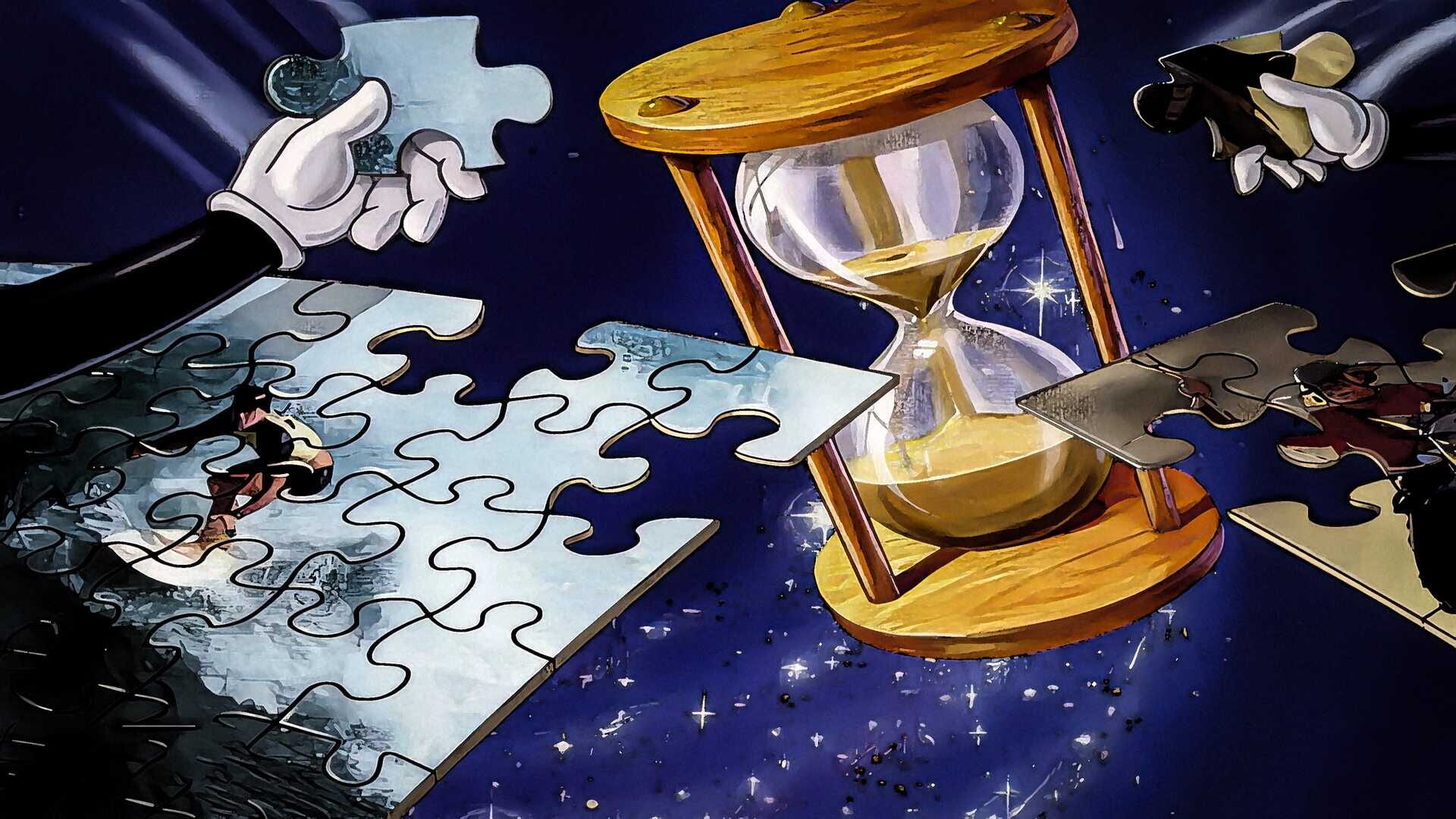
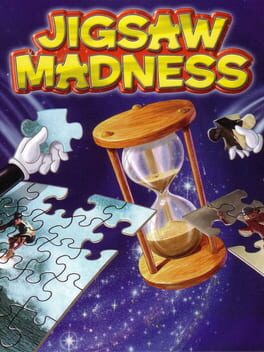

An international Port of "Jigsaw Island: Japan Graffiti" that removes the storyline and plot of the title. A digital re-creation of the hobby of puzzle building, Jigsaw Madness offers gamers a collection of 150 different puzzles (across a variety of themes) that can be pieced together, alone or against up to three other players. Utilizing a small hand-shaped cursor, players construct puzzles that range in size from 24 to 96 to 150 pieces, each depicting anything from animals and insects to sports and animé characters. Players are given only seven pieces at a time with which to work, and basic statistics such as the number of pieces placed both, correctly and incorrectly, as well as the time elapsed is continually displayed. The multiplayer portion of the title allows up to four players to compete against one another, in a race to see who can complete the puzzle fastest. A handful of options are available, including whether or not an outline of the various shapes is displayed on the playing field, thereby making the game easier.

Puzzle / Quiz/Trivia / Non-fiction
Puzzle Mania features a numbers crossword puzzle game and assorted variants (Crossword Number Place, Skeleton Crossword & Number Crossword) which requires logic and quick thinking. Ply your guile on a 9x9 tiled board. The game features a complete tutorial in Japanese. Based on the basic concepts of "simple and easy to play", "deep and addictive", and "very exhilarating when the mystery is solved" - includes 3 types of puzzle games.

Dokidoki Shutter Chance☆ is a jigsaw puzzle game with a competitive action twist, one of many such games produced by Nippon Ichi. Two players compete to assemble three small picture puzzles as quickly as possible. Placing pieces will earn energy to use items which can help that player or hinder their opponent, and each of the nine playable characters has a different selection of items available. The game includes a single-player story mode in which Shunsuke challenges a series of girls to puzzle matches; if he wins, the girl allows her photo to be taken, which the player can adjust the framing of and save to an album. There is also a two-player versus mode where any character and set of puzzles can be chosen.

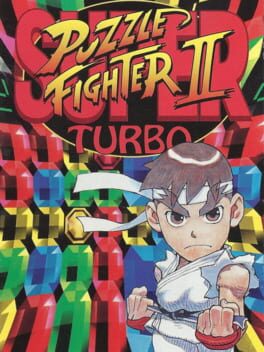
The game's title is a parody of Super Street Fighter II Turbo (or Super Street Fighter II X in Japan), as there are no other Puzzle Fighter games, and the game includes music and interface elements spoofing the Street Fighter Alpha and Darkstalkers games. It was a response to SEGA's popular Puyo Puyo 2 that has been sweeping Japanese arcade. A HD-remake version titled Super Puzzle Fighter II Turbo HD Remix, is available for purchase on Microsoft's Xbox Live Arcade and Sony's PlayStation Network.

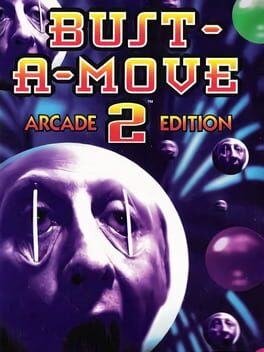
Bub and Bob are back! Like in Tetris in reverse, you shoot bubbles at an array of different-colored bubbles stuck in an ever descending ceiling, attempting to match them up three by three to make them disappear. This edition contains both puzzle challenges, multiplayer and normal progressive stages.

Puzzle / Strategy / Arcade / Fantasy / Kids
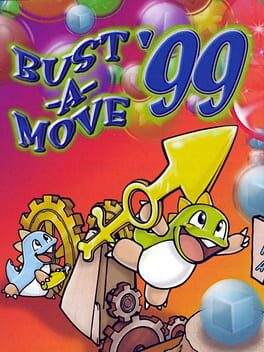
In the tradition of the Bust-A-Move series, Taito's Bust-A-Move '99 is a traditional puzzle game. The main objective is to destroy or get rid of (by dropping) all the bubbles located within the stage. Once you do this, you'll graduate to the next level. While the premise may sound simple, the logic and execution is not. Using a "bubble shooter", you must aim and shoot your bubbles to the top of the screen so that you can bring three bubbles of the same color together. When you do this, the bubbles will pop. One way to earn points is to have the popping bubbles as well as the bubble that was shot fall off the screen (in multi-player, it puts these bubbles on your opponent's side). This also gives you a lot less bubbles to take care of. Bubbles are constantly falling down. Popping them all in a short amount of time is necessary because the longer it takes you to pop them all, the faster they will drop. If you fail to clear out all the bubbles and they reach the bottom of the screen, the game is over. Bust-A-Move '99 contains some new options never seen in the Bust-A-Move series. There are now special bubbles (star, metal and rainbow to name a few), obstructive bubbles and blocks and new backgrounds. You are also given the opportunity to create your very own stages with the create-a-level editor.

Jigsaw Island is a jigsaw puzzle game, and the third title in Nippon Ichi's jigsaw series. As in Jigsaw Party and Jigsaw World, it combines the jigsaw puzzle with elements of arcade puzzle games, tasking two players (or a player and the computer) with solving a set of puzzles as quickly as possible. Pieces are supplied to each player in a specific order, and there are also power-ups that can be used to hinder the other player. A localize port removing the anime storyline, "Jigsaw Madness" was released in the west.

This game was released only in Japan. It is the fourth game in the Puyo Puyo series and the last set during the Madou-era in the main series. Continuing the trend of naming the games after puns, the name comes from a pun on "yon", the Japanese word for the number 4, but this time this is the only reference to the pun. The gameplay in is similar to that of Puyo Puyo 2, but adds super attacks. Clearing chains now builds up a "charge meter" which allows players to use them. The only other addition was a new game mode which could be played with a number of different field sizes, smaller or bigger than the standard 6x12, however, it removes several game modes that were present in Puyo Puyo Sun, i.e. the tournament, task and chain training modes. The art is also vastly different to the previous game in the series and, of course, the Fever series; this style was only otherwise used for Minna de Puyo Puyo.