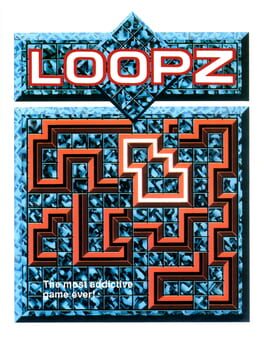
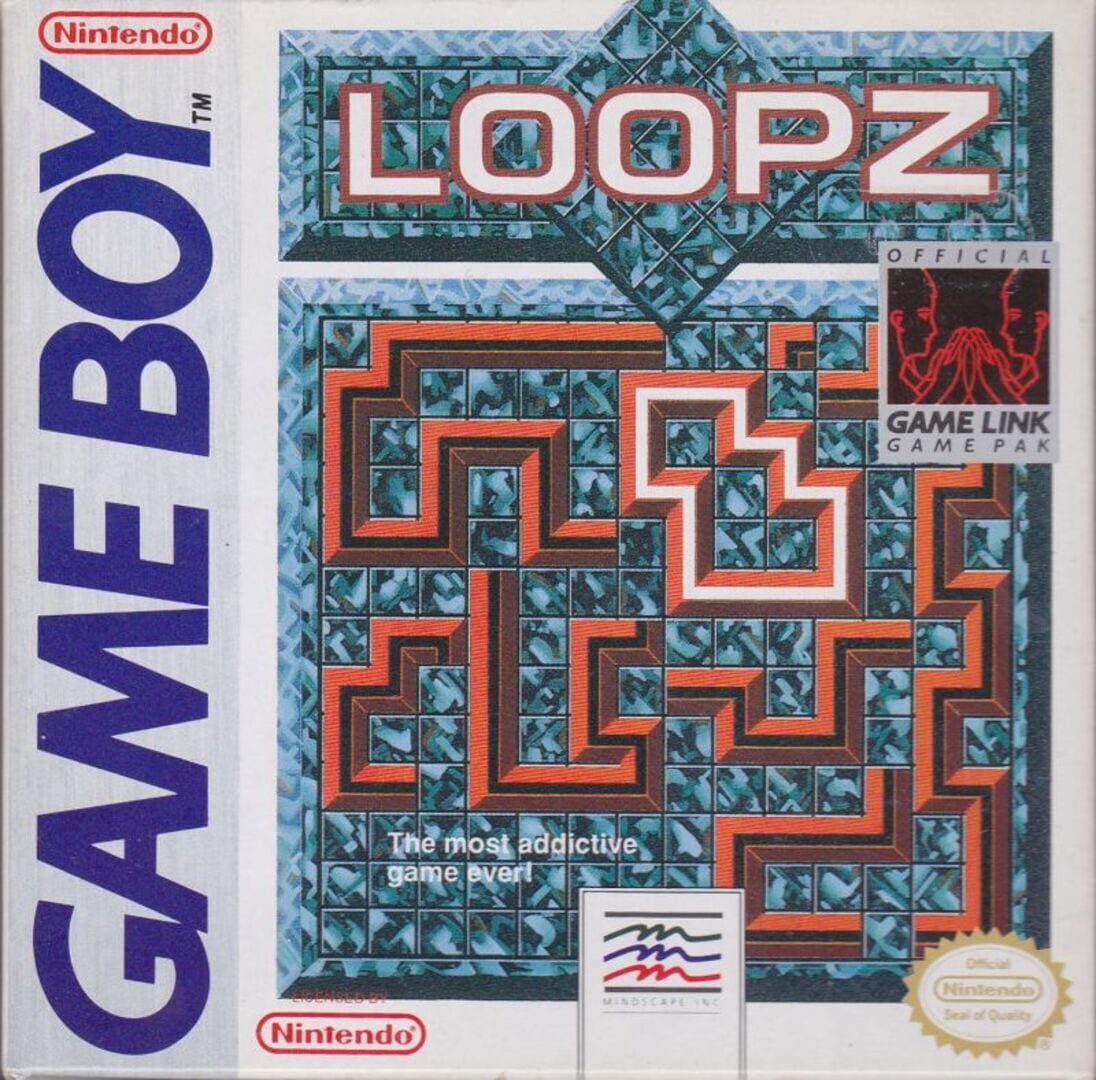
Loopz is a puzzle video game originally designed and programmed by Ian Upton for the Atari ST in 1989. He previously worked as head game designer for Audiogenic, who acquired exclusive rights to the game, then in 1990 arranged for Mindscape to publish it for computers in North America and consoles worldwide. The Nintendo Entertainment System version (programmed by Bits Studios) and the Game Boy version (programmed by Argonaut Software) were released in 1990. Audiogenic published versions of the original game for the Acorn Electron, BBC Micro, ZX Spectrum, Amstrad CPC, Commodore 64, Atari ST, Amiga, and IBM PC in 1990 and 1991.

Puzzle / Strategy / Turn-based strategy (TBS) / Party
He's captured Mario and his friends in his pursuit of a crystal that the group collected when it fell from the sky, and he doesn't hesitate to shrink them to miniature size to get rid of them and get his hands on the other four crystals. The mini-heroes have to find the crystals before he does, making their way through giant environments filled with enormous creatures. The single-player campaign takes place in five different settings, each of them ending with a boss. As usual, players have to collect coins and stars, at the same time escaping dangers such as Piranha Plants and other classic creatures from the Mario universe.


Fighting / Shooter / Platform / Action / Fantasy
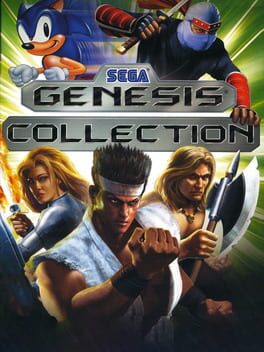
Sega Genesis Collection features over 30 titles including, Altered Beast, Sonic The Hedgehog, Shinobi III, Phantasy Star, and the original Sega Genesis version of Golden Axe. Sega Genesis Collection also features numerous unlockable items that delve into the soul of the Genesis including interviews with the original developers that created the games featured in the collection, a museum area with interesting facts about the games, a hint area to help gamers complete their favorite Sega Genesis games, and Sega arcade games from the Genesis era.

Puzzle / Strategy / Quiz/Trivia / Action / Party
Welcome to Zhadnost, the "most popular game on Bizzarnian state run television"! Bizzarnia, a small communist nation has kidnapped contestants for this its favourite game show and is playing them against each other to compete for their freedom. In this party game for two to four people you will be in near constant action. You will play mini-games with such names as Propaganda, and Eye Spy. Try to force your opponents into harder games and uncover secrets about their characters. All characters are live action including the host.

Puzzle / Strategy / Card & Board Game / Kids / Party
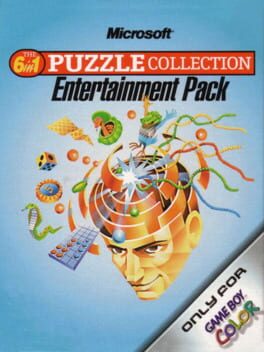
A Game Boy version of the Windows puzzle suite of the same name, featuring 6 of the 10 games released on PC, designed by Alexey Pajitnov, the original Tetris designer, on one Gameboy Color cartridge. Jewel Chase. A level based game. Every level consists of a labyrinth of colored pathways, scattered valuables, locked doors, keys, a thief (the player), on some levels an opposing thief and a door marked exit. The goal is to reach the exit to proceed to the next level, valuables can be 'stolen' for score. If the opposing (computer controlled) thief reaches the exit before the player, the game is lost. Movement is not possible between differently colored tiles, unless a special, multicolor 'bridge' stone is used. 99 levels total. Spring weekend. A rotation puzzle, where a given pattern needs to be recreated by rotating elements on the playfield. Lineup. Using 'Tetris' style blocks, a continuous line from a screen border to an opposite screen border needs to be build. Elements appear on an element stack, and can be selected freely from that and subsequently placed anywhere on screen, without overlapping each other. If the element stack is full, the game is over. As soon as a line is complete, the elements of that line are removed from the screen. Elements appear faster over time. Finty Flush. A grid on top of the screen fills slowly with multicolor balls. The player can pick one out of 4 squares on the bottom of the screen to shift balls in one line into and out of these squares. The squares can be rotated in 90 degree steps. As soon as any square is completely full with balls of the same color, its content empties to make room for more balls. 3 filled square grids grant a bonus point, and the next level begins (tiles appear faster). The game is over when the upper grid is full. Color Collision. A 'Qix' style ray ( no better way to describe this - for the younger audience - imagine a flapping fan ) moves with increasing speed through a screen full of obstacles. The player can only indirectly control it - any time the direction pad is pressed, it gets 'reflected' into the direction that has been indicated. Objective is to hit obstacles with a given color and pattern, avoiding all other elements. To top things of, the patterns change over time. The game ends if the wrong obstacles have been hit too many times. Rat Poker. Little differently colored rats are automatically fed into labyrinths, with labyrinth design changing and getting more complex during level progression. Switches allow rerouting of the rats to arrange certain color combinations ('hands') of rats. If a given combination is achieved, the contributing rats exit the playfield through a door. You progress to the next level if a given number of rats has been removed from the game. The game ends if there is no space left on the playfield for additional rats. .
Puzzle / Strategy / Card & Board Game / Comedy / Kids
"GORYUZIN ELECTRO" is a board game acknowledged for its quality by the Good Toy Committee in Japan in 1997. Based on the legend of the dragon, you have to compete connecting special frames and see to what extend can you proceed into your opponent's territory. No matter how many times you play, it is a fun game for everyone. The gameplay is difficult to explain, the goal of the game is to use all of the player pieces or use the ones that the player needs to reach to other part of the board, (for example the player starts in the bottom of the screen and have to reach the top) the harder part is to that before the opponent do it, both players compete to use their pieces to create obstacles that avoid the opponent to reach the other side, using the opening (that is too the closing piece) to close the line and get a point (or more depending of the pieces used). The game got a challenging gameplay but the difficulty level is really hard.

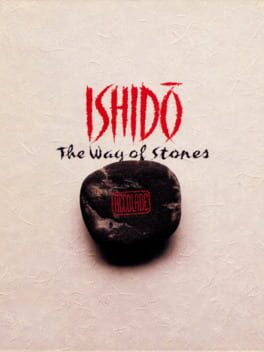
Ishido: The Way of Stones is a puzzle video game released in 1990 by Accolade and developed by Publishing International. It was designed by Michael Feinberg and programmed by Ian Gilman and Michael Sandige. Producer was Brad Fregger, and Brodie Lockard (the designer of the Shanghai computer game) contributed with graphics. "One misty spring morning in 1989, in the remote mountains of China's Han Shan province, a Mendicant monk of the Northern School of the White Crane branch of Taoism, walked silently out through the front gates of the Heavenly Peak Temple The monk carried a stone board, a set of seventy-two carved stone pieces, and an ancient scroll inscribed with brush and ink in elegant calligraphic script. He also carried with him a secret which had lain cloistered and hidden for thousands of years."