Marionette Company 2 is an adventure game for the Sega Dreamcast and sequel to Marionette Company.
In the game, you play a student in a high school - I believe you're supposed to be the same guy from part 1, as you keep on having memories of the Marionette from the original game. One day, you stumble upon a pair of abandoned marionettes, one called Marine and the other called Maria. You take Marine under your care while a rival and all-together obnoxious classmate called Arese takes Maria under hers'. Arese is under the impression that marionettes are nothing more than robots with a heart made of computer circuits, but your experience with part 1, where you apparently managed to raise the original marionette to near human form, has you convinced otherwise, and you intend to prove Arese wrong.

Simulator / Visual Novel / Science fiction / Romance
A visual novel released in 1999.

Simulator / Strategy / Visual Novel / Science fiction / Romance
Elan is a strategy visual novel, developed and published by Visco, which was released in Japan in 1999.

Simulator / Adventure / Visual Novel / Fantasy / Romance
Evergreen Avenue is a Visual Novel released on PlayStation in 2001. Choosing either a male (Catan) or female (Ira) character, you must help each of the seven spirits learn the ways of human life by scheduling sessions with them each week and playing mini-games to determine your effectiveness. Events will pop up from time to time, where you have personal conversations with the various spirits or with your rival. At the end of each month, you are graded in comparison with your rival, and you must sufficiently educate the spirits by the time six months have passed.

Simulator / Visual Novel / Romance
The protagonist, Tanaka Ichirou, is a high school student who, prior to the spring vacation of his third year, receives a letter simply stating "I want to meet you." During middle school, his frequent transferring of schools allowed him to form unique relationships with various girls. In order to search for the sender of the letter, he travels nationwide to various places, and meets the 12 girls of his memories once again.

Simulator / Strategy / Visual Novel / Romance
Roommate: Inoue Ryōko is a love-simulation adventure game and the first title in the Roommate series. The player can freely move about the apartment, and the game mostly consists of voiced dialogue sequences where the player interacts with Ryōko and can respond to her via multiple-choice answers. Unlike many such games, the two weeks of the in-game story progress in real time using the Saturn's internal clock (or the PocketStation in the PlayStation version), and the time and frequency of the player's visits will affect the events that occur and the protagonist's relationship with Ryōko, leading to several different endings. In Roommate Ryoko you have three years to develop a relationship with her. Using a truly innovative real-time feature, the Saturn's internal clock affects how the game plays out. If you play during the day, she isn't around at times. Most of your "interfacing" with her occurs at night (welcome to the next level, indeed). Bad Three's Company allusions aside, there is a good bit of social interaction that goes on - you actually get to know her and have to reveal a lot about yourself. What is most impressive, though, is that the conversation is never recycled - there are thousands of things that Ryoko can say. Seasonal changes affect the game, and although it isn't played in real time, you must adjust your schedule in the game to hers to catch her (this is done by leaving her notes on your shared white board). Don't get antsy and set the Playstation clock ahead though; the Playstation reads that "skipped" time as time you didn't spend talking to Ryoko, and by the time you get to the "future," she'll have moved out. The graphics in Roommate look pretty good - forget polygons or texture mapping though; everything here is drawn two-dimensionally with special attention to detail. The sound is also pretty sharp because Ryoko actually speaks a lot of her dialogue (while it is correspondingly displayed onscreen). Unfortunately though, the gameplay almost entirely consists of listening to your new roommate and picking an appropriate thing to say (a lot like your freshman year of college really).

Simulator / Visual Novel / Romance
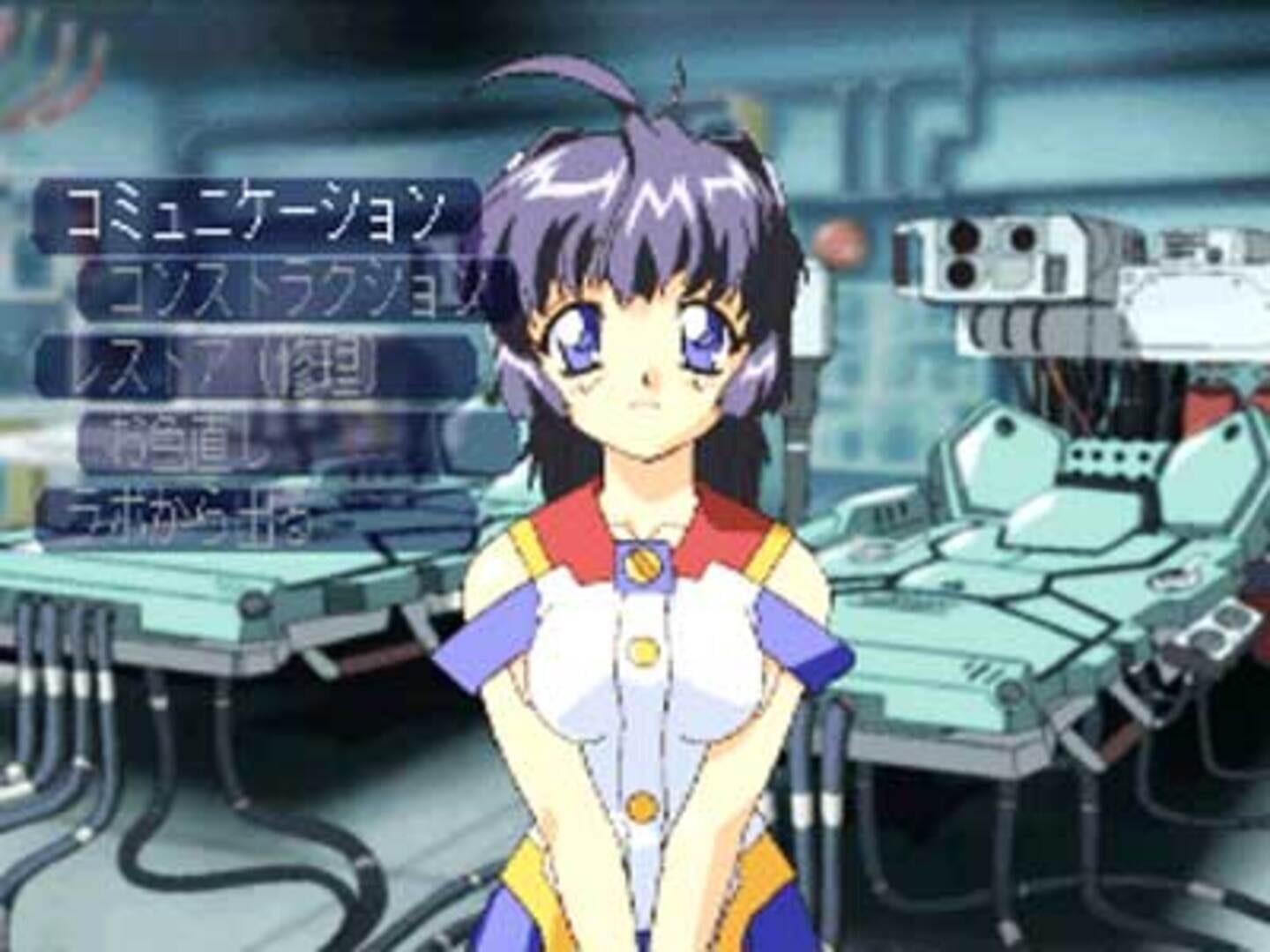
Anokodokonoko is a dating simulation board game released by Success in 1998 that features 2 main game mode: - Story mode: Only one player game. In this mode there is a strong element of simulation. The hero (the player) has the purpose of meeting with the girl, and make her fall in love with him, the game in this mode features different events. - Party mode: This mode can be played by up to 4 human players. This mode is more focused in the board game style but without squares and dices, since the game is also playable in the story mode game maps and is a sort of a competition between the human characters to win and know who between them got more friends or dates with the different girls.

Simulator / Visual Novel / Romance
In Tokimeki Memorial 2, male players make their way through three years of high school, while trying to attract a female character from a pool of dateable characters. With 13 different girls to pursue, each with their own unique likes, dislikes, and characteristics, there's hours of dating fun to be had. Will you be able to win the affection of the girl of your dreams in this short time?

Adventure / Visual Novel / Science fiction
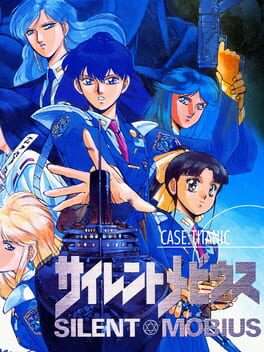
Case: Titanic is based on the manga and anime Silent Möbius. It presents an original episode that involves the sighting of a strange ship in the clouds above Tokyo. Closer inspection reveals that the ship appears to be identical to the famous RMS Titanic that sank in the Atlantic Ocean in 1912. The game's nameless male protagonist boards the ship along with Rally, Kiddy, Nami and other heroines from the manga in order to investigate this seemingly inexplicable phenomenon. The gameplay is done in Japanese-style, puzzle-less adventure format. The entire game is set on the Titanic. The player is generally free to visit various areas of the ship in any order, though access to certain locations is restricted and necessary events must be triggered in order to gain it. The commands Look, Talk and Move are used on most screens, and there is no inventory management.