

Developed by Fupac for Datam Polystar.
Simulator / Strategy / Visual Novel / Romance
Roommate: Inoue Ryōko is a love-simulation adventure game and the first title in the Roommate series. The player can freely move about the apartment, and the game mostly consists of voiced dialogue sequences where the player interacts with Ryōko and can respond to her via multiple-choice answers. Unlike many such games, the two weeks of the in-game story progress in real time using the Saturn's internal clock (or the PocketStation in the PlayStation version), and the time and frequency of the player's visits will affect the events that occur and the protagonist's relationship with Ryōko, leading to several different endings. In Roommate Ryoko you have three years to develop a relationship with her. Using a truly innovative real-time feature, the Saturn's internal clock affects how the game plays out. If you play during the day, she isn't around at times. Most of your "interfacing" with her occurs at night (welcome to the next level, indeed). Bad Three's Company allusions aside, there is a good bit of social interaction that goes on - you actually get to know her and have to reveal a lot about yourself. What is most impressive, though, is that the conversation is never recycled - there are thousands of things that Ryoko can say. Seasonal changes affect the game, and although it isn't played in real time, you must adjust your schedule in the game to hers to catch her (this is done by leaving her notes on your shared white board). Don't get antsy and set the Playstation clock ahead though; the Playstation reads that "skipped" time as time you didn't spend talking to Ryoko, and by the time you get to the "future," she'll have moved out. The graphics in Roommate look pretty good - forget polygons or texture mapping though; everything here is drawn two-dimensionally with special attention to detail. The sound is also pretty sharp because Ryoko actually speaks a lot of her dialogue (while it is correspondingly displayed onscreen). Unfortunately though, the gameplay almost entirely consists of listening to your new roommate and picking an appropriate thing to say (a lot like your freshman year of college really).
The basic plot of Roommate is fairly simple. Ryoko is seventeen, her family has moved from Tokyo to New York, and she is staying behind to finish school. Her father (a friend of your father's) has asked that she move in with you in your apartment (where you have a spare room) so she can complete her studies. But Ryoko misses her family and is emotionally vulnerable - so it's time to for you to do some moving in of your own.


Simulator / Strategy / Visual Novel / Science fiction / Romance
Elan is a strategy visual novel, developed and published by Visco, which was released in Japan in 1999.

Simulator / Visual Novel / Science fiction / Romance
A visual novel released in 1999.

Role-playing (RPG) / Strategy / Visual Novel / Fantasy / Romance
A strategy game and a visual novel with RPG elements developped by Gimmick House.

Simulator / Visual Novel / Romance
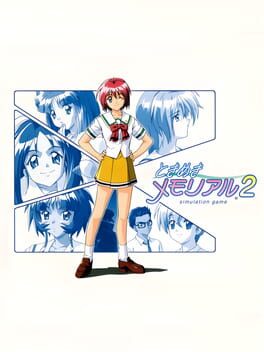
In Tokimeki Memorial 2, male players make their way through three years of high school, while trying to attract a female character from a pool of dateable characters. With 13 different girls to pursue, each with their own unique likes, dislikes, and characteristics, there's hours of dating fun to be had. Will you be able to win the affection of the girl of your dreams in this short time?

Role-playing (RPG) / Strategy / Visual Novel / Action / Drama
The first entry in the Tokyo Majin Gakuen franchise, a series of hybrid titles that mix school life adventure gameplay with strategy RPG battles.

Simulator / Visual Novel / Romance
Tokimeki Memorial is a dating sim by Konami and the first game in the Tokimeki Memorial series. The first game in the series is particularly notable for its "bomb" feature, where neglected, infrequently-dated girls would eventually become angry and gossip to their friends, severely reducing love meters across the board. In the middle of the game, when the number of known girls was high, these "bombs" became the primary concern of the player, forcing careful planning and strategies like round-robin dating.

Simulator / Adventure / Visual Novel / Fantasy / Romance
Evergreen Avenue is a Visual Novel released on PlayStation in 2001. Choosing either a male (Catan) or female (Ira) character, you must help each of the seven spirits learn the ways of human life by scheduling sessions with them each week and playing mini-games to determine your effectiveness. Events will pop up from time to time, where you have personal conversations with the various spirits or with your rival. At the end of each month, you are graded in comparison with your rival, and you must sufficiently educate the spirits by the time six months have passed.

Simulator / Visual Novel / Romance
The Tokimeki Memorial 2 EVS Append Disc was published on three additional discs for Tokimeki Memorial 2 to allow the game's EVS (Emotional Voice System) to be available for the different girls. The EVS is a system that allows the girls to actually pronounce the protagonist's name. Only two of the girls, Hikari Hinamoto and Kasumi Asou, have EVS in the base game, and the append discs contain the voices for all the others, except Maeka Kudanshita who never uses the protagonist's name. The discs were included in the Tokimeki Memorial 2 magazine Hibikino Watcher, each disc includes the data for three additional girls, shown on the cover of the corresponding issue: Disc 1: - Kotoko Minazuki - Miyuki Kotobuki - Kaedeko Sakura Disc 2: - Akane Ichimonji - Homura Akai - Kaori Yae Disc 3: - Maho Shirayuki - Mei Ijūin - Sumire Nozaki