Developed by Shout! Designworks for Asmik Ace Entertainment.
Role-playing (RPG) / Strategy / Visual Novel / Action / Drama
The first entry in the Tokyo Majin Gakuen franchise, a series of hybrid titles that mix school life adventure gameplay with strategy RPG battles.
In the nights of Tokyo, mysterious deaths involving the 'Reborn Dead' occur. People that are disappearing at night suddenly reappear during the day as a corpse. Not only that, but as the corpses are sent to the morgue to be autopsied, they disappear again leaving signs showing that they escaped themselves. To fight these 'Reborn Dead' and to prevent more deaths, mysterious transfer student, Tatsuma Hiyuu, and delinquent student, Kyouichi Houraiji, stay up every night to fight and solve what's causing this. Along with the rest of their group, who all have supernatural powers, they soon realize that a greater threat, which involves even more powerful demons, is near.

Role-playing (RPG) / Strategy / Visual Novel / Fantasy / Romance
A strategy game and a visual novel with RPG elements developped by Gimmick House.

Role-playing (RPG) / Strategy / Tactical / Fantasy / Romance
Sakura Taisen 1 & 2 (also known as Sakura Wars 1 & 2) is a dramatic adventure game compilation of "Sakura Taisen" (1996) and "Sakura Taisen 2 ~Thou Shalt Not Die~" (1998) for the PlayStation Portable released exclusively in Japan. A "Taishō Roman" story featuring lavish visuals, music, and voice acting, both timeless Sega Saturn masterpieces depict the battle between the Imperial Combat Revue and a great evil set in the Imperial Capital. Both games have been readjusted for widescreen and are compacted on a single UMD. While publishers attempted to release the game overseas, Sony Computer Entertainment America rejected the proposal due to the game's visual novel format and difficulties in localization and licensing.

Role-playing (RPG) / Strategy / Action
The second entry in the Tokyo Majin Gakuen franchise, a series of hybrid titles that mix school life adventure gameplay with strategy RPG battles.

Role-playing (RPG) / Turn-based strategy (TBS) / Adventure / Action / Comedy
The world of Blue Breaker is called "the path in the middle of empty sky": floating islands connected with each other by bridges. It is the tradition of the people in this world that a fighter's full initiation can be completed only when he finds his true love and marries her. Such day has come now in the life of a young warrior named Kain, the hero of the game. His father explains to him that besides the usual warrior's goal of defeating the evil Dark Lord, Kain also has to find the girl of his dreams. He introduces to him a young sorceress named Asha, who becomes his first companion. But on his journey Kain meets many other young women, and it won't be so easy to choose one to whom he can give his heart! Labeled as Love Role-Playing, "Blue Breaker" is a genre-crossing game that combines traditional Japanese RPG with town and dungeon exploration, party-based combat, etc., with "love adventure", in which your behavior towards girls influences the story. "Blue Breaker" features branching story progressing: events appear depending on the progress you have made with your female companions. Your typical RPG activities will influence your relationship with the girls. For example, if you fight too much, the girls will be tired; if you give a girl too many orders in battle (you can set battle in auto mode and only interfere occasionally) she will be displeased, and so on. It is also important to form a party in which the girls will have as few internal conflicts with each other as possible.

Simulator / Strategy / Visual Novel / Science fiction / Romance
Elan is a strategy visual novel, developed and published by Visco, which was released in Japan in 1999.

Role-playing (RPG) / Strategy / Adventure / Historical
As with the tradition of Tokyo Majin Gakuen franchise, Tokyo Majin Gakuen: Gehoujou is an adventure/strategy RPG hybrid. In adventure mode, players interacts with characters for answers. Affecting the answers and overall story progression are nine "emotions": love, friendship, joy, agreement, sorrow, anger, indecision, scorn, and ignorance. In battle mode, the party fights on isometric battle screens, moving around the battlefield and attacking when enemies are in range.

Strategy / Tactical / Adventure / Action / Science fiction
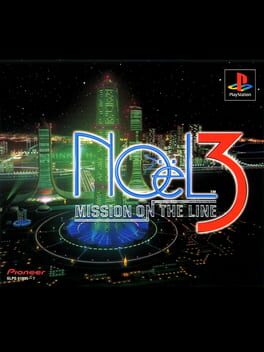
Noël 3 - Mission on the Line is the latest game in the Noël series. This time the game is a little different from the previous ones. The gameplay is about using your computer to destroy the terrorist virus and clear the network. To do that the player will use 3 antivirus that Yuka Okano created and to use them the player just have to choose hacking in a square of the network and select them in that square of the network that is infected and after that a bar will appear and pressing the button in the proper time will destroy the virus. Once some parts of the network is clear a video phone event will happen and Yuka Okano or other of the girls will talk to your character and give you more information to advance in the game and clear all the network, here the gameplay is similar to the other Noël games, and in the right panel sometimes a ball of light appear and if the player is quick enough he can click on it and transfer it to the catapult part and when the ball of light shines there click again to ask the girl about that subject and gather more information. The game features an album mode that will be unlocked playing the story mode. Probably this game is the best one in the series.

Simulator / Strategy / Visual Novel / Romance
Roommate: Inoue Ryōko is a love-simulation adventure game and the first title in the Roommate series. The player can freely move about the apartment, and the game mostly consists of voiced dialogue sequences where the player interacts with Ryōko and can respond to her via multiple-choice answers. Unlike many such games, the two weeks of the in-game story progress in real time using the Saturn's internal clock (or the PocketStation in the PlayStation version), and the time and frequency of the player's visits will affect the events that occur and the protagonist's relationship with Ryōko, leading to several different endings. In Roommate Ryoko you have three years to develop a relationship with her. Using a truly innovative real-time feature, the Saturn's internal clock affects how the game plays out. If you play during the day, she isn't around at times. Most of your "interfacing" with her occurs at night (welcome to the next level, indeed). Bad Three's Company allusions aside, there is a good bit of social interaction that goes on - you actually get to know her and have to reveal a lot about yourself. What is most impressive, though, is that the conversation is never recycled - there are thousands of things that Ryoko can say. Seasonal changes affect the game, and although it isn't played in real time, you must adjust your schedule in the game to hers to catch her (this is done by leaving her notes on your shared white board). Don't get antsy and set the Playstation clock ahead though; the Playstation reads that "skipped" time as time you didn't spend talking to Ryoko, and by the time you get to the "future," she'll have moved out. The graphics in Roommate look pretty good - forget polygons or texture mapping though; everything here is drawn two-dimensionally with special attention to detail. The sound is also pretty sharp because Ryoko actually speaks a lot of her dialogue (while it is correspondingly displayed onscreen). Unfortunately though, the gameplay almost entirely consists of listening to your new roommate and picking an appropriate thing to say (a lot like your freshman year of college really).