Adventure / Thriller / Mystery
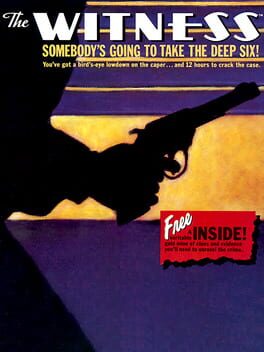
The Witness was the seventh game released by interactive fiction pioneers Infocom. The player character is a detective who has been summoned to the Cabeza Plana, California office of Mr. Linder, a millionaire. Linder fears that his life is in danger... and indeed, as he sits in his office with the player, he is murdered before the player's eyes. The player then must solve the murder.
Puzzle / Adventure / Thriller / Mystery
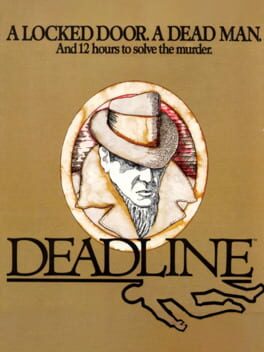
Deadline is an interactive fiction computer game published by Infocom in 1982. Written by Marc Blank, it was one of the first murder mystery interactive fiction games. Like most Infocom titles, Deadline was created using ZIL, which allowed the easy porting of the game to popular computer platforms of the time such as the Apple II and the Commodore 64. It is Infocom's third game. The player's character in Deadline is an unnamed police detective, summoned to a sprawling Connecticut estate to investigate the apparent suicide of wealthy industrialist Marshall Robner. At first, it seems a very straightforward case: the body was discovered in the library, which had been locked from the inside, and the cause of death was an overdose of his prescribed antidepressants. But something just doesn't feel right. Could someone have killed Robner for his money? Did he make an enemy through his business dealings? Or was there some other motive? With the able assistance of level-headed Sgt. Duffy, the player has twelve hours to solve the case before it is closed forever.

Adventure / Thriller / Mystery
Moonmist is an interactive fiction computer game written by Stu Galley and Jim Lawrence and published by Infocom in 1986. The game was released simultaneously for many platforms, including the IBM PC, Apple II, Amiga, Atari ST and Commodore 64. It is Infocom's twenty-second game. Galley and Lawrence previously wrote Seastalker for Infocom. The player's character is a young detective, asked by friend Tamara Lynd to investigate her new home of Tresyllian Castle in Cornwall, England. Tamara has recently become engaged to the castle's lord, Jack Tresyllian. She was very happy until she began seeing what appeared to be The White Lady, a ghost who has allegedly haunted the castle for centuries. As if seeing a ghost wasn't nerve-racking enough, she's also begun to fear for her life. Is Tamara's imagination just overly excited from living in a large old castle, or is someone really trying to kill her? And if her life is in danger, is it from a ghost or someone using it as a disguise?
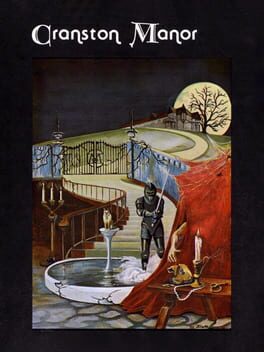
You break into the mansion of the late millionaire Cranston in order to steal sixteen treasures which are said to be hidden within its walls.
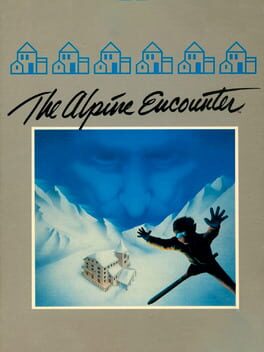
While in Peking, China a priceless Ming vase was stolen, in a military installation in the Rocky Mountains top-secret plans for a new missile were taken. VODOC, a secret organization keen on world domination is behind both crimes. It is up to you, Agent 456, to stop VODOC. You are therefore sent to a ski resort in the Swiss Alps.

Adventure / Visual Novel / Mystery
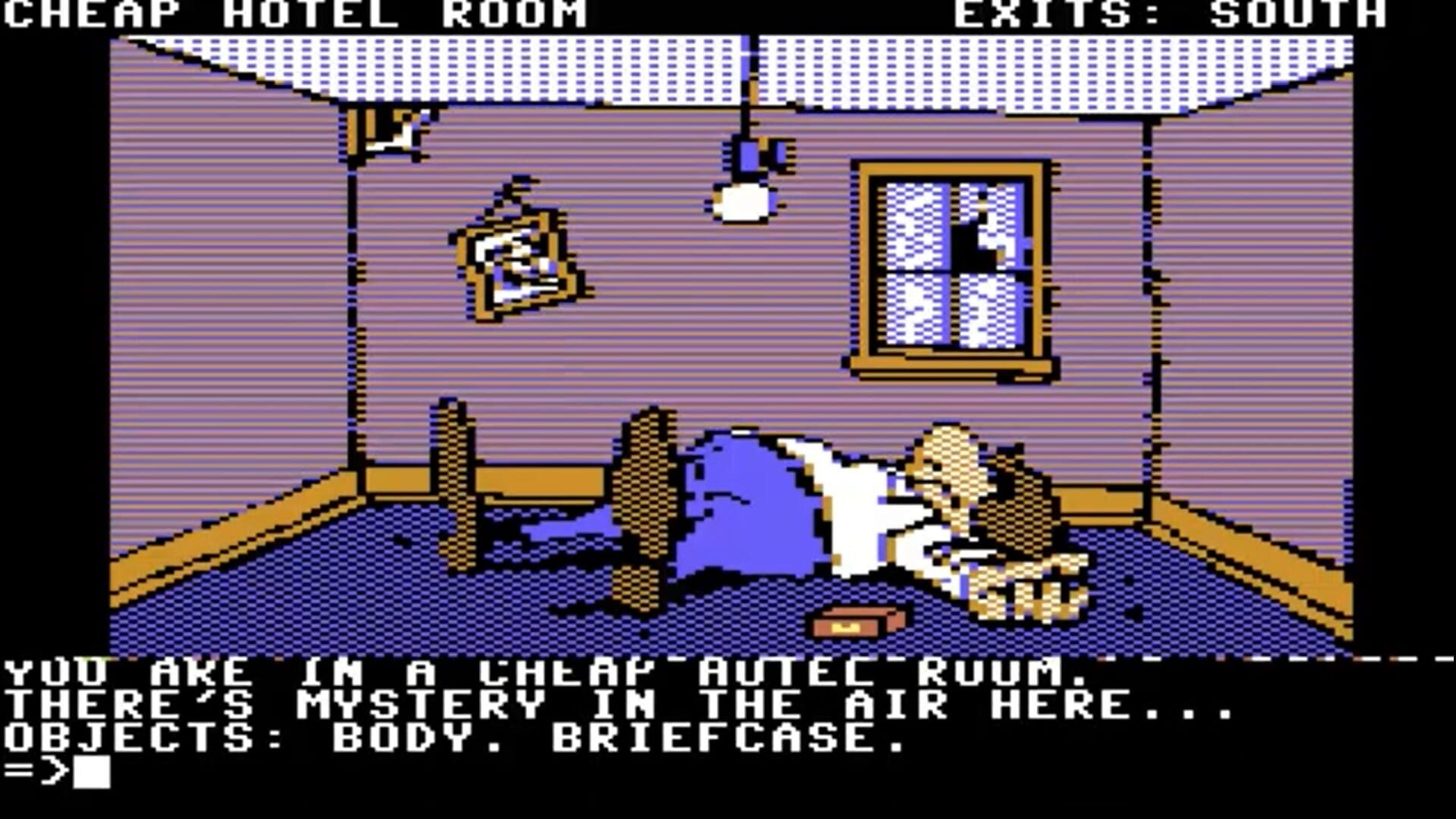
In spite of its title, the game has little to do with the famous movie Casablanca beyond a few loose references. It is a text adventure with graphics, in which the player types text commands to interact with the environment. Several useful commands (including Look, Search, Take and Knock) can be accessed directly through function keys. Limited navigation between screens can be performed with directional arrows.
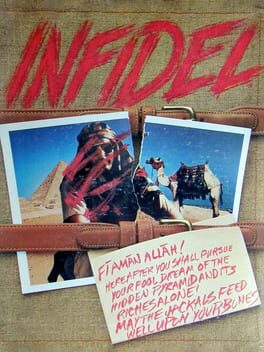
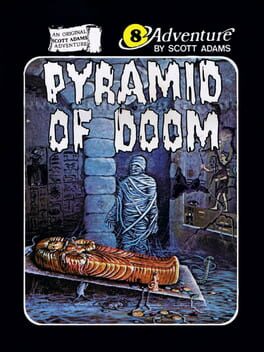
Infidel is an interactive fiction computer game published by Infocom in 1983. It was written by Patricia Fogleman and Michael Berlyn and was the first in the "Tales of Adventure" line. Due to Infocom's virtual Z-Machine, it was ported to a wide variety of popular computing systems of the day, including the Apple II and Commodore 64. It is Infocom's tenth game. In 1916, Dr. Ellington came into possession of a 5000-year-old fragment of pottery covered with hieroglyphics. (Conveniently for the text-only game, these runes look strangely like ASCII characters.) After years of painstaking research, Ellington managed to decipher a portion of the text, which indicated the general location of a pyramid that no one had heard of before. He managed to organize a modest expedition to the area in 1920, but found nothing before he died except a small block of limestone bearing the same style of hieroglyphics. According to the partial translation he made, the new fragment spoke of a queen and great riches. When Howard Carter discovered King Tut's tomb a few years later, Dr. Ellington's widow figured that someone had found the pyramid her husband had been looking for. She stowed the papers and artifacts away and forgot all about them. Rose found them in the early 1980s after her mother's death and did some preliminary fact-checking. The pyramid indicated by her father's papers is nowhere near Tut's. In fact, no pyramids have ever been discovered in the area Dr. Ellington was investigating. Rose is by no means a rich woman—she only wants someone to give her father the recognition he deserves—so it'll be a modest expedition. But it sure sounds like the perfect chance for an opportunistic soldier-of-fortune to make a name for himself.