Oekaki Logic1999
Oekaki Logic is a Puzzle game, published by Sekaibunka Publishing, Inc., which was released on the Nintendo Power service on June 1999. A sequel was released later that year.
Screenshots
Featured in
Oekaki Logic is a Puzzle game, published by Sekaibunka Publishing, Inc., which was released on the Nintendo Power service on June 1999. A sequel was released later that year.
Puzzle / Fantasy / Science fiction
Dr. Mario was remastered for the Super Famicom and released as a stand-alone Nintendo Power service release, only in Japan, and also for the Nintendo Gateway System. The game also received a Satellaview broadcast. The same version was previously bundled with Tetris and released in the West as Tetris & Dr. Mario.
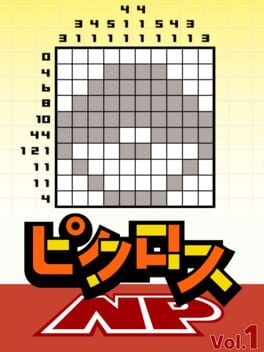
The first of a series of eight Picross puzzle games distributed over the Nintendo Power cart-writing service. This part includes puzzles featuring characters from Pokémon Red and Blue.
Puzzle / Strategy / Fantasy / Educational
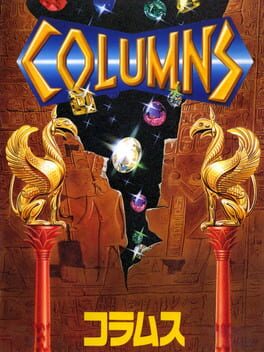
Go back in time to a bygone civilization: the ancient world of Phoenicia. There you will play a simple and captivating game where sparkling, rainbow-coloured jewels drop one after another. According to the ancient merchants, by arranging three or more of the same jewels horizontally, vertically or diagonally, you shall perform miracles.
Oekaki Logic 2 is a Puzzle game, published by Sekaibunka Publishing, Inc., which was released in Japan in 1999.
Platform / Puzzle / Fantasy / Comedy
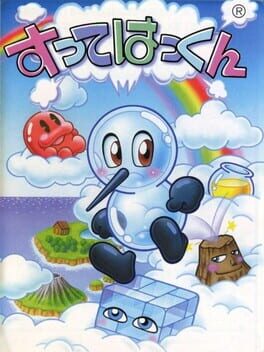
This version was released for use with the Nintendo Power cartridge, and included all the levels designed by game creators (which wasn't possible to do with the 8MB Satellaview Memory Pak). It was afterwards released as a Super Famicom standard cartridge and also for the japanese Wii and Wii U Virtual Console. Sutte Hakkun is a puzzle action game in the shape of a platformer. The playing character is an abundant-beaked bird resembling a penguin, named Hakkun, that is able to walk and jump but not to fly. The Rainbow of Happiness shined in the sky above Peaceful Islands: one day it broke apart and now Hakkun has to track down, collect, and put together all rainbow crystals to relive it. The gameplay hinges upon two elements: blocks and potions, the latter of several colours. Hakku makes its way through levels by changing the position of blocks — that will be done by swallowing them to release them on an other place then — and sucking potions — that are to be injected to blocks by the beak, endowing them with new properties consequential to the colour of the fluid — from jars. A level is cleared when the rainbow shards in it are collected. Neither a time limit nor enemy characters are there impeding Hakkun's way. Equally distinctive is the score system: a set number of points is given at the beginning of each level, and a decrease happens with any move made, thus rewarding the player for completing levels with as little moves as possible.
Puzzle / Strategy / Fantasy / Science fiction
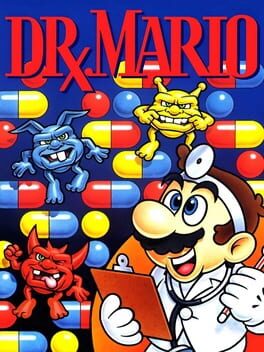
Dr. Mario is a falling block tile-matching video game, in which Mario assumes the role of a doctor, dropping two-colored medical capsules into a medicine bottle representing the playing field. This area is populated by viruses of three colors: red, yellow, and blue. In a manner and style considered similar to Tetris, the player manipulates each capsule as it falls, moving it left or right and rotating it such that it is positioned alongside the viruses and any existing capsules. When four or more capsule halves or viruses of matching color are aligned in vertical or horizontal configurations, they are removed from play. The main objective is to complete levels, which is accomplished by eliminating all viruses from the playing field. A game over occurs if capsules fill up the playing field in a way that obstructs the bottle's narrow neck.