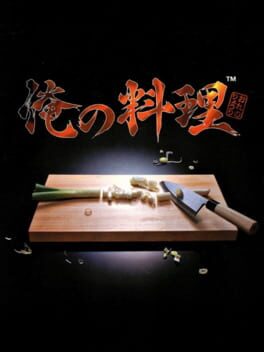

Ore no Ryouri was developed by Agenda and released by Sony for the original PlayStation. Players must successfully manage different types of restaurants, utilizing the DualShock's analog sticks to perform various tasks.
You play the part of a young boy who is hailed as the most accomplished chef in the Coo-Kingdom, and not undeservedly: year after year, you have been the top winner in the kingdom's annual Iron Chef-like cooking contest. One day, as you are relaxing at the beach, a jealous rival appears: Kaeru, a frog who has consistently been the runner-up in every one of those contests. He and his Gero-Gero Gang (a motley mix of bad guys, including a robot and a flower) want to challenge you to a final cooking competition, to be held at 8 different restaurants in the capital city. As a competitive type yourself, you accept and begin your journey across the city's restaurants, where you will train with your fellow chef friends in order to defeat Kaeru and his gang! Once customers start coming into the restaurant, their orders will begin to accrue on the side of the screen. After selecting the order you want to fill, a wide variety of cooking-oriented mini games must be quickly completed before you can prepare the food in question. Each individual event and activity is scored from 1 to 10, with a number of indicators letting you know when you've poured just enough beer into the glass or your noodles have the preferred firmness. Likewise, points will be deducted if you cut your fingers when chopping or burn your french fries. Tougher cuisines will require more steps, will offer fewer chances for chaining, and will require speed, precision, and careful resource management in order for you to advance. In addition to cooking tasks, a number of other, more detrimental, events can occur.

Real Time Strategy (RTS) / Simulator / Strategy / Comedy / Business
The PlayStation port of Theme Hospital has a a different menu system to accomodate the controller, and a slightly different graphical presentation of the HUD.

Simulator / Adventure / Comedy / Business
A second, expanded PlayStation iteration of Artdink's Atlas series. You are once again in charge of a trading company headquartered in Lisbon, and tasked by the king with exploring the rest of the world and bringing home the spoils. In addition to the exploration, trading and map creation of the prior game, it adds an "episode" system which is effectively a quest log, as well as changes and updates to the story and quests. Additionally, it improves on the trading system, adding the "trading post" function, which allows the player to choose which product to make in some cities, which allows for more streamlined trading. Just like the prior games, the shape of the world is determined by the player's belief or disbelief in the reports brought in by their admirals, and ultimately influences what is found on the map, and the routes that are available.

Simulator / Adventure / Historical / Comedy
Neo ATLAS is a reimagining of Artdink's home computer Atlas series, with 32-bit era upgrades to graphics and gameplay. Neo ATLAS is a reimagining of Artdink's home computer Atlas series, with 32-bit era upgrades to graphics and gameplay.

Role-playing (RPG) / Simulator / Fantasy / Comedy
A flight simulation shooting game set in the fictional planet Verdecelba. The main character Misaki who crashes on Verdeselba and survives the war while engaging with various people and the military. Unlike the Ace Combat series, this game emphasizes the appeal of flying slowly in the sky. You can't crash in this game unless shot down in battle by an enemy. You can also stand still in the air.

Role-playing (RPG) / Simulator / Business
Natsume's farm simulation series makes its debut on the PlayStation with Harvest Moon: Back to Nature. It is the first Harvest Moon game for a non-Nintendo console. Starting with a few rudimentary implements and very little money, players begin the arduous task of reviving their grandfather's farm and thereby claiming their place as its rightful heir. Players are given three years to achieve this goal. A year consists of four seasons, each of which lasts 30 days. Different crops can be planted each season, but before the seeds can be planted, the land must be cleared and then the soil tilled. Seeds must also be watered until the fruit or vegetable matures. Once the crops are ready for harvest, they can be placed in a shipping bin where they'll be collected and paid for. In addition to farming, players will interact with local villagers and partake in seasonal events such as the Tomato Festival and Fireworks Display. As more money is earned, players can expand their farm and begin to raise livestock such as chickens and cows.

Simulator / Strategy / Business
The Bistro - Ryouri & Wine no Shokunin-tachi is a simulation game in which the player can own his own bistro restaurant hiring the different staff members, selecting the foods and drinks, etc. The goal of the game is to have the best restaurant of the city. The game features 3 main countries to choose (Japanese, Italian & French) over 230 different wine kinds and a complete encyclopedia of meals and drinks.

Simulator / Strategy / Business / Sandbox
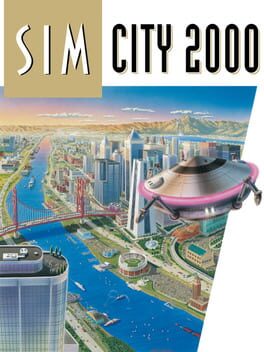
It has all the features, flexibility, art, animation, and power you need to create an environment of your dreams. Choose from a selection of bonus cities and scenarios to rule or ruin as you please. Build schools, libraries, hospitals, zoos, prisons, power plants, and much more... Lay down roads, railways, and highways. Explore the underground layer and build subways and utilities without compromising your aesthetics. Customize different buildings or design your own graphics sets from scratch. This is the ultimate classic Maxis city-building and management simulation. If this game were any more realistic, it'd be illegal to turn it off!