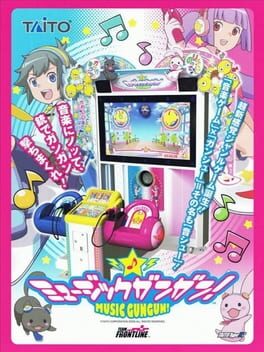
This expanded sequel of Sound Shooting!! features all of the original game's songs along with new songs and updated gameplay. Like the original game, this blends sidescrolling arcade shooting and rhythm gameplay; this time, the rhythm game sections feature extra lanes for added difficulty.

Shooter / Music / Indie / Action / Science fiction
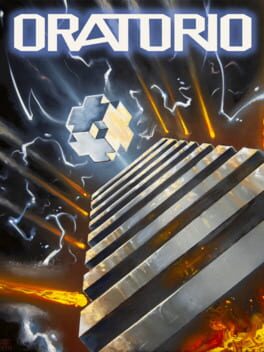
Oratorio is a rhythm action rail-shooter developed for the 8-bit Nintendo Entertainment System. Primarily inspired by games like Rez, Child of Eden, and Thumper. Oratorio is a unique on-rails rhythmic shooter where players create the music of the game through interaction with the game's systems, like shooting enemies, projectiles, and powerups. Everything players do contributes to the soundscape in this innovative retro music shooting game. The game takes place in a dystopian cyberpunk future where an environmentalist hacker group launches a desperate mission to hack the servers of one of the world's largest corporations in order to steal the DNA sequences for extinct plants and animals that the corporation has copyrighted for use in virtual reality safaris. As the enigmatic hacker named Oratorio, players are the last hope for revival in a world that has gone to a digital ruin. Players control a cursor and assume a first-person perspective on an ever-expanding digital track in cyberspace.

Shooter / Music / Science fiction
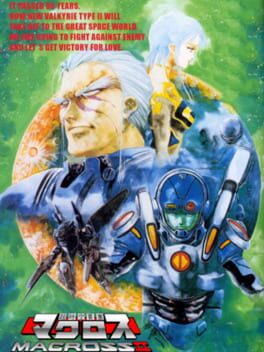
Super Spacefortress Macross is a vertically-scrolling shoot'em up based on the 1984 theatrical film in the Macross franchise, commonly known in English as Macross: Do You Remember Love?. Players control the VF-1 Valkyrie fighters of ace pilots Max Jenius and (in two-player games only) Hikaru Ichijyo in combat against the Zentradi. The game consists of seven levels, mostly based on action scenes from the film, including confrontations over Macross City, in the rings of Saturn, the surface of the devastated Earth, and the final battle against Boddole Zer. Gameplay is similar to Raiden: the Valkyrie can transform into one of three different modes by collecting the appropriate power-up: in Fighter mode, the ship fires a spread shot, Gerwalk mode has a narrow but powerful laser that passes through enemies, and Battroid mode features homing missiles. The intensity of the attacks can be upgraded in three stages through another power-up. There are also smart bombs to pick up that clear most enemies off the screen with one shot. Each level ends with a boss battle. Besides shooting down the hordes of enemies, picking up medals and rare Minmay dolls also increases the score. In two-player mode, both players take on the enemy simultaneously. Between levels, cutscenes recreate scenes from the film to illustrate the storyline.


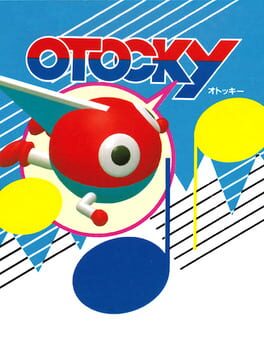
Otocky can be described as a musical side-scrolling shoot 'em up. The player's spaceship has a ball for a weapon, which can be fired in eight directions; each direction corresponds to a different musical note. The note plays when the player presses the fire button, and is also quantized in time so that it matches the beat playing in the background. By using the weapon selectively the player can improvise music while playing.

Shooter / Music / Science fiction
iS: internal section is a video game developed by Positron and published by Squaresoft and released in 1999. In the same vein of gameplay as Tempest 2000, iS: internal section is a tube shooter, a type of shoot 'em up where the player controls a ship "looking down" a long tunnel or tube, and the player can move around inside the cylinder, shooting enemies that it runs into while moving. It is an experimental project that responds to its 16 built-in tracks, or even your own music from a CD.

Shooter / Music / Indie / Action
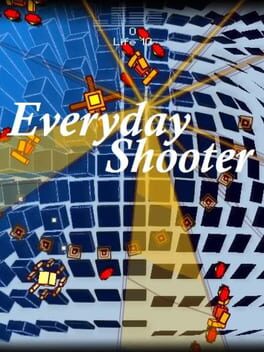
Everyday Shooter is an album of games exploring the expressive power of abstract shooters. Dissolute sounds of destruction are replaced with guitar riffs harmonizing over an all-guitar soundtrack, while modulating shapes celebrate the flowing beauty of geometry. Play through different levels each with a completely unique musical, graphical, and gameplay style. Shoot to trigger musical sounds and riffs that combine to form the final soundscape of the game. Use points earned in the game to unlock extra lives, shuffle mode, and different visual filters.

Shooter / Music / Platform / Action / Fantasy
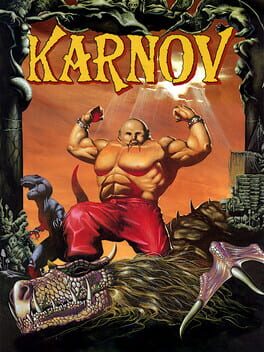
Karnov is a 1987 platform arcade game. It is the debut of Data East's mascot of the same name. After Data East became defunct due to bankruptcy in 2003, Paon, a company comprising former Data East staff, acquired the rights to Karnov, along with multiple other Data East games. In the game, players take control of the title character Jinborov Karnovski, or "Karnov" for short. Karnov is a strongman popularly illustrated as being from an unspecified part of the Soviet Union's Central Asian republics as shown on the original arcade flyer and again in Karnov's Revenge.