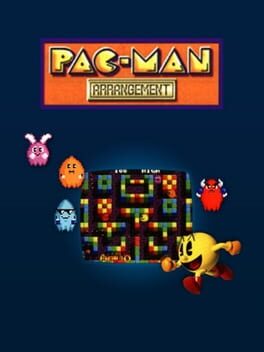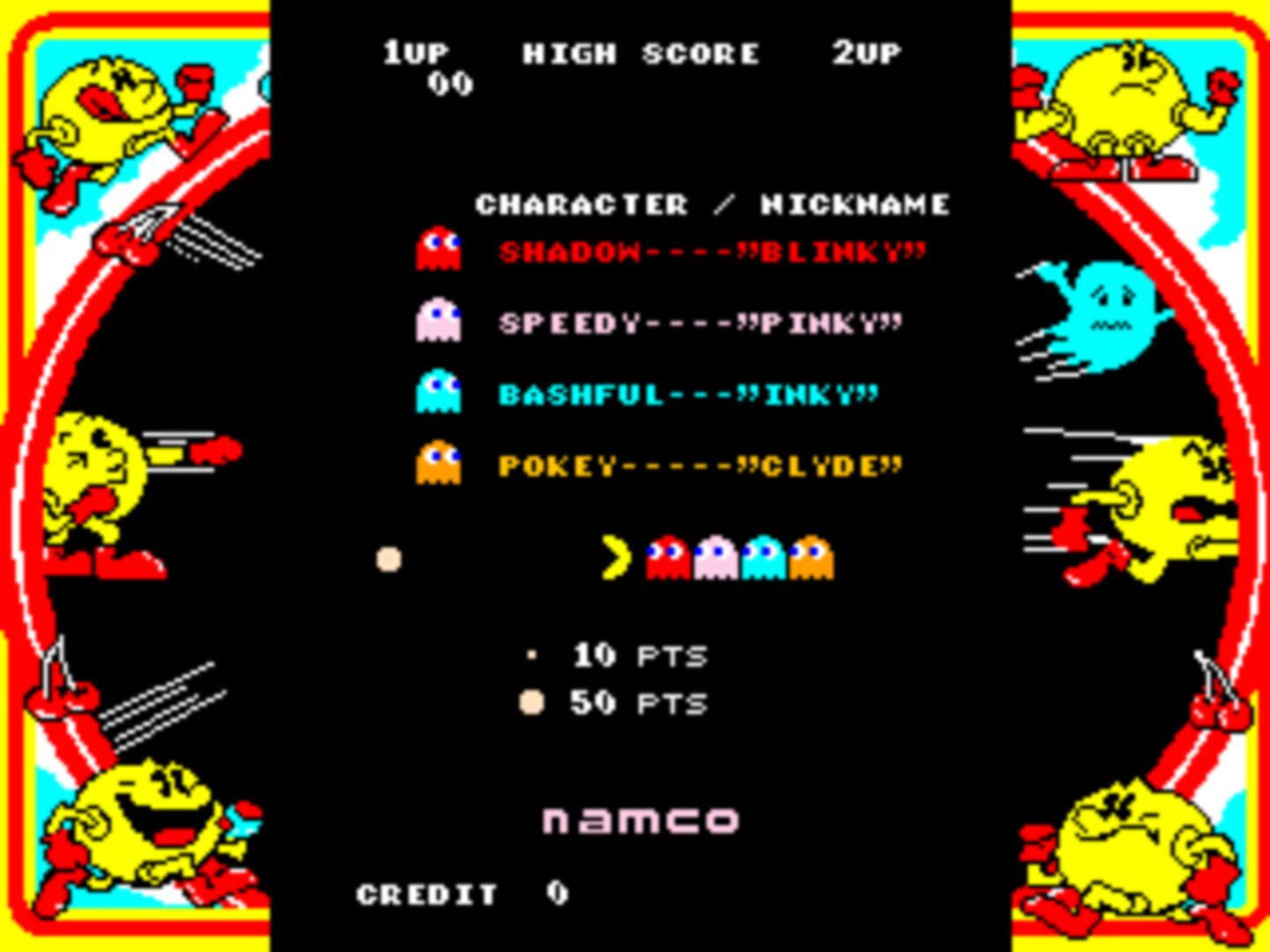
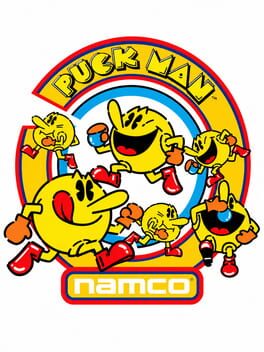

The Namco Museum port of Pac-Man. This version of the game, introduced in Namco Museum Volume 1 (1995), is notable for being perhaps the most frequently rereleased "official" version of Pac-Man from 1995 to 2005. This version of the game often featured a border based on the classic Puckman artwork surrounding it. Being based off the original's source code, it is mostly faithful to the arcade version, but a few things were altered in gameplay: Pinky always aims exactly four spaces in front of Pac-Man when in chase mode (in the original, this became four spaces up and four spaces to the left when Pac-Man was facing up, due to a glitch). Inky's behavior has been considerably altered; he exclusively aims for Blinky's position in chase mode. The ghosts' eyes will not travel up through the one-way paths when returning to regenerate. When a ghost is sent back to the Ghost Home to regenerate, they will always come back out instantly, even if Pac-Man lost a life on the current round. (Incidentally, this fixes a glitch that can occur in the original where Pac-Man can trap Pinky, Inky, and Clyde in the Ghost Home.). Ghosts will exit the Ghost Home to the right if their target position happens to be there. In the original game, they will only exit to the right if the behavior mode (i.e. scatter, chase, frightened) changes while they are in the Ghost Home. If a bonus fruit appears and Pac-Man eats a ghost, the timer that controls how long the fruit stays onscreen halts with everything else. This makes it impossible for fruit to disappear while Pac-Man is eating a ghost.
A port of Pac-Man Vs., released initially inside Namco Museum DS.

Originally released in Namco Museum Vol. 2 for the PSP.

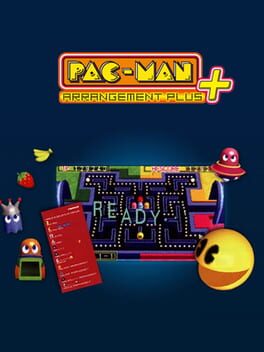
A remake of the original Pac-Man, with modernized presentation and gameplay.

Fighting / Role-playing (RPG) / Adventure / Action / Fantasy
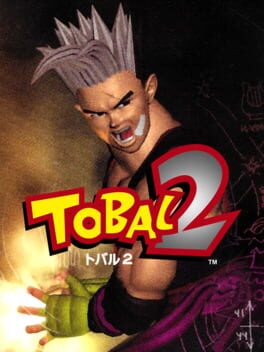
The fighting system in Tobal 2 is the same as in the previous game. The player can freely navigate 3D fighting arenas under the condition that he or she faces the opponent. High, medium, and low attacks can be executed using assigned buttons. As in Tobal No. 1, the grappling and blocking system offers the player a variety of offensive and defensive maneuvers. A new unblockable fireball attack has been added for each character. Tobal 2 was released on the same day as Sony's Dual Analog Controller in Japan, noted as the first game compatible with the peripheral. Graphically, the game features Gouraud shaded and higher-resolution character models compared to Tobal No. 1, but still runs at 60 frames per second.

Puzzle / Strategy / Arcade / Action / Fantasy
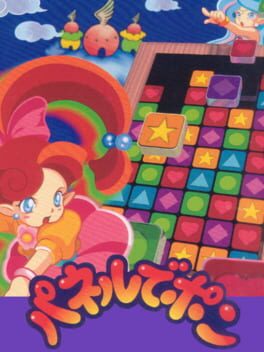
A tile matching puzzle game for the Super Famicom, the first in the Puzzle League series. It was later modified to feature Yoshi and Mario related characters to be released in the western regions, under the name of "Tetris Attack". It was also a downloadable game for the Satellaview that was broadcast in at least 4 runs between November 19, 1995 and January 31, 1998. Although the game was Japan exclusive, it did eventually see releases in the rest of the world in 2020 as part of the Nintendo Switch Online lineup.

Shooter / Arcade / Action / Fantasy
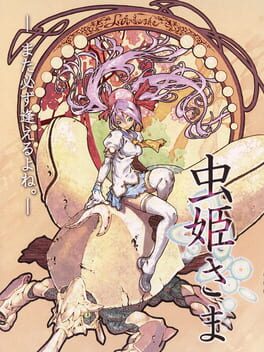
Mushihimesama is a manic shooter developed by Cave and released by Taito in 2004. It was ported to the PlayStation 2 in 2005 and iOS in 2011. An Xbox 360 port was released in May 2012 (with ver1.5 as first print DLC). A significantly changed "version 1.5" was released to arcades in 2011. The game has an insect theme as all of the enemies resemble various insects such as beetles and butterflies. The game is set in various forest environments. It received a sequel in 2006, known as Mushihimesama Futari, and a spin-off iOS game entitled Mushihimesama Bug Panic.

Fighting / Arcade / Action / Fantasy
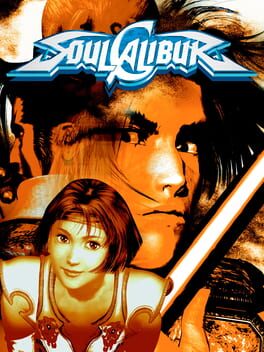
SoulCalibur is a weapon-based 3D fighting game developed by Project Soul and produced by Namco. It is the second game in the Soul series, preceded by Soul Edge (1996). Originally released in arcades in 1998, it ran on the Namco System 12 hardware. In 1999 it was ported to the Dreamcast with improved graphics and new features. The North American version was released in September 1999 as a launch title for the Dreamcast and was part of the successful launch of the new console. It became available as a downloadable title on Xbox 360's Xbox Live Marketplace in 2008. The title brought many innovations to the fighting game genre that include a heavy emphasis on weapons and a unique eight-way movement system. Soulcalibur is widely regarded as one of the best Dreamcast titles and is one of the most critically acclaimed fighting games of all time.

Puzzle / Arcade / Action / Fantasy
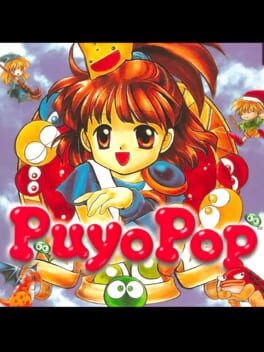
A Neo Geo Pocket port of Puyo Puyo Tsuu, licensed to SNK by Sega, was released in North America and Europe as Puyo Pop. Unlike previous English Puyo Puyo games, the NGPC Puyo Pop retains both the character designs and (almost) all of the character names from the Japanese version. As in the English translations of the first game, Satan is renamed "Dark Prince."