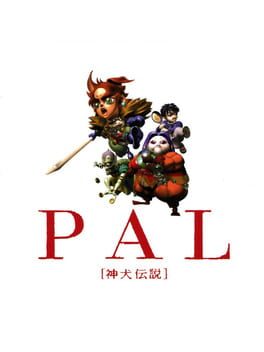
PAL is in most ways a traditional Japanese-style role-playing game. The player orders each character in battle, choosing attacks, items, and techniques. Equipment upgrades are represented as scrolls, and techniques can be upgraded as they are used. Kaoru's boyfriend, Yukito is also an excellent cook and can learn a wide variety of recipes to create recovery and assist items for use in and out of battle.
One rainy day, a shy young girl named Kaoru was walking home from school. Near her house, she found a puppy abandoned in a box. She rescued the puppy, naming him "Pal", and cared for him dearly. However, not long after, the prophet Nostradamus, having waited hundreds of years searching for the one who will finally make his predictions come true, has finally found the one he's been seeking. It just so happens that this person is none other than Pal's owner, Kaoru. Nostradamus sends his servants, who kidnap Kaoru, leaving Pal all alone. The Seven Gods of Luck, taking pity on Pal, grant him a rare gift: a Fruit of Evolution. Eating it, Pal transforms into a human. Together with Kaoru's boyfriend Yukito and two lesser gods who work for the Seven Gods of Luck, Pal sets out to rescue Kaoru and stop Nostradamus!

Role-playing (RPG) / Adventure / Action / Fantasy
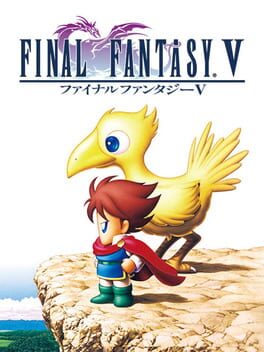
Final Fantasy V is a fantasy role-playing video game developed and published by Square in 1992 as a part of the Final Fantasy series. The game first appeared only in Japan on Nintendo's Super Famicom (known internationally as the Super Nintendo Entertainment System). It has been ported with minor differences to Sony's PlayStation and Nintendo's Game Boy Advance. An original video animation produced in 1994 called FINAL FANTASY: Legend of the Crystals serves as a sequel to the events depicted in the game. It was released for the PlayStation Network on April 6, 2011, in Japan. An enhanced port of the game, with new high-resolution graphics and a touch-based interface, was released for iPhone and iPad on March 28, 2013, and for Android on September 25, 2013. FINAL FANTASY V has been praised for the freedom of customization that the player has over the characters, achieved through the greatly expanded Job System. Despite being released only in Japan, the Super Famicom version sold more than two million copies. The PlayStation version has earned "Greatest Hits" status, selling more than 350,000 copies.

Role-playing (RPG) / Turn-based strategy (TBS) / Fantasy / Science fiction
A turn-based JRPG and sequel to EarthBound (1994) in which a tragedy surrounding a family in the primitive yet joyful village of Tazmily incites the coming-of-age story of Lucas, the family's younger son, who goes on perilous adventures along with his friends in order to find his missing brother and stop a group of masked men from bringing about the end of the world.

Role-playing (RPG) / Turn-based strategy (TBS) / Adventure / Fantasy / Historical
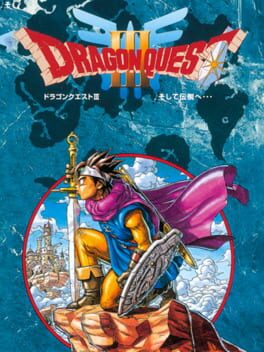
Dragon Quest III: Soshite Densetsu he... is a remake of the third Dragon Quest for the Super Famicom.

Role-playing (RPG) / Turn-based strategy (TBS) / Adventure / Action / Fantasy
A turn-based JRPG and sequel to the then-Japan-only Earthbound Beginnings (1989) in which Ness, a young boy living in a land based on the USA, leaves home to go on an adventure through strange locations, get to know quirky characters, and defeat an unknowable alien threat called Giygas while facing up to the realities of growing up and becoming familiar with the real world.

Role-playing (RPG) / Strategy / Turn-based strategy (TBS) / Action / Fantasy
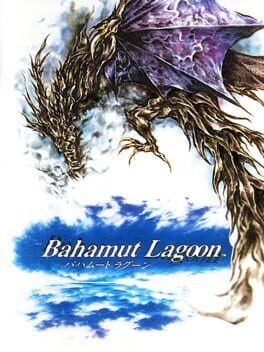
Bahamut Lagoon combines RPG mechanics with squad-based combat. Characters have HP, MP (SP for fighter characters), EXP, equipment, stats and class-specific, SP-draining special elemental abilities very much like traditional console RPGs. The player can explore his surroundings, talk to people and visit shops when not in battle, though to a limited degree as there is no world map and no way to leave the current area. The game's core is its turn-based battles fought on a 2d grid. Characters are assembled into parties of four and the player allowed a maximum of six parties, which are usually well outnumbered. The two opposing sides act in alternating turns so that each party can move once and/or attack once a turn. Attacks are divided into distant and close-up combat. In the former, a party uses a special ability (e.g. casting fireballs, throwing lightning, healing allies) of one of its members at a distance. The range and possible area of effect damage vary per ability. If the attacking party has two or more characters with the same ability, they join in the action to multiply its effectiveness. Distant combat results in less money and generally less damage, but the target cannot retaliate. Distant attacks can also affect the field; fire and ice ignite or extinguish forests and melt or freeze ice, etc. Close-up, each unit in two adjacent opposing parties can act once. Very much like Final Fantasy SNES combat, they can attack an enemy, use an item or a special ability (though these can't be combined and most only affect one target instead of all) or defend. Dragons are the player's ace in the hole. They have their own stats and gain experience like normal characters do. In battle, each party has a dragon attached to it and draws a large portion of its strength from that of its dragon: if a party's dragon is slain, the party will lose the ability to use special attacks and class-specific abilities for the remainder of the map. The beast acts as a very powerful autonomous unit that moves after its party does and it cannot be controlled beyond very simple commands, e.g. "Come!" Out of battle, dragons will eat anything and raising them by feeding them items is an important part of the game. Feeding can improve their stats as well as affect their behavior on the field, and the dragons develop into new forms as they grow. The player can change the characters in each of the parties, their formation as well as what dragon represents them at will.

Role-playing (RPG) / Strategy / Turn-based strategy (TBS) / Fantasy
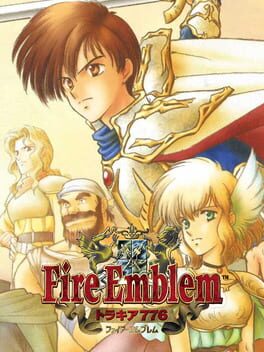
Fire Emblem: Thracia 776 is a Japanese tactical role-playing game developed by Intelligent Systems and published by Nintendo, and the fifth installment in the Fire Emblem series. It is also the third and final Fire Emblem series title to be released on the Super Famicom. Fire Emblem: Thracia 776 takes place between Chapters 5 and 6 of the previous game, Fire Emblem: Seisen no Keifu. Several characters from Fire Emblem: Seisen no Keifu appear, such as Leaf, Fin, and Nanna. It takes place in the Thracian peninsula in southeastern Jugdral.

Role-playing (RPG) / Adventure / Action / Fantasy
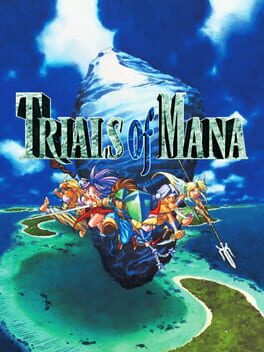
Trials of Mana is the third installment of the Mana series, developed by Square under the direction of series creator Koichi Ishii. The game takes place in a new world where, once again, the Mana Tree is under threat from an ancient evil thought sealed away. Players choose three from among six heroes as the chosen wielder of the Mana Sword and their two companions on the journey to claim the holy blade and preserve what remains of the Mana power.

Racing / Role-playing (RPG) / Turn-based strategy (TBS) / Fantasy
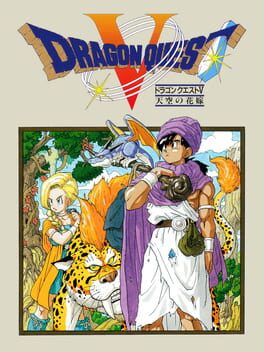
Dragon Quest V: Tenkuu no Hanayome is a role-playing video game and the fifth installment in the Dragon Quest video game series, second of the Zenithian Trilogy. Originally developed by Chunsoft and published by Enix Corporation, Dragon Quest V was the first title in the series to be released for the Super Famicom video game console in Japan in September 1992. Dragon Quest V was the first game in the series to not be released outside Japan due to programming issues at the time.