Developed by Copya System for Enix America Corporation.
Paladin's Quest is the first game in the Lennus series. It is an Fantasy JRPG for the Super Nintendo / Super Famicom. A defining feature for the game is that there is no Magic Point system. Rather health is used to cast magic. There is also no healing magic. Rather bottles can be bought at most towns with limited uses to heal the characters and various other buffs. Each character that the player can recruit has an elemental affinity, that can be combined when casting spells.
The game centers around a boy named Chezni who, on a dare, activates an ancient machine called Dal Gren and in doing so releases a being of immense power and evil. As a result the magic school is destroyed and the headmaster of the school orders Chezni to destroy Dal Gren at whatever cost before it destroys the world. During his travels he meets a girl named Midia, very much like himself, who wishes to help him on his quest, and numerous other mercenaries that come to aid Chezni. The main antagonist is a young dictator named Zaygos, who wants to use the Dal Gren for his own nefarious purposes.
Role-playing (RPG) / Adventure / Fantasy
Final Fantasy VI is the sixth main installment in the Final Fantasy series, developed and published by Square. It was the final title in the series to feature two-dimensional graphics, and the first story that did not revolve around crystals. The game gives players up to fourteen playable characters, the largest cast in the series, and features the Active Time Battle pseudo-turn based menu command system. A party can consist of up to four characters, though some events require the player to assemble three different parties of up to four and switch between them. Each character has a unique command ability, such as Terra's Trance, Locke's Steal, Edgar's Tools or Sabin's Blitz, and can also learn Magic spells from earning AP from battles with magicite equipped. Each character's rare Desperation Attack will randomly activate after using the Attack command when at critical health.

Role-playing (RPG) / Adventure / Fantasy / Drama
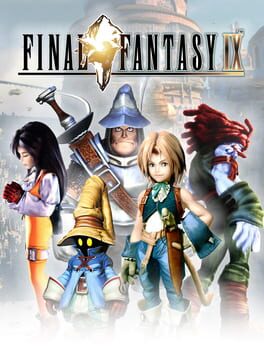
Final Fantasy IX is the ninth main installment in the FF series. The title is a return to the series's roots, with gameplay features and references to the past games featuring throughout, as well as a medieval fantasy setting and cartoonish art style as a break from the sci-fi slant style of Final Fantasy VII and Final Fantasy VIII.

Role-playing (RPG) / Turn-based strategy (TBS) / Adventure / Fantasy / Sandbox
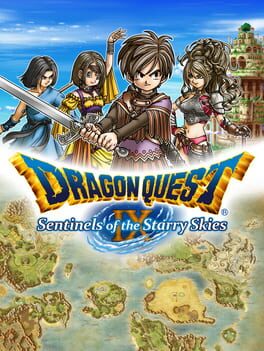
In Dragon Quest IX: Sentinels of the Starry Skies, players begin their adventure as a city guardian who is sent to retrieve a sacred trees fruits, which have the power to grant wishes. Players travel the world, conquer fearsome monsters and unravel an epic storyline. During their journey, players will encounter mighty opponents in fast-paced battles, and also interact with a colorful cast of characters.

Role-playing (RPG) / Turn-based strategy (TBS) / Adventure / Fantasy / Open world
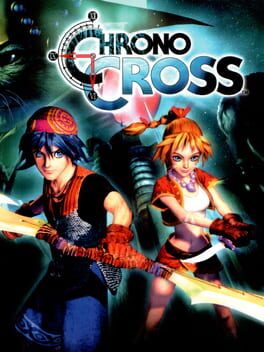
CHRONO CROSS, the sequel to the SNES favorite CHRONO TRIGGER, is one of the most ambitious role-playing games ever made. There are over 40 playable characters, each with their back-story, special moves, abilities, and weapons. The story spans two discs and follows the story of Serge, a young man who is able to cross dimensions. Suddenly he is pulled between worlds, trying to figure out his own past at the same time. The graphics are bright and beautiful, utilizing the PlayStation's capabilities to the fullest. The polygonal character models are huge and detailed, and the pre-rendered backgrounds are immaculately detailed. The music is composed and arranged by Yasunori Mitsuda, and features very realistic-sounding synthesizers. The battle system revolves around Elements, which are used to grant magical powers, as well as to summon huge monsters. For anyone that wanted to see the story of CHRONO TRIGGER continue, this is your chance.

Role-playing (RPG) / Adventure / Card & Board Game / Fantasy / Science fiction
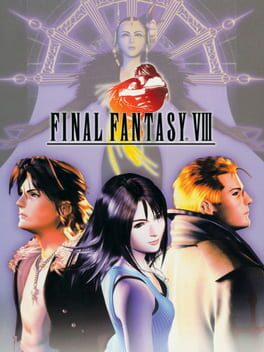
Final Fantasy VIII is the eighth main installment in the Final Fantasy series. The gameplay makes a departure from many series standards. While it still uses the Active Time Battle system, it deviates from the series' traditional means of boosting a character's power via leveling, although levels are not completely abandoned as they were in Final Fantasy II. In addition, it does not have a Magic Point-based system for spell-casting. Instead, magic is collected, drawn, and created from items, and is used to power up the characters via the junction system.

Role-playing (RPG) / Fantasy / Science fiction
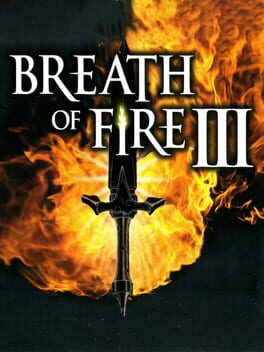
A MYSTERIOUS POWER...AN UNLIKELY HERO...A CLASSIC ADVENTURE... The lone survivor of a legendary dragon clan, a rebellious youth embarks on a great journey. One of discovery... and danger. The classic role-playing game now returns to continue the epic tales of Ryu and the dragon people. An inner power of uncertain origin matures Ryu into a warrior who ponders his purpose as he embarks on a mystical journey. What lies ahead is shrouded in mystery... yet strangely familiar. DRAGON GENE SPLICING LEGENDARY ROLEPLAYING AN EPIC 3-D ENVIRONMENT LEARN OR STEAL ADVANCE SKILLS AND TECHNIQUES POWERFUL MAGIC NOW YOU POSSESS THE POWER TO CONTROL RYU'S DESTINY.

Role-playing (RPG) / Strategy / Turn-based strategy (TBS) / Fantasy
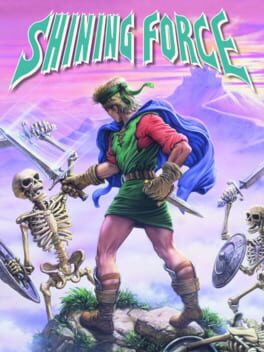
Shining Force is a turn-based tactical RPG. Battles take place in square grids, and each unit occupies 1 square. Units can belong to one of two sides: allies (controlled by the player) or enemies (controlled by the computer AI). Each unit can move up to a fixed amount of squares along the battlefield, determined by its Move statistic. Depending on its location relative to enemies and to allies, a unit also has the option to attack, cast a spell, use an item, search (if adjacent to a treasure chest), or stay and do nothing, all of which end the unit's turn. Some commands, such as equipping or dropping items, don't count as actions, and the character's turn is able to continue. The order of the turns is determined by the unit's agility score and a random seed. Units can use offensive actions, such as physical attacks or offensive magic, only on units belonging to the other side and can use supportive actions, such as healing magic, stat-enhancing magic, and items, only on units belonging to the same side.

Grandia is a role-playing video game developed by Game Arts and published by Entertainment Software Publishing for the Sega Saturn console as the first game in their Grandia series. Initially released in Japan in 1997, the game was later ported to the PlayStation in 1999, with an English version of the game appearing on the platform in North America in the following September by Sony Computer Entertainment America, and later in Europe in March 2000 by Ubisoft. The game was produced by much of the same staff who worked on the company's previous role-playing endeavor, the Lunar series, including producer Yoichi Miyagi and music composer Noriyuki Iwadare. Since its release, Grandia has become notable for its combat mechanics, which have been carried over to future games within the franchise, and has spawned two spin-off titles – Grandia: Digital Museum and Grandia: Parallel Trippers – both released exclusively in Japan. In celebration of the announcement of renewing development on Grandia Online, which acts as a prequel to Grandia, the game was re-released on Sony's PlayStation Network platform in Japan as a downloadable title in April 2009 and in North America on February 25, 2010. It was re-released in Europe on November 10, 2010.