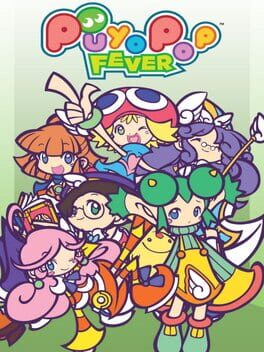

A port of Puyo Puyo Fever for DS.
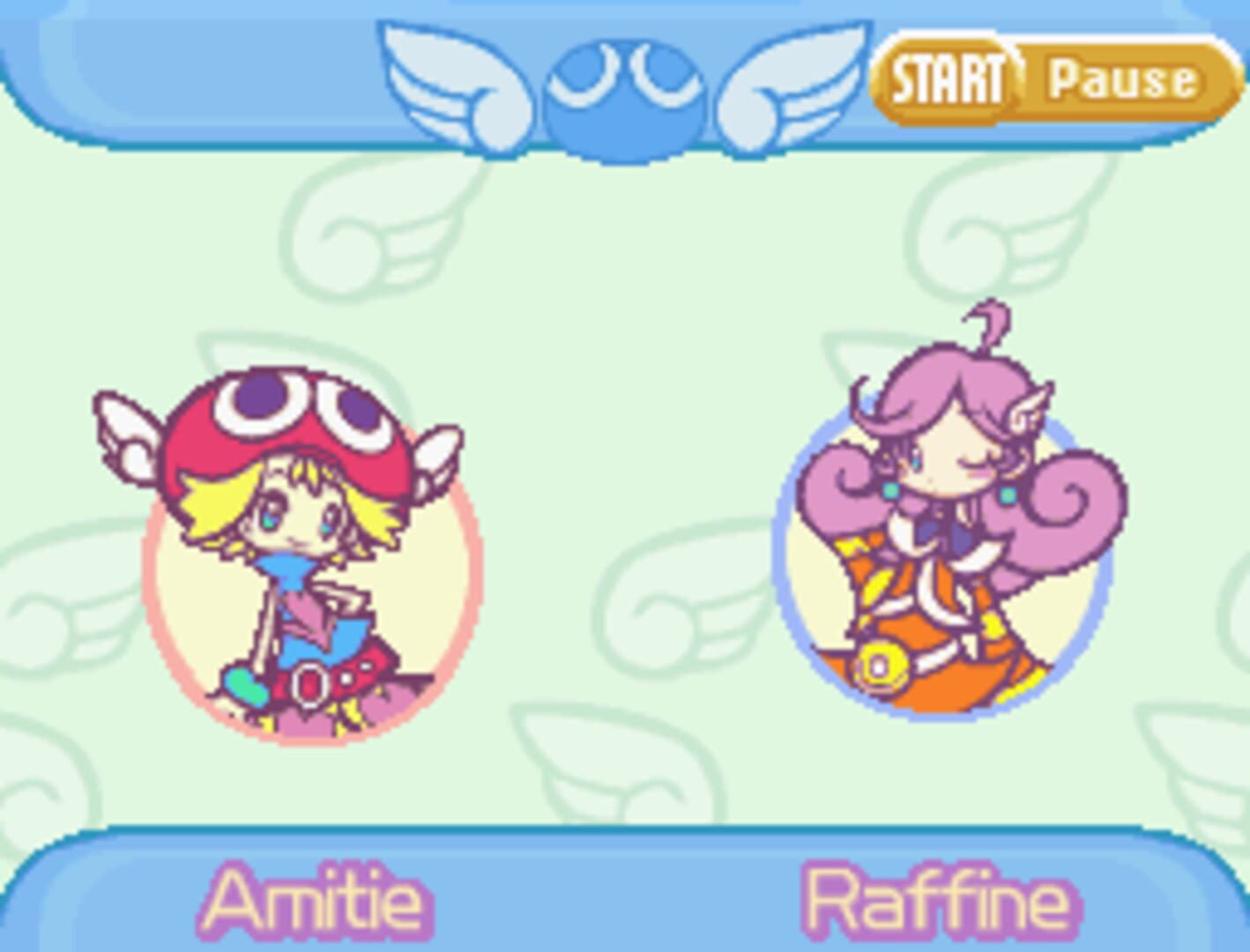
The game's story mode is divided into three courses that follow the adventure about Amitie, a spunky girl who attends a magic school, where she is taught by Accord how to cast magical spells using Puyo. In the main story of the game, Accord has lost her Flying Cane, the equivalent of a magic wand, and claims to have a reward for the student who can find it. The player plays the role of Amitie as she ventures across the Puyo Puyo Fever world to find the cane, while meeting many wacky characters along the way and battling them. In a harder version of the story mode, one plays as Amitie's rival, Raffina. Which story mode one is playing determines what characters one will meet and which ultimately finds the wand. When playing as Raffina near to the end of the game, it is revealed that Accord never actually lost her flying cane. She then plans on revealing Accord's and Popoi's secret, but fails in her ending, as she is knocked unconscious by Accord, losing all memories of the flying cane incident. She regains consciousness near her school where Amitie and her friends congratulate her.
It is the 2nd anniversary game in the series and as such shares more similarities to "Puyo Puyo! 15th Anniversary" than "Puyo Puyo 7". This game came out 4 months before "Sonic Generations", which is also commemorating the 20th anniversary of the Sonic games. There are 24 playable characters available, each with their own 8-stage course (similar to Puyo Puyo! 15th Anniversary). This game, as it's predecessor, was released only in Japan.

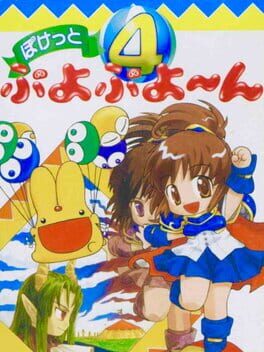
This game was released only in Japan. It is the fourth game in the Puyo Puyo series and the last set during the Madou-era in the main series. Continuing the trend of naming the games after puns, the name comes from a pun on "yon", the Japanese word for the number 4, but this time this is the only reference to the pun. The gameplay in is similar to that of Puyo Puyo 2, but adds super attacks. Clearing chains now builds up a "charge meter" which allows players to use them. The only other addition was a new game mode which could be played with a number of different field sizes, smaller or bigger than the standard 6x12, however, it removes several game modes that were present in Puyo Puyo Sun, i.e. the tournament, task and chain training modes. The art is also vastly different to the previous game in the series and, of course, the Fever series; this style was only otherwise used for Minna de Puyo Puyo.

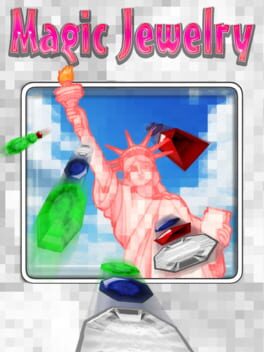
Magic Jewelry is a tile-matching puzzle video game for the NES. It was programmed by Hwang Shinwei in Taiwan and released in 1990 by RCM, without a license from Nintendo.

Puzzle / Role-playing (RPG) / Strategy / Fantasy
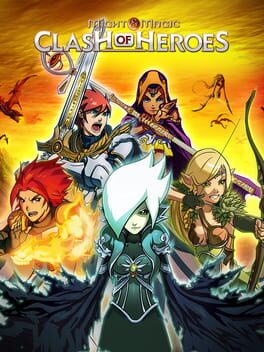
Scattered across five different regions, five special heroes must travel their own dangerous paths to grow in strength, unravel a demonic plot & ultimately save the world from chaos.

The ancient kingdom is in trouble! The magic of the four elements that kept it running for centuries has been corrupted by evil powers and the altars no longer yield the energy of life. It is up to you to unlock the 4 ancient books of magic and collect 16 mysterious cards that will help you restore the kingdom to life. An adorable little fairy will be your aide in this perilous journey as you encounter elementals, dragons, knights, and various magic creatures.

Puyo Puyo is Game Gear port of Puyo Puyo. It includes an additional quest mode. This port only released in Japan but contains a secret English localization with the title Puzlow Kids. This version appears whenever the game cartridge is used in a North American or European system.

Pocket Puyo Puyo~n is a simplified version of Puyo Puyo~n for the Game Boy Color, released in Japan in 2000. At the time of release, Sega owned the Puyo Puyo license and are credited in game, however development and publishing was still largely handled by Compile.

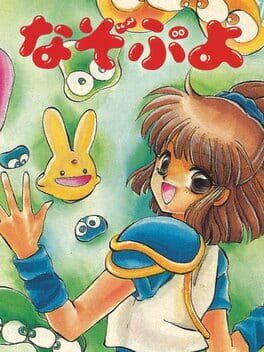
Nazo Puyo (なぞぷよ) is a 1993 game for the Sega Game Gear by Compile spinning off Puyo Puyo. It was released exclusively in bundles with specially marked Game Gears in Japan (hence its price tag) and would go on to receive two sequels on the Game Gear (the latter receiving two sequels on the Super Nintendo Entertainment System) and many PC-98 games (one retail, the others as part of the DiscStation series) and would be retooled as the Puzzle Mode of the 8-bit version of Dr. Robotnik's Mean Bean Machine.