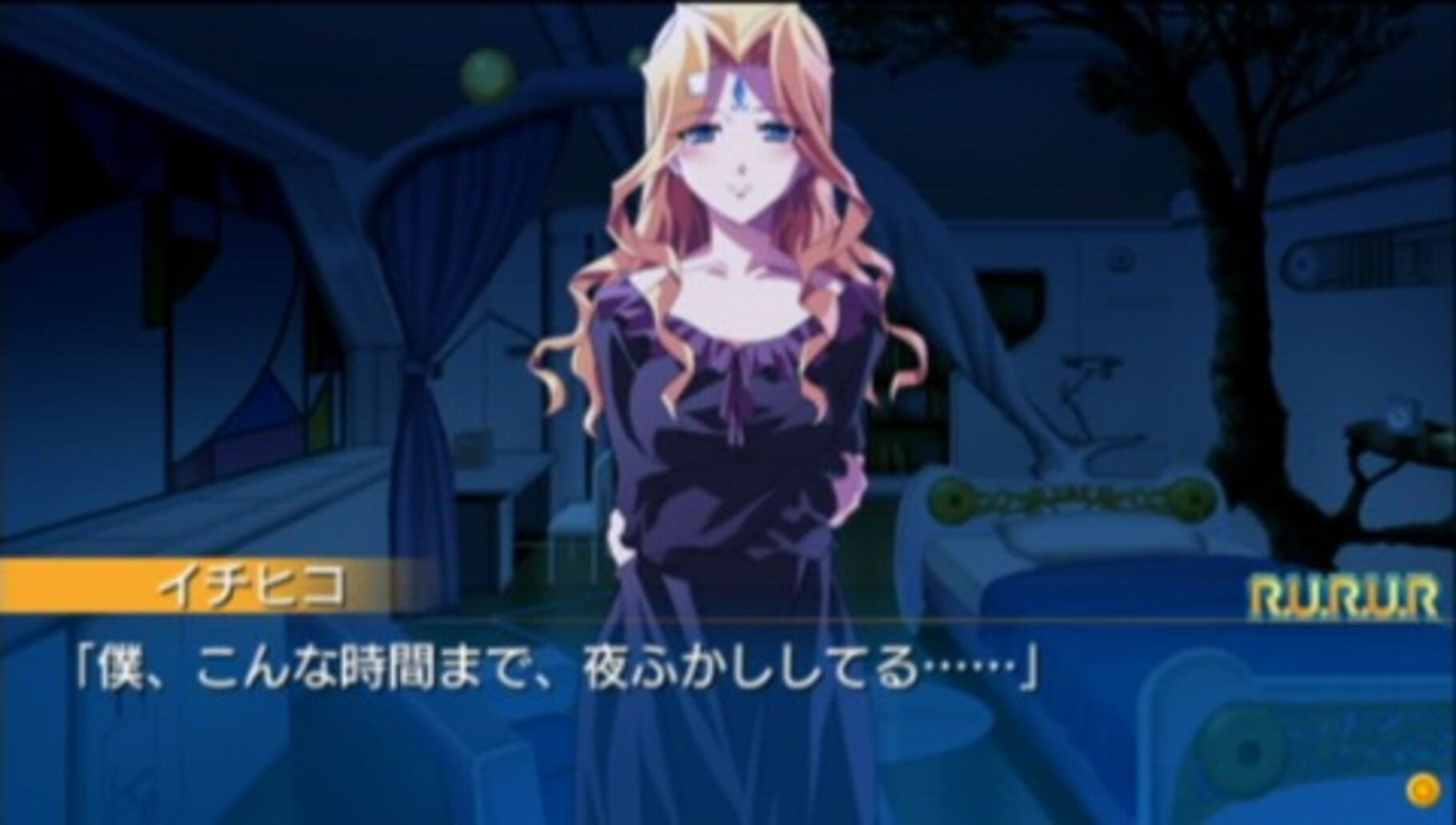
A Japan-only PlayStation Portable visual novel, ported from the original R.U.R.U.R. The game is known for its use of established science fiction elements in its story, along with numerous references to several works of literature.

Adventure / Visual Novel / Science fiction / Survival
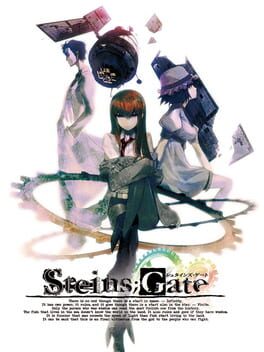
Steins;Gate is a Japanese visual novel developed by 5pb. and Nitroplus. It is the second game in the Science Adventure series following Chaos;Head. The game is described by the development team as a "hypothetical science ADV" and explores time and time travel in 2010 Akihabara. The gameplay follows non-linear plot lines which offer branching scenarios with courses of interaction.

Adventure / Visual Novel / Science fiction / Comedy
Neon Genesis Evangelion: Girlfriend of Steel, also known as Neon Genesis Evangelion: Iron Maiden, is a video game based on the Gainax anime/manga series Neon Genesis Evangelion, released officially only in Japan for the PlayStation, Sega Saturn, PlayStation 2, PSP, Windows (PC), and Macintosh. On January 20, 2005 a sequel was released titled "Neon Genesis Evangelion: Girlfriend of Steel 2nd" for the Playstation 2, and while it does feature much of the cast of the original game, the story is unrelated to the original's.

Shooter / Adventure / Visual Novel / Action / Science fiction
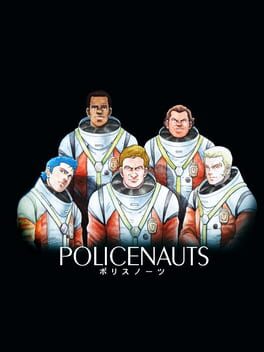
Policenauts is an interactive movie/graphic novel/adventure game with a hard science fiction storyline, written and directed by Hideo Kojima, and published by Konami. It was initially released for the PC-9821 computer platform in 1994, followed by remade versions for the 3DO in 1995, and the PlayStation and Sega Saturn in 1996. The game has never been officially released outside Japan, despite plans for an English localization of the Saturn version. On August 24, 2009 (in honor of the 46th birthday of the game designer, Hideo Kojima), an unofficial English translation patch was released onto the internet. The game is set in a primarily first person perspective and uses a point-and-click interface: the player can move the cursor and have the protagonist (Jonathan Ingram) analyze objects around his environment or talk to other characters in the game. Like in Snatcher, the game features shooting segments where the player must defend their character from incoming enemies. The player can use the shooting trainer at the police department to test their reflex and accuracy. There are numerous puzzles in the game, including an event where the player must dismantle a bomb by following their partner's instructions. The console versions of the game all include support for their respective mouse peripherals. The Saturn version features light gun support for the shooting segments. The game was notable for being an early example of extensive voice recording in video games. It also featured a theme revolving around space exploration and occasional full-motion video cut scenes. The gameplay was largely similar to Snatcher, but with the addition of a point-and-click interface and some first-person shooter segments. Policenauts also introduced summary screens, which act to refresh the player's memory of the plot upon reloading a save, an element Kojima would later use in Metal Gear Solid. The PlayStation version of Policenauts could also read the memory card and give some easter egg dialogues if a save file of Konami's dating sim Tokimeki Memorial is present, a technique Kojima would also later use in Metal Gear Solid.

Adventure / Visual Novel / Science fiction / Horror
Ever 17: The Out of Infinity is a visual novel video game developed by KID. It is the second entry in the Infinity series; it is preceded by Never 7: The End of Infinity, and followed by Remember 11: The Age of Infinity, 12Riven: The Psi-Climinal of Integral, and Code_18. From VNDB: "Ever17 is the tale of seven individuals who come to be trapped 153 feet within the underwater marine theme park, LeMU. During an apparently normal day at the park, a massive accident happens, placing almost half of the facility underwater. The path to the surface and the communication lines are cut off. In addition, LeMU is under constant assault by severe water pressure, limiting time to find a means of escape to 119 hours. Escape is not the only concern, however; many questions arise as to the legitimacy of the accident and whether or not those trapped there were brought there for a purpose."

Adventure / Visual Novel / Science fiction / Thriller
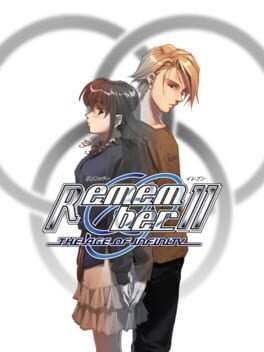
Remember11: The Age of Infinity is a visual novel video game. It is the third entry in the Infinity series; it is preceded by Never7: The End of Infinity and Ever17: The Out of Infinity, and followed by 12Riven: The Psi-Climinal of Integral and Code_18.

Fighting / Role-playing (RPG) / Adventure / Fantasy / Science fiction
Persona 4 Arena is a fighting video game developed for Japanese arcades and later ported to home consoles. Based on Atlus' Persona role-playing game series, Arena serves as a direct sequel to Persona 4 and features characters from its predecessor, Persona 3. Atlus wrote the story to the game while Arc System Works handled the gameplay.

Adventure / Visual Novel / Science fiction / Comedy
Never7: The End of Infinity is the first title in the Infinity series, and is followed by Ever17: The Out of Infinity, Remembe 11: The Age of Infinity, 12Riven: The Psi-Climinal of Integral, and Code_18. In the game, the player takes the role of Makoto Ishihara, a college student who attends a seminar camp on an island together with three other students; he also befriends three other people who he meets on the island. The game takes place over the course of a week, and consists of the player reading the story, occasionally making choices that affect the direction of the plot; on the sixth day, one of the female characters dies, and the game moves back in time to the beginning, letting the player use knowledge from the first set of six days to make new choices, to try to prevent the character's death.

Adventure / Visual Novel / Science fiction
Akira is a 1988 adventure video game by TOSE for the Family Computer console exclusively in Japan. It is based on Akira, the 1988 animated film version of Katsuhiro Otomo's manga of the same name.