Developed by Cinematronics for GCE.
Shooter / Arcade / Action / Science fiction
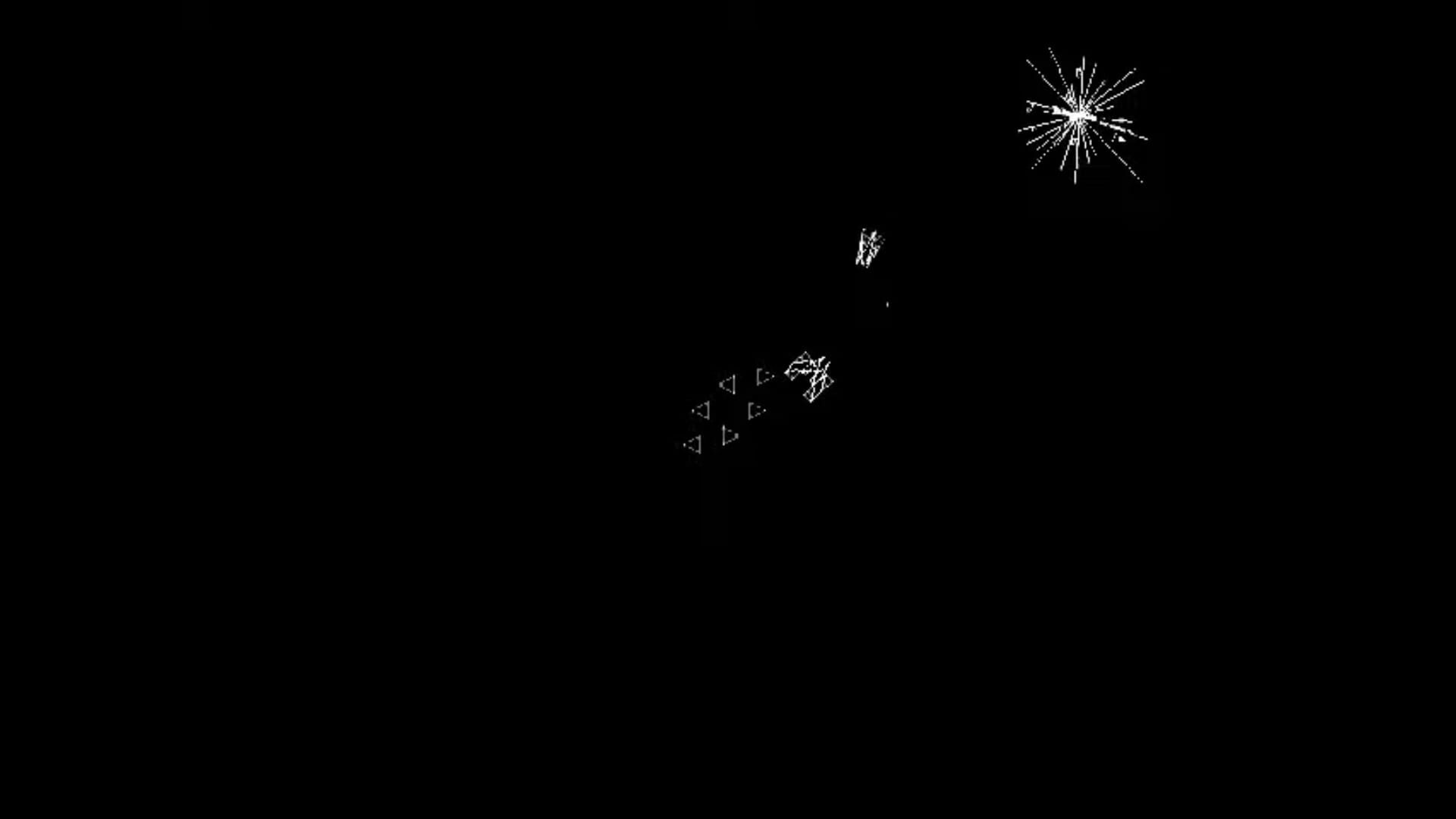
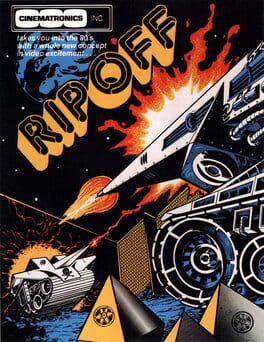
Rip-Off is a vector shoot 'em up released in arcades by Cinematronics in 1980. It is the first shoot 'em up arcade game to feature cooperative gameplay and the first game to exhibit "flocking" behavior. The objective is to prevent computer-controlled enemies from stealing eight canisters set in the center of the screen. One or two players control tank-like vehicles while game-controlled "pirate" tanks rush onto the field and attempt to drag the canisters off the edge of the screen. Enemies can be defeated by shooting or colliding with them. The game speed and difficulty increase with each successive wave until all the canisters have been taken ("ripped off").

Shooter / Arcade / Action / Science fiction
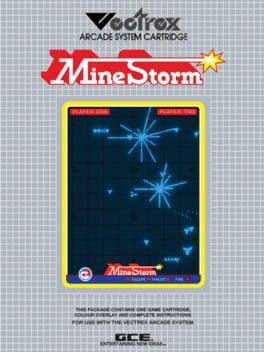
The game begins with a large enemy ship dropping mines onto the field as an ominous jingle plays, and moves from the top to the bottom of the screen, where it disappears. The player's ship starts in the middle of the field with 5 lives. Numerous mines then start popping up. The player must destroy all of the mines in order to progress to the next minefield. All of the mines can be destroyed with one shot, or hit with the player's ship, costing the player a life. There are 4 types of mines.

Shooter / Arcade / Action / Science fiction
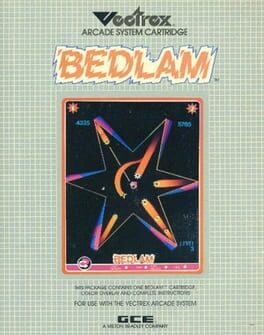
In the arcade game Tempest, players controlled a blaster that could move around the outermost lanes of a bunch of geometrically-shaped levels and fire at ships that emerged from the middle or innermost areas of those levels. Bedlam, however, was a "Tempest in reverse", where players' ships (resembling the Millennium Falcon from several of the Star Wars movies) sat in the middle of sectors while ships emerge from points of those sectors and came inwards towards the player. Players turn their ships left and right and can spin them around quicker with the Fast Rotate button. Also, Zap, like the Superzapper on Tempest, will destroy everything onscreen and can only be used once per sector. There are several different types and mannerisms of enemies as well as sectors. Getting rammed by an enemy will cause the player to lose a ship in reserve and the game will end once the player has no more remaining ships.

Shooter / Arcade / Action / Science fiction
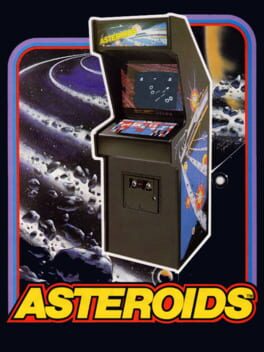
Asteroids is an arcade space shooter released in November 1979. The player controls a spaceship in an asteroid field which is periodically traversed by flying saucers. The objective of the game is to destroy both, asteroids and saucers. The triangular ship can rotate left and right, fire shots straight forward, and thrust forward. Once the ship begins moving in a direction, it will continue in that direction for a time without player intervention unless the player applies thrust in a different direction. The ship eventually comes to a stop when not thrusting. The player can also send the ship into hyperspace, causing it to disappear and reappear in a random location on the screen, at the risk of self-destructing or appearing on top of an asteroid.

Shooter / Arcade / Action / Science fiction
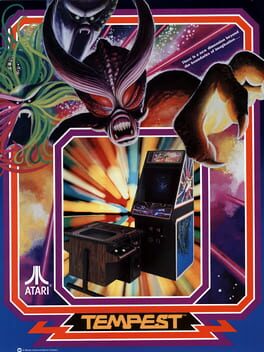
Tempest is a 1981 arcade game by Atari Inc., designed and programmed by Dave Theurer. It takes place on a three-dimensional surface, sometimes wrapped into a tube, which is viewed from one end and is divided into a dozen or more segments or lanes. The player controls a claw-shaped spaceship (named Blaster) that crawls along the near edge of the playfield, moving from segment to segment. Tempest was one of the first games to use Atari's Color-QuadraScan vector display technology. It was also the first game to allow the player to choose their starting level (a system Atari dubbed "SkillStep"). This feature increases the maximum starting level depending on the player's performance in the previous game, essentially allowing the player to continue. An official port was released for the Atari ST. An official port that bears the Atari logo was released by Superior Software for the BBC Micro and Acorn Electron in 1985, and another by Electric Dreams for the ZX Spectrum and Amstrad CPC in 1987. Versions for the Atari 2600 and 5200 were in the works in Atari, Inc. during 1984, and unfinished prototypes exist for both of them.

Shooter / Arcade / Action / Science fiction
This 1981 vector graphics arcade game is available in both two- and four-player configurations. A top-down space shooter set within a bounded playfield, where the player maneuvers a ship using rotation, thrust and forward-firing controls (much like Asteroids or Space War). Each stage is populated by autmated drone ships (or by competing players), and dominated by the titular enemy: a moving, rotating space fortress surrounded by a lethal force field.

Shooter / Arcade / Action / Science fiction
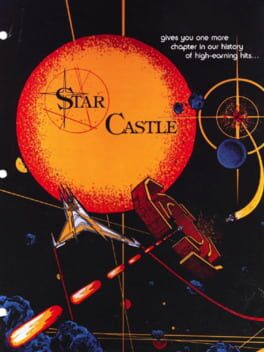
Star Castle is a 1980 vector arcade game by Cinematronics. The game involves obliterating a series of defenses orbiting a stationary turret in the center of the screen. The game was designed by Tim Skelly and programmed by Scott Boden. Tim Skelly also created a number of other Cinematronics titles, including Starhawk, Armor Attack and Rip-Off. As with many other titles by the company, Star Castle was ported to the Vectrex video game console in 1983.

Shooter / Arcade / Action / Science fiction
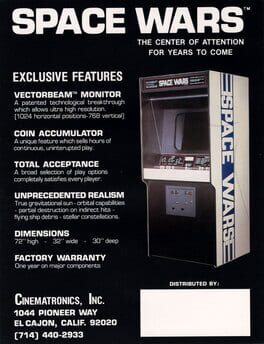
Space Wars is an early vector graphics arcade game. It is based on Spacewar!, a PDP-1 program. It was ported to the Vectrex in 1982. Space Wars was the brainchild of Larry Rosenthal, an MIT graduate who was fascinated with the original Spacewar! and developed his own custom hardware and software so that he could play the game. Cinematronics worked with Rosenthal to produce the Space Wars system. Two players controlled different ships. One button rotated the ship left, another rotated the ship right, one engaged thrust, one fired a shell, and one entered hyperspace (which causes the ship to disappear and reappear elsewhere on the playfield at random). The game offered a number of gameplay options, including the presence or absence of a star in the middle of the playfield (which exerted a positive or negative gravitational pull), whether the edges of the playfield "wrapped around" to their opposite sides, and whether shells bounced. Three other fascinating features were unique to this game. First, the game could not be played in "one player" mode; a human opponent was required. Second, the player's ship could take a glancing hit without dying, but would suffer damage; a cloud of loose ship fragments would break off and float away, after which the ship would be visibly damaged on screen and would turn and accelerate more slowly. Third and most memorable was that the duration of play for any contest was solely governed by the amount of money deposited; each quarter bought a minute and a half of play. A dollar bought six minutes, and for a ten dollar roll of quarters two players could play non-stop for an hour.