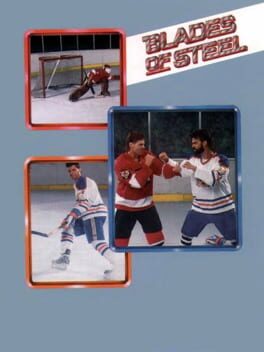
From the opening Face-Off it's six on six pro-style hockey at its best. Their are eight teams for you to captain: Los Angeles, New York, Vancouver, Montreal, Edmonton, Minnesota, Toronto and Chicago. You can challenge a friend, or take on a multi-talented computer squad. You can also choose from three difficulty levels - Junior, College and Pro. Throughout the game, you'll constantly be tested by every intense element of championship hockey, from Penalty and Overtime Scenes to Knockout Smash-Hit Fight Scenes. Speed, strength, quickness and instinct are talents you must possess if you plan to prevail, especially when the anger flares, gloves come off and fists start flying. It's hard hitting action at its toughest. And you'll soon learn that in this league nothing's ever given to you, and before you can reach your goals - you have to score them. You've gotta master the artful skill of a finesse player and the bone crushing brutality of an enforcer. You'd better be versatile as well, because you must skillfully control your forwards, centers, defensemen and even the goalie, who'll defend the net against unrelenting Power Plays (which will occur if you lose a fight and have your battered carcass banned to the Penalty Box).
Shooter / Arcade / Action / Science fiction
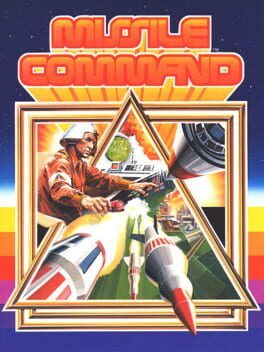
As a regional commander of three anti-missile batteries, the player must defend six cities in their zone from being destroyed. The player's six cities are being attacked by an endless hail of ballistic missiles, some of them even splitting like multiple independently targetable reentry vehicles (MIRVs). New weapons are introduced in later levels: smart bombs that can evade a less than perfectly targeted missile, and bomber planes and satellites that fly across the screen and launch missiles of their own.
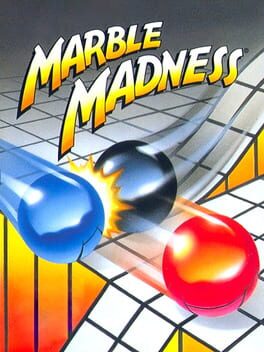
Marble Madness is an isometric platform game in which the player manipulates an onscreen marble from a third-person perspective. The player controls the marble's movements with a trackball, though most home versions use game controllers with directional pads. The aim of the game is for the player to complete six maze-like, isometric race courses before a set amount of time expires. When a player completes a race, the remaining time is added to the next race's allotted time. The game also allows two players to compete against each other. Courses are populated with various objects and enemies designed to obstruct the player. As the game progresses, the courses become increasingly difficult and introduce more enemies and obstacles. Each course has a distinct visual theme. For example, the first race, titled "Practice", is a simple course that is much shorter than the others, while the fifth race, named "Silly", features polka-dot patterns and is oriented in a direction opposite from the other courses
Shooter / Arcade / Action / Science fiction
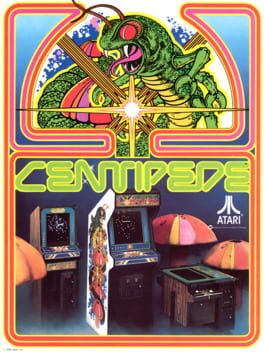
Centipede is a vertically-oriented shoot 'em up arcade game produced by Atari, Inc. in 1980. The game was designed by Ed Logg along with Dona Bailey, one of the few female game programmers in the industry at this time. It was also the first arcade coin-operated game to have a significant female player base. The player defends against swarms of insects, completing a round after eliminating the centipede that winds down the playing field.
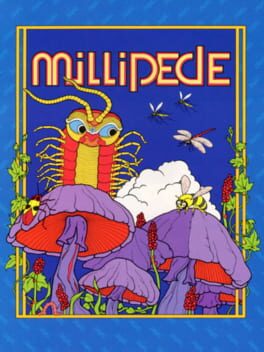
Millipede is a 1982 arcade game by Atari, Inc. and is the sequel to the arcade hit, Centipede. The objective of the game is to score as many points as possible by destroying all segments of the millipede as it moves toward the bottom of the screen, as well as destroying and avoiding other enemies. The game is played with a trackball and a single fire button, which can be held down for rapid-fire. The game is over when the player's last life is lost.
Puzzle / Strategy / Arcade / Action / Fantasy
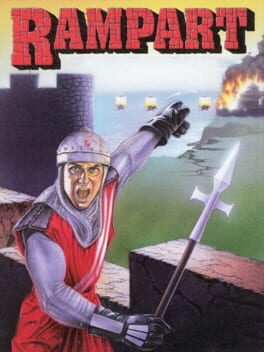
Rampart is a game combining strategy and artillery action. Build your castle from Tetris-style pieces, place your cannons, bombard the enemy, try to repair, do it all over again. The original arcade release has a single-player and a two-player mode; later revisions incorporate three-player gameplay.
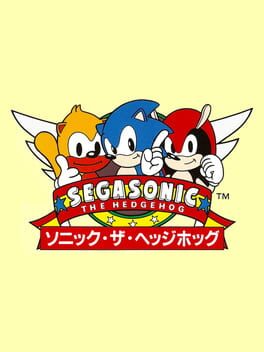
SegaSonic the Hedgehog is an isometric platforming game with three characters who shares identical controls and abilities. The characters are controlled with one action button which lets the player perform a spin jump, and a trackball which is used to move the characters around. Each trackball and corresponding action button are color-coded, meaning the blue ones are for Sonic, red ones are for Mighty and yellow ones are for Ray. The premise of the game is to reach the end of an isometric course without dying. This objective is similar to other video games in the Sonic the Hedgehog series. Yet, it is also different in the sense that instead of a typical platforming game, the game is centered entirely around running as fast as possible on a linear course from a never-ending barrage of threats, including giant boulders, lava flows, rogue gears, falling stalactites, and other traps. When the player is hit by a dangerous obstacle or hazard, they lose health from the Health Gauge, which can be refilled by collecting Rings that found around the arena. Upon completing each level, the game tallies up how many Rings were grabbed. Extra points are also received if over half of the level's Rings were found. The game only has a few enemies and one boss that appears midway through the game. At the end of the final level, the player is given twenty seconds to escape from the self-destructing tower. Failure results in an instant Game Over.