Developed by Minakuchi Engineering for Nintendo.
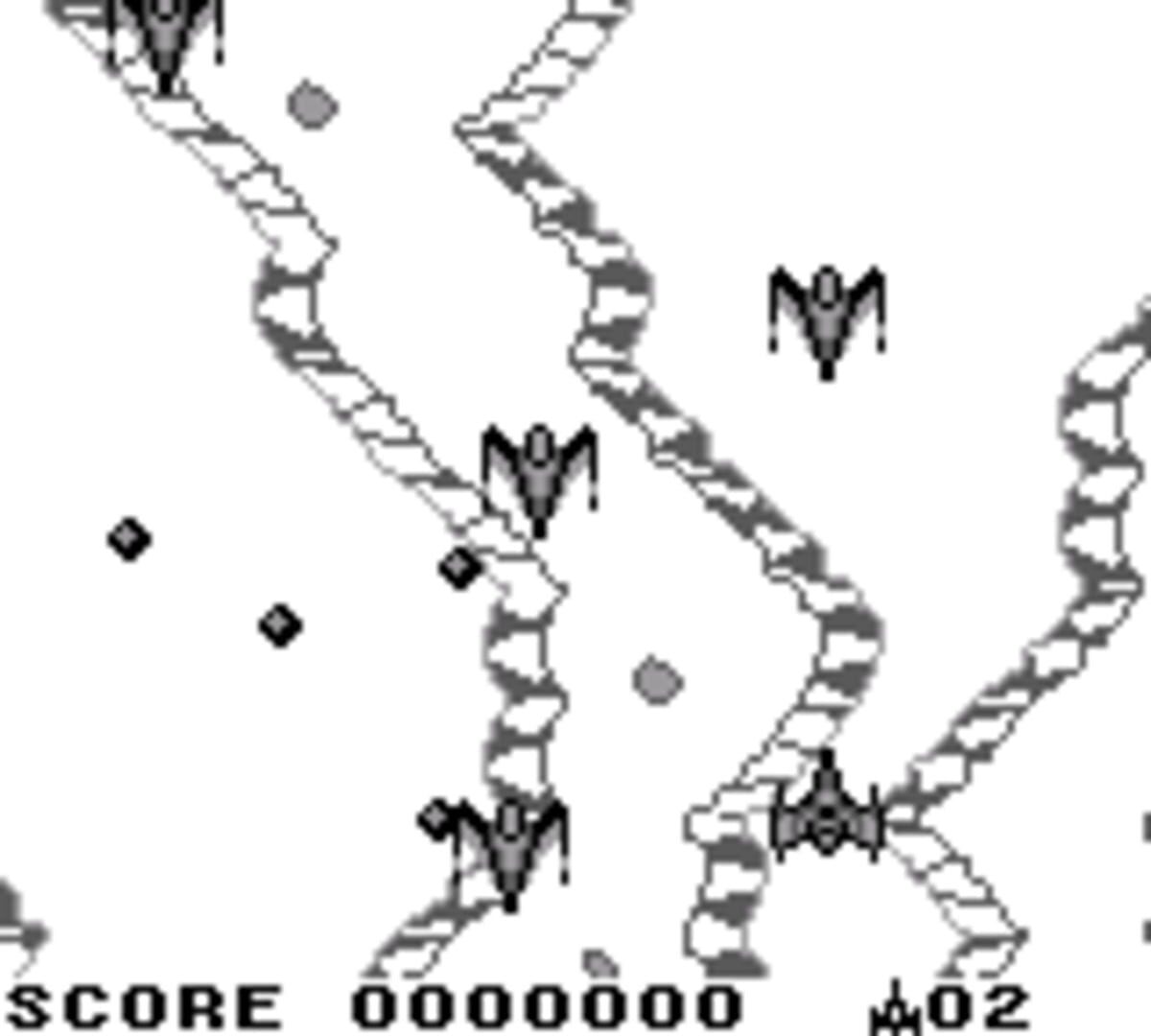
You are locked in ferocious combat on an interstellar battlefield. Dodging and taking aim, alien rocketships stream past, circle, and attack. There are too many to count! Fire, fire, fire! The enemies' first wave is repelled. A moment's rest, and the attack begins again. Gather extra life and firepower from floating energy cells. Prepare to duel batwing fighters and insect spaceships, avoid churning energy fields, alien cruisers and more!

Shooter / Puzzle / Arcade / Action / Science fiction
High-speed action-packed game play returns with the addition of exciting head-to-head battle modes, a challenging new time attack mode, and expanded game play progression that goes beyond Fever Time to SUPER FEVER TIME! Space Invaders Extreme 2 - faster and more exhilarating than ever before!

Shooter / Arcade / Action / Science fiction
R-Type Leo is a horizontally scrolling shooter arcade game. It is a spin-off of the R-Type series and the last entry to be released in Arcades. R-Type Leo was initially an original shoot 'em up game in development by Nanao before Irem retooled it into an R-Type project instead. It is also the first R-Type game to feature simultaneous two player gameplay.

Shooter / Action / Science fiction
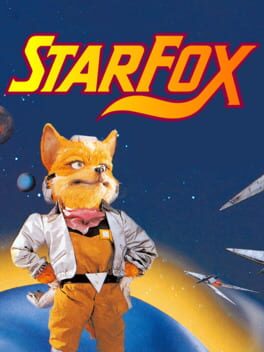
Star Fox, released as Starwing in Europe, is a 1993 rail shooter video game developed and published by Nintendo, with assistance from Argonaut Software, for the Super Nintendo Entertainment System. The first game in the Star Fox series, Star Fox follows Fox McCloud and the rest of the Star Fox team defending their homeworld of Corneria against the attacking forces of Andross.

Shooter / Action / Science fiction
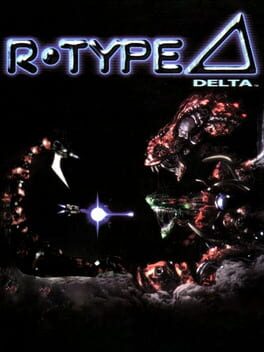
R-Type Delta is a horizontally scrolling shooter video game released only on the PlayStation. It is the fourth game in the R-Type series (hence Delta, the fourth letter of the Greek alphabet) and also the first game in the R-Type series rendered in full 3D graphics.

Shooter / Arcade / Action / Science fiction
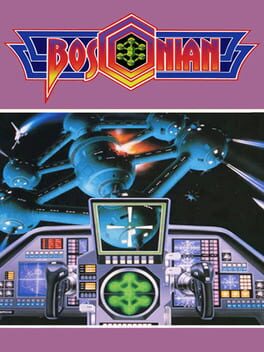
The object of Bosconian is to score as many points as possible by destroying enemy bases and ships. The player controls a small fighter ship that can move in eight directions and can fire both forward and backward. Each level consists of a number of green space stations that must all be destroyed to advance to the next level (a semi-transparent mini-map helps identify their location). Each station consists of six cannons arranged in a hexagon, surrounding a central core. The player must either destroy all six cannons or shoot the core to destroy a station, and in later levels the core is capable of defending itself. Additionally, the player must avoid or destroy asteroids, mines, and a variety of enemy missiles and ships that attempt to collide with the player's ship. Enemies occasionally launch formation attacks — destroying the leader causes all remaining enemies to disperse, but destroying all enemies in a formation scores extra bonus points. A spy ship (worth a random bonus value) also appears occasionally, which must be destroyed or the enemies will go berserk.

Shooter / Arcade / Action / Science fiction
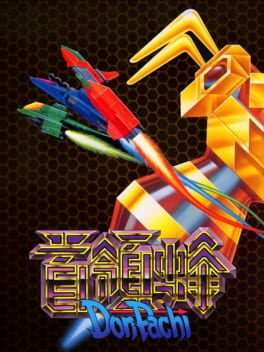
DonPachi is a 1995 vertical manic shoot-'em-up originally in arcades and was the first game from the developer Cave. Settings are mainly woodland and enemies are military vehicles and robots, culminating in the final boss, a huge robotic bee. One of three weapon configurations is chosen at start and then leveled up through dropped power-ups. DonPachi was ported to the Sega Saturn and Sony Playstation in 1996.

Shooter / Arcade / Science fiction
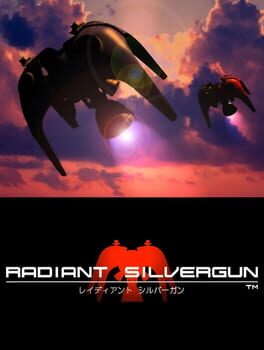
Unlike in most other shoot 'em ups, there are no power-ups. All weapons are available from the start. Weapons can 'level up', however, becoming more powerful as the player uses them to score points. There are a selection of 7 weapons that can be used at any given time: The game is designed so that there is almost always a 'right' weapon for any situation. The bosses in the game are designed so that they have multiple 'sections' which, if all destroyed before the 'core' of the boss, will award the players with point bonuses. Being able to apply the right weapons on any different boss is key to obtaining these bonuses. For example, a boss may have two sections located on either side of the screen. You could immediately go up to one and begin shooting it with a vulcan, or you could hover in the centre and hit both at the same time with the side bombs. This would increase your chance of obtaining the bonus before the time limit runs out and the boss self-destructs. The game rewards players for "chaining" enemies of just one of three colors, red, blue, or yellow. Whenever the player kills three enemies that are of the same color, who can obtain a points bonus. This also facilitates faster upgrading of weapons.
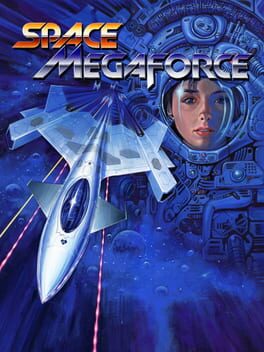
Taking the role of a lone starfighter pilot, you are tasked with destroying an evil alien armada in standard 2D shooter fashion. And while you may be alone, you certainly won't be underpowered, with eight different types of weapons, each having six power-up levels for a grand total of 48 firing modes (not counting bomb power-ups) Space Megaforce boasts one of the largest arsenals in 2D shooter history. Gameplay is single-player only with 3 difficulty levels. Also included is a short campaign with different levels that plays mostly like a "survival" mode with the objective being to outlast the time limit and rack the most points. This international release of Super Aleste features a different story compared to its Japanese counterpart.