

Shooter / Arcade / Action / Science fiction
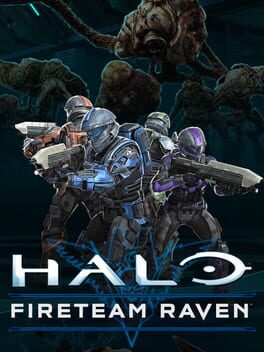
"Halo: Fireteam Raven is a cooperative arcade sci-fi shooting game from arcade legends Raw Thrills and Play Mechanix in a unique partnership and collaboration with 343 Industries. Set in the timeframe of the original Halo: Combat Evolved, this new immersive experience hot-drops players feet first into the boots of Fireteam Raven – a group of elite Orbital Drop Shock Troopers (ODST) – on the surface of Alpha Halo as they try desperately to prevent the alien Covenant alliance from taking control of the ancient superweapon."
Shooter / Arcade / Action / Science fiction
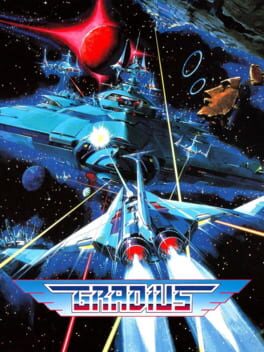
One of the defining characteristics of the Gradius series is the use of a "power meter." The power meter is powered by a power-up item, whose purpose, when collected, is to move a highlight to the next power-up on the power meter. When a power-up that the player wants becomes highlighted, he or she may activate it, also causing the highlight to reset.
Shooter / Arcade / Action / Science fiction
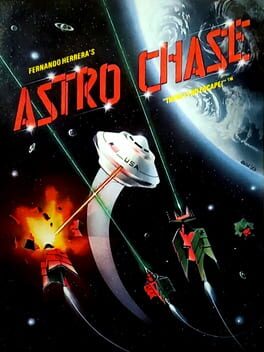
Astro Chase is a multidirectional shooter written by Fernando Herrera for Atari 8-bit computers. It was published by First Star Software in 1982 as the company's first game. Parker Brothers licensed it, releasing cartridge versions for the Atari 8-bit family and Atari 5200 console in 1983 and a Commodore 64 version in 1984. Exidy licensed it for arcade use with its Max-A-Flex cabinet.
Shooter / Arcade / Action / Science fiction
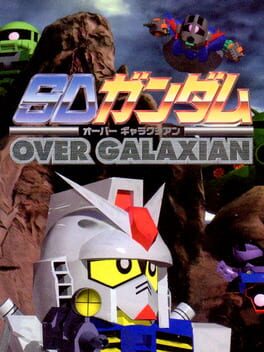
3D remake of Galaxian using characters from the Gundam series.
Shooter / Arcade / Action / Science fiction
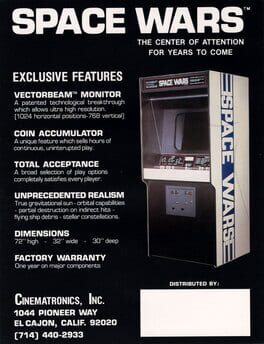
Space Wars is an early vector graphics arcade game. It is based on Spacewar!, a PDP-1 program. It was ported to the Vectrex in 1982. Space Wars was the brainchild of Larry Rosenthal, an MIT graduate who was fascinated with the original Spacewar! and developed his own custom hardware and software so that he could play the game. Cinematronics worked with Rosenthal to produce the Space Wars system. Two players controlled different ships. One button rotated the ship left, another rotated the ship right, one engaged thrust, one fired a shell, and one entered hyperspace (which causes the ship to disappear and reappear elsewhere on the playfield at random). The game offered a number of gameplay options, including the presence or absence of a star in the middle of the playfield (which exerted a positive or negative gravitational pull), whether the edges of the playfield "wrapped around" to their opposite sides, and whether shells bounced. Three other fascinating features were unique to this game. First, the game could not be played in "one player" mode; a human opponent was required. Second, the player's ship could take a glancing hit without dying, but would suffer damage; a cloud of loose ship fragments would break off and float away, after which the ship would be visibly damaged on screen and would turn and accelerate more slowly. Third and most memorable was that the duration of play for any contest was solely governed by the amount of money deposited; each quarter bought a minute and a half of play. A dollar bought six minutes, and for a ten dollar roll of quarters two players could play non-stop for an hour.
Shooter / Arcade / Action / Science fiction
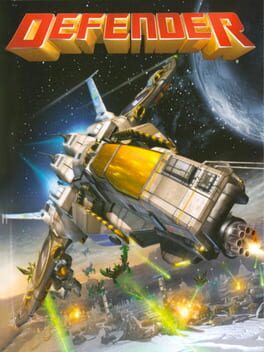
Released in conjunction with a 3D update of the classic arcade game on consoles, the Game Boy Advance version is also an update of the original, but retains its side-scrolling gameplay. The cartridge includes several variants of the game. The main mode is called "XGP". Its basics are the same as in the original: The player's spaceship flies left or right over a scrolling landscape that wraps around after a few screens. The goal is to destroy all invading aliens before they can capture the humans sitting on the ground. Besides updated graphics with various backgrounds and sprites for the enemies and humans, there are other differences as well: players can select from different ships, all with slightly different weapons and ratings for shields and speed. The XGP mode offers six different levels to complete. It can also be played by two players over the System Link. The cartridge also includes "Classic" mode, which is a port of the original arcade game. Finally, "XG" mode is the same gameplay-wise as Classic, but has been updated with graphics similar to the XGP mode.
Shooter / Arcade / Action / Science fiction
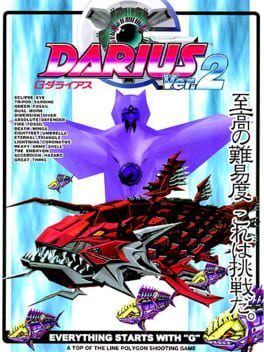
A second version of G-Darius was released in the arcades in 1999, with the following changes: - Increased difficulty. - Default play cost is increased to 2 coins per credit from 1 coin per credit. - Added Beginner Mode; in this mode, the game ends after completing only 3 zones. - Standard auto-fire button. - When using a Capture Ball, the player is no longer invulnerable. - With the super shield, the player is vulnerable to obstacles; with the hyper shield, the player can take a single hit from obstacles. - All stages include mid-bosses; moreover, they all fire the spiral laser from First Captain at the player. - Boss battles include a timer - three minutes for normal bosses, seven minutes for the final boss - with 10000 bonus points added to the player's score for each remaining second upon destroying the boss. - The high score table records high scores for each zone. - After continuing, the player is given one of each Missile, Bomb, Arm and Capture Ball power-ups, instead of a single item that provides the first three.
Shooter / Arcade / Action / Science fiction
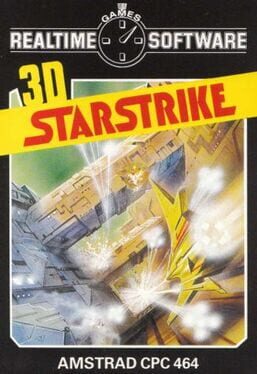
3D Starstrike is a clone of the original wireframe Star Wars game.