Qix 2000 offers both a perfectly-translated version of the original and the insanely fun arrangement version, which updates the graphics (giving the Qix itself a Tempest X3-style psychedelic flair) and adds a few power-ups to the mix. The speed-up power-up makes even slow draw fast, and fast draw faster, but the speed-down power-up negates that effect - and heaven help you if you hit the latter while already operating at normal speed.

Puzzle / Arcade / Action / Fantasy
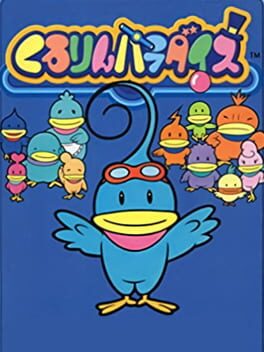
Kururin Paradise revolves around avoiding collisions as the player maneuver a robot through levels. The robot is shaped like a stick, and constantly spins. The second in the Kururin franchise, Paradise involves navigating complex levels with a constantly-rotating robot. Spring objects within levels change the direction of rotation when collided with, and an unlockable ability allows for increasing the speed of rotation. The player has three hit points. After three collisions with objects in the level (discounting the aforementioned springs), the level is re-started. Some levels have intermediate points that replenish health fully. However, they do not save progress. If the player loses all of his or her hit points, they still restart the level from the beginning. Almost all of the game is in Japanese.

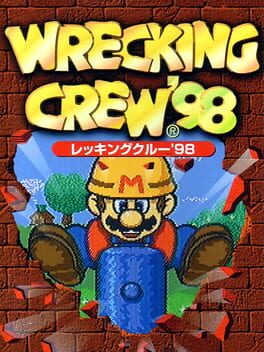
Wrecking Crew '98 is a Japan-only puzzle video game released for the Super Famicom. It is the sequel to the Nintendo Entertainment System game Wrecking Crew. The game takes on a more competitive approach, featuring puzzle-versus elements akin to games like Tetris and Puyo Puyo. Such additions include chain reactions, as well as attacks unleashed into the opponent's play area upon successfully clearing lines.

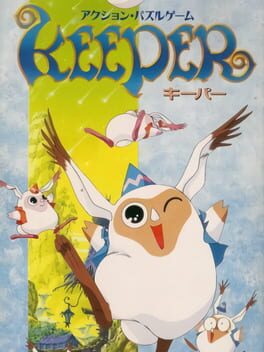
Keeper is an action/puzzle game developed by Fupac and published by Bullet-Proof Software, and released only in Japan for the Super Famicom.


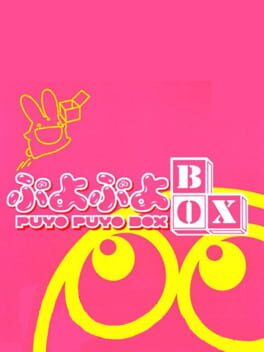
This is a compilation game consisting of modes from previous Puyo Puyo games. It is Compile's last recognized Puyo Puyo title in the series before Sega obtained the rights. Puyo Puyo Box, being a compilation, primarily consists of modes from earlier Puyo Puyo games, but also contains original content. This game has a plethora of game modes available to the user. It contains ports of "Puyo Puyo" and "Puyo Puyo 2", as well as a RPG-styled quest mode in which the player plays as Arle and battles against members of the other cast in Puyo Puyo matches. It also houses a "Stage Clear" mode in which you have to face either 10, 20, or 30 opponents, as well as two multiplayer modes which can be played with either other players or AI substitutes. For the Quest mode itself, it allowed the player to customize the armory in ways in which made Arle stronger with a double-edged sword effect. You could remove the Puyo Rings in order to beef up her attack at the expense of being unable to see your next pieces for example, and the amount of experience gained and gold won was relative to how big a chain was scored and how quickly the opponent was defeated. The key point in the Puyo Puyo gameplay of Box is that the player can choose a ruleset from either "Puyo Puyo", "Puyo Puyo 2", "Puyo Puyo Sun" and "Puyo Puyo~n". This can effectively lead to 4-player battles where each player plays with independent or mixed rules. This game also allowed for team battles to take place. A special multiplayer mode was made available in this game, known as "Treasure Mode", which was adapted in "Puyo Puyo! 15th Anniversary" as its "Excavation Mode".
Noon is a Action-Puzzle game, published by Micro Cabin, which was released in Japan in 1998.