Mystery box
?
Sealed
Mystery Box
Every game in your current results, in one box. Add it to a quest and each run draws a fresh game from it, revealed on release day.
Arcade
1989
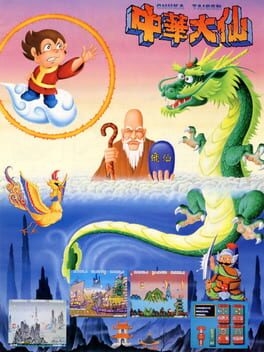
This side out
Shooter / Arcade / Action / Fantasy
Enter the wild, fun-filled world of Mike Chen. He's out to learn the secrets of the five lands so he can become a powerful wizard of the skies! Already he has tamed a cloud to carry him around. He has learned the art of the shooting Ki force from his fingertips! but standing against him are more wacky, zany creatures than you can shake your chopsticks at! Bird men. Flying cat heads. Pigs with guns. And flying bowls of soup! Sounds funny...but remember that each can zap you with a touch! You do have a couple of tricks up your sleeve. Collect power-up pots to fly faster and make your Ki force even more powerful! Defeat the mid-round bosses and you will earn the use of true magic...fireballs, guardian flames and bouncing bombs. Defeat the five world guardians and you'll become a Cloud Master! Fail, and you'll be locked in combat forever. Are you really going to let a flying dumpling get the best of you?
Arcade
1992
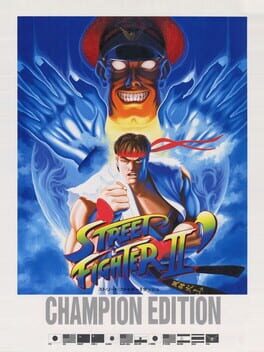
This side out
Street Fighter II: Champion Edition is a competitive fighting game released for the arcades by Capcom in 1992. It was the first of several updates to the original Street Fighter II: The World Warrior. The main changes consisted of adding the Grand Masters (the final four computer-controlled opponents in single-player mode) as playable characters and mirror matches (same character vs same character). The fighting techniques of the eight main characters from the original game were also further refined to allow for more balanced competitive play. The Champion Edition was followed by Street Fighter II' Turbo: Hyper Fighting, released several months later.
PC-88
1988
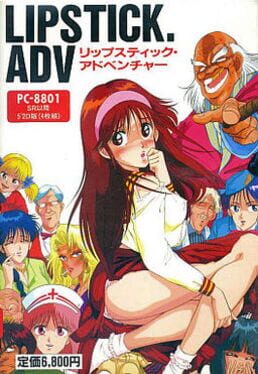
This side out
In Lipstick. ADV the player takes the role of Gorou, a young Japanese private detective. One day, a wealthy and powerful old man contacts him and asks him to find a box which - according to him - contained a family treasure. The young detective thinks that fortune has finally smiled to him, but when his pretty girlfriend Otomi disappears, he realizes that the mystery is bigger than he thought...
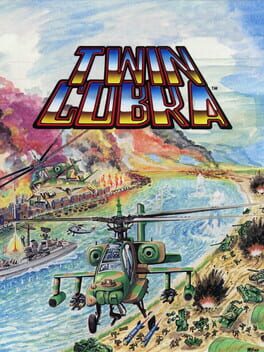
Arcade
1986
This side out
Hack and slash/Beat 'em up / Arcade / Action / Fantasy
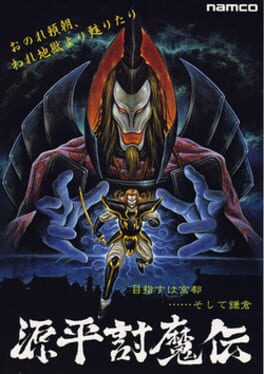
The Genji and the Heike Clans (Genpei Touma-den) is a side-scrolling hack and slash platform game. The player controls Taira no Kagekiyo, a samurai who was killed in the Battle of Dan-no-ura during the Genpei War. Kagekiyo was resurrected to defeat his enemy Minamoto no Yoritomo and the heads of his clan, Minamoto no Yoshitsune and Saito Musashibo Benkei. The game offers three types of action: Small Mode (standard), Big Mode (standard, but with large characters and usually boss fights) and Plain Mode (viewed from an overhead perspective). The game received a localization when released in Namco Museum.
Arcade
1988
This side out
Shooter / Platform / Action / Fantasy
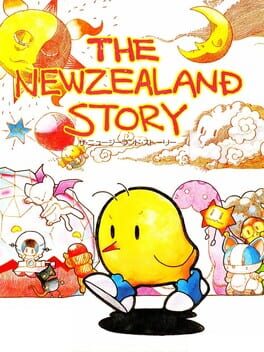
Tiki, a sneaker-wearing kiwi who must save his lover Phee Phee and several of his other kiwi chick friends who have been kiwi-napped by a large blue leopard seal. The player has to navigate a scrolling maze-like level, at the end of which they release one of Tiki's kiwi chick friends trapped in a cage.
PC-88
1989
This side out
Adventure / Visual Novel / Erotic
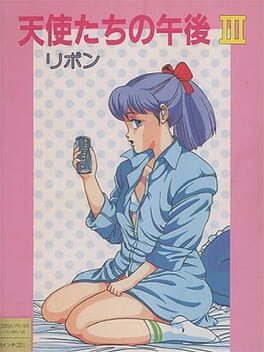
The third game in the Tenshitachi no Gogo series is not connected to its predecessors story-wise. In this installment, the player assumes the role of a male teacher in a high school. Many pretty female students (and pretty female teachers) surround the hero, but he only has one girl in mind: Haru Okamoto, whom he calls "his angel". In order to win her love, the hero will have to know her better - which also means knowing the secrets of students and teachers alike... Tenshitachi no Gogo 3: Ribbon is a Japanese-style (puzzle-less) adventure game. The player interacts with the environment by choosing verb commands ("Look", "Ask", "Search", etc.), which lead to sub-menus with object choices. The game mostly advances in a linear way, but at certain points the story can end prematurely, depending on the player's choice.
PC-88
1986
This side out
Role-playing (RPG) / Simulator / Strategy / Fantasy / Historical
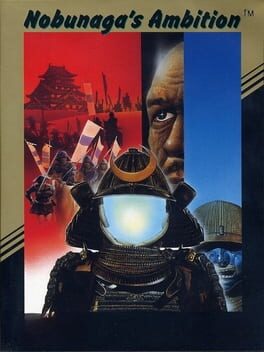
The second game in the series, previously released as Nobunaga's Ambition in the West. Players take on the role of one of the main characters of the period, Nobunaga Oda, Shingen Takeda, Kenshin Uesugi, or others and try to unite the 50 kingdoms of Japan, from Ezo in the north to Kyushu in the south, under their own rule.
PC-88
1987
This side out
Turn-based strategy (TBS) / Tactical / Fantasy / Warfare
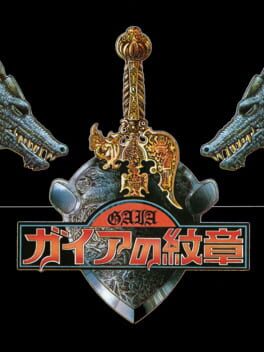
Gaia no Monshō (also known as the 'Crest of Gaia') is a fantasy round-based strategy game by NCS and conversion of a game originally released for the NEC PC-8801 in 1987. Gaia no Monshō is a turn-based strategy game at heart - the player moves troops around a battlefield and attacks nearby enemy units. An Auto Battle mode is also available and gives the option to let the AI figure out of the player's next move. The game offers several play modes - the first one (Scenario Mode) gives the player the chance to jump straight into battle using predefined troops. The second (Construction Mode) allows him to build his own army using unit points. The last one (Campaign Mode) conveys story plot elements and starts in the siege town of Dirl, where king Sieghart battles the fierce Böser. This mode requires more complex strategy and the player must assemble his own troops using unit points and units lost in battle don't come back during the campaign. Unlike the other two modes, it offers a password system to save the player's progress through the game.
MSX2
1988
This side out
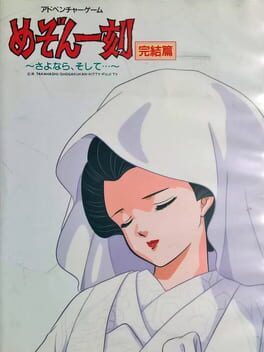
The game is based on the manga Maison Ikkoku by Rumiko Takahashi. The game is a "puzzle-less" adventure, the gameplay mostly focusing on simply depleting all the verb commands at every given screen and moving between locations. The commands include the usual "Look", "Talk", and Move" typical for Japanese adventures (no "Think" command), but also context-sensitive commands "Eat", "Drink", etc., as well as the possibility to use certain inventory items.
Arcade
1985
This side out
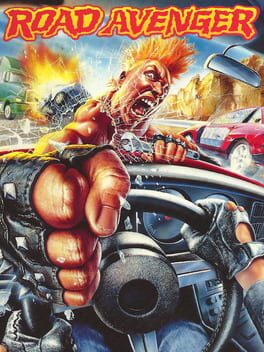
Players assume the role of an angry cop on a wild ride as he pursues a gang of bikers who killed his wife. Players need to race through oncoming traffic, squeeze between trucks, trash motorcycles and steer through lots of explosions. The only thing needed are quick reflexes to follow the instructions on the screen (with an increasing difficulty) in order to keep the animation going.
Arcade
1991
This side out
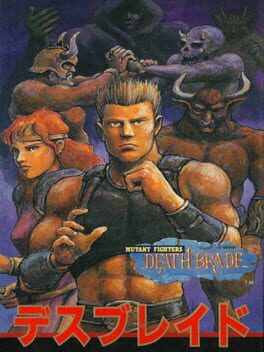
Warriors clash against each other in a series of "Death Matches" in a quest to claim the throne and become king or queen of all fighters.

MSX
1991
This side out
Role-playing (RPG) / Adventure / Science fiction
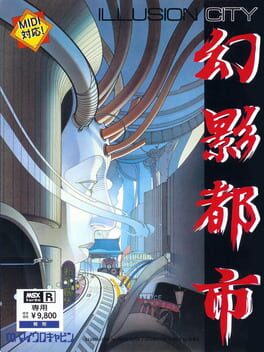
Illusion City is a Japanese-style role-playing game with several distinguishing characteristics. Unlike most games of the genre, it has no overworld, and takes place entirely in a vast city divided into several districts. The player advances the story by exploring the city, talking to non-playable characters, gathering information, receiving missions, and eventually heading into large, complex hostile areas. There are no random battles in the game; all enemies are visibly moving on the field, and many of them can be avoided. Combat is turn-based, utilizing an "over-the-shoulder" perspective similar to that of Phantasy Star II. Characters join the party as dictated by the plot; an active party includes three combatants. A wide variety of weapon and armor types can be purchased or found in dungeons. Each character has his or her own weapon proficiencies, which can be increased by repeatedly using the same weapon type. Firearms require specific ammunition (e.g. bullets, shotgun cartridges, etc.), which is expended in combat and must be re-stocked. In addition, certain characters can use offensive, supportive, and healing techniques. The game's visual style aims for realistic presentation of locations and characters, and shares more common traits with contemporary Western visual aesthetics than the traditional Japanese anime art.
MSX
1988
This side out
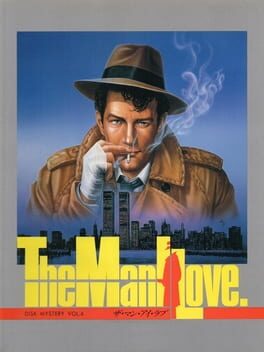
The Man I Love is an Adventure game, developed and published by Thinking Rabbit, which was released in Japan in 1989.
Arcade
1986
This side out
Shooter / Arcade / Action / Science fiction
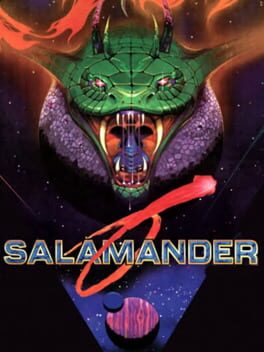
Salamander is a scrolling shooter arcade game released by Konami as a spin-off to Gradius. It introduced a simplified power-up system, two-player cooperative gameplay and both horizontally and vertically scrolling stages. Some of these would later become the norm for future Gradius games.

Still plenty of games...