Developed by Ubisoft Nagoya.
Fighting / Hack and slash/Beat 'em up / Action / Science fiction
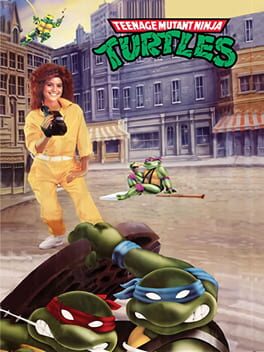
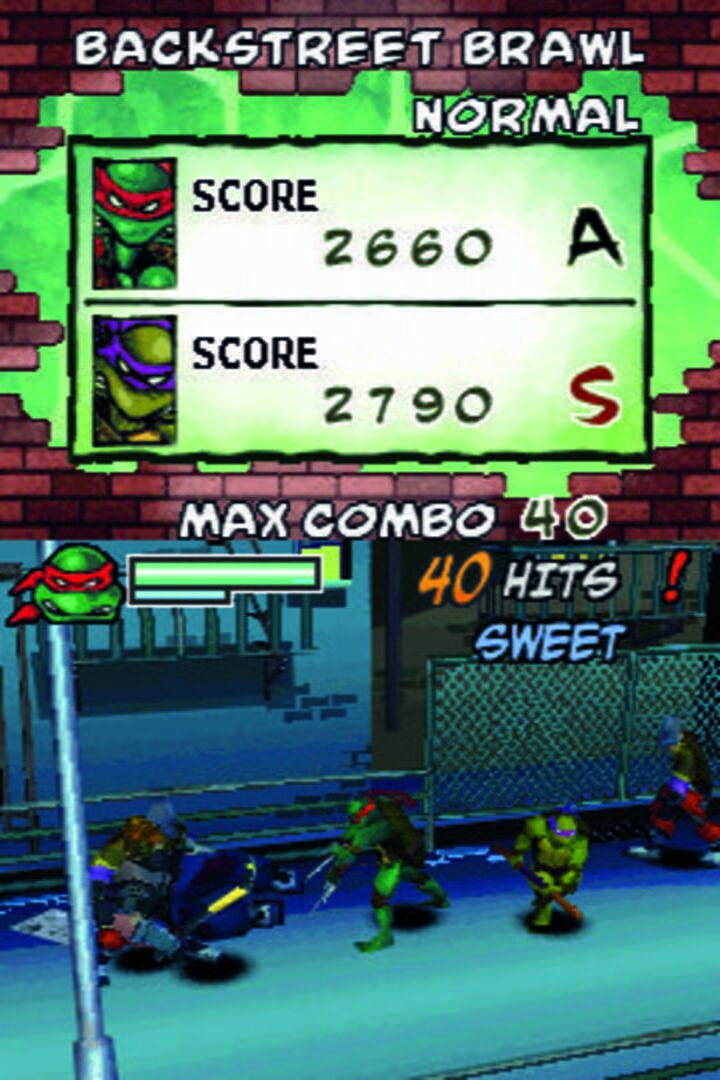
This side-scrolling beat-em-up game is a tribute to the coin-op classics that made the Turtles video game legends. The Turtles make their return to clean up the crime-riddled streets of NYC. Shredder stands poised to take over the city - and only you can rally the might of the ninja brothers to put a stop to the threat in the present and the future...
The game's plot seems to come sometime after TMNT: Back to the Sewer's conclusion, although there are some slight inconsistencies which prevent it from being canon to the show. Cyber Shredder has returned, this time in the distant future. He has sent a Golden Cyber Foot back to the past to test a time travel device. The Turtles then go off on an adventure to stop Cyber Shredder from reaching the present. Along the way, they topple many Purple Dragons, Foot Ninja, and some well-known TMNT villains. All of the games cut-scenes were written by Sam Regal who also voices Donatello.

Fighting / Hack and slash/Beat 'em up / Adventure / Action
NOTE: This is the original 4-Player Arcade release, not the NES Title. The player chooses from one of the four Ninja Turtles: Leonardo, Michelangelo, Donatello, and Raphael. After Shredder kidnaps the Turtles' friend April O'Neil and their mentor Splinter, they must give chase, save their comrades, and defeat the evil Shredder. The player chooses from one of the four Ninja Turtles: Leonardo, Michelangelo, Donatello, and Raphael. Depending on the version of the game, the characters are either, chosen at the start of the game or assigned by control panel. After Shredder kidnaps the Turtles' friend April O'Neil and their mentor Splinter, they must give chase, save their comrades, and defeat the evil Shredder. Up to four players (two in some versions) can take control of any of the Turtles. Donatello has slower attacks but a longer range, Michelangelo and Raphael have faster attacks but a shorter range, and Leonardo is a well-rounded Turtle with average range and speed. The eight-way joystick controls the movements of the Turtle, the jump button makes them jump and the attack button makes them hit in front of them using their weapon. In addition to this, some combinations are possible. The Turtles can throw Foot soldiers overhead, and by pressing the jump and attack buttons, a special attack is performed. Raphael rolls along the ground and finishes with a kick, while the other Turtles do a sweeping jump attack with their weapons. Turtles can also spring off the wall in certain areas. Enemies can be defeated more quickly by slamming them into walls or solid objects. Many objects such as traffic cones, parking meters, fire hydrants and exploding oil drums can be hit or damaged with attacks in order to help defeat nearby enemies. In the attract mode, the game showed the first part of the cartoon opening, along with a portion of the Teenage Mutant Ninja Turtles theme song. Most of the enemies the Turtles face are the Foot Soldiers, all color-coded to indicate their attack patterns and weapon of choices. Some enemies, such as the standard purple-clad Foot Soldiers and Roadkill Rodney robots, have the ability to restrain the Turtles' mobility and drain their health, leaving the player open to attack for other enemies. The bosses in the game include Rocksteady and Bebop (individually at first in that order, and later the two of them together), Baxter Stockman, Granitor, General Traag, Krang, and Shredder himself.
Fighting / Puzzle / Hack and slash/Beat 'em up / Action / Fantasy
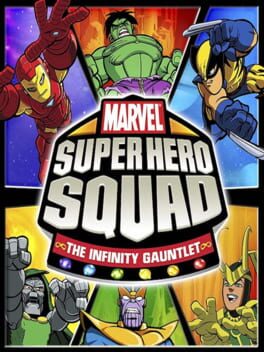
Marvel Super Hero Squad: The Infinity Gauntlet is a continuation of the video game Marvel Super Hero Squad and it was released on November 16, 2010. Similar to the first game, it features cartoonish Super-deformed versions of the Marvel Comics characters, as seen in the Marvel Super Hero Squad toy line, as well as the television show.

Fighting / Hack and slash/Beat 'em up / Action / Science fiction
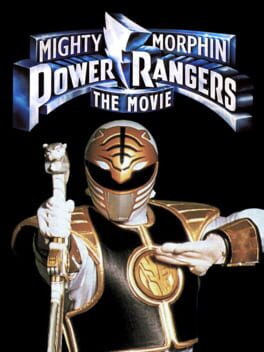
The Super NES version of Mighty Morphin Power Rangers: The Movie is a side-scrolling action game similar to the previous SNES game based on the series. The game can be played by one or two players with six available characters. Billy and Kimberly return from the previous game along with the introduction of Tommy, as the White Ranger (opposed to appearing as Green Ranger), three new rookie rangers, Rocky, Adam, and Aisha, who replaces Jason, Zack, & Trini from the original game. The player begins each stage as his or her character's civilian persona. The player can fill up a "Morphing meter" next to their life gauge by picking up thunderbolt-shaped items (whether by small bolts or morphing sign bolts). These items are dropped by enemies and can also be used to perform a special attack when the character is morphed in Ranger Mode. A Special code made for the game can have the players begin the stages as the morphed Rangers instead of their civilian persona. Once the Morphin' meter is filled, the player can press the special attack button to morph; an animated sequence begins showing the rangers morphing in a digitized video (Based of the Season 2's transformation without showing the Red Ranger helmet configuring at the end). The method also occurs automatically after the player goes throughout the mission in civilian mode encountering the boss triggering the morph sequence (regardless of how much energy of the morphin' meter is filled up). The game consists of seven stages. The player fights against Lord Zedd's Putty Patrol until reaching the end of stage boss. The first five bosses are all monsters from the TV show's second season, while the sixth one is an original creation for the game. The final boss is Ivan Ooze, the film's antagonist. Unlike the first game, there are no giant robot battles in this version, although the Ninja Megazord from the film (and the show's third season) makes an appearance during the ending sequence.

Fighting / Hack and slash/Beat 'em up / Action / Science fiction
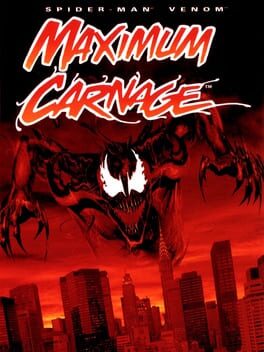
Spider-Man and Venom: Maximum Carnage is a side-scrolling beat 'em up game for the Super NES and Sega Genesis/Mega Drive, developed by Software Creations and published by Acclaim Entertainment and it's subsidiary LJN in 1994. The game, based on a sprawling comic book story arc of the same name, features numerous heroes, including Spider-Man, Venom, and their allies from the Marvel Comics fictional universe like Captain America, Black Cat, Iron Fist, Cloak and Dagger, Deathlok, Morbius and Firestar, all teaming up to battle an onslaught of villains led by Carnage, including Shriek, Doppelganger, Demogoblin and Carrion. Both the Genesis/Mega Drive and Super NES versions come in a red cartridge. They were later released in the normal cartridge colors (black for Genesis, gray for Super NES). The game was followed up by a sequel called Venom/Spider-Man: Separation Anxiety. Universal Studios Orlando used Maximum Carnage as the theme for a haunted house at Halloween Horror Nights in 2002.

Fighting / Platform / Hack and slash/Beat 'em up / Action / Science fiction
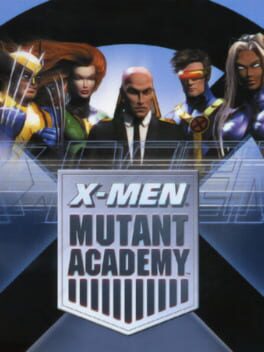
X-Men: Mutant Academy is a 3-D/2D fighting game developed by Paradox, the company behind Activision's Wu-Tang: Shaolin Style and the never-published Thrill Kill, and based on the X-Men characters from Marvel Comics. The game was released for the Game Boy Color and PlayStation as a tie-in to X-Men. X-Men: Mutant Academy is a basic fighting game that uses six buttons: three buttons for punches and three for kicks. Due to the success of the game, it was followed by two sequels: X-Men: Mutant Academy 2 and X-Men: Next Dimension. The game's characters can be played both with their comic book costumes and their costumes from the 2000 film X-Men. Characters not present in the film were given costumes of a similar design.

Fighting / Platform / Hack and slash/Beat 'em up / Action
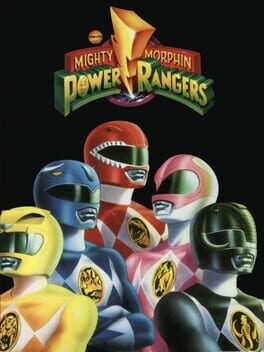
Mighty Morphin Power Rangers is a video game for the Sega CD console. It was produced by Sega TruVideo and released by Sega in US and Europe in 1994. The game consists mostly of footage from nine episodes of the Mighty Morphin Power Rangers TV series, which featured footage from Kyōryū Sentai Zyuranger. Gameplay requires the player to press certain buttons at precise moments throughout the game as they appear on screen. If the player misses, the health meter will drop. However, there are points in the game where the player can press a button unprompted for extra points. At the end of each level, the player's progress is tallied. The points earned will be used to refill the player's health meter and can even score an extra life. Footage from episodes of the television series was used for the game. This footage was heavily cut down for disc space and level length. As a result, the five-part "Green With Evil" serial was turned into four small segments for the game. The game has a total of ten levels. Levels six and seven are playable only on normal and hard modes, and levels eight, nine, and ten are playable only on hard mode.

Fighting / Shooter / Hack and slash/Beat 'em up / Action / Fantasy
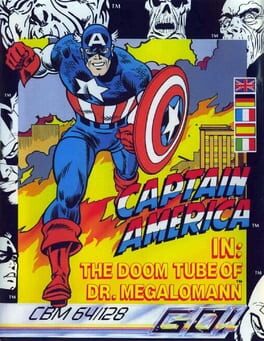
Captain America in the Doom Tube of Dr. Megaloman is a platform/action game developed in 1987 for the Commodore 64 iIt is based on the comic book license of the same name.

Hack and slash/Beat 'em up / Arcade / Action / Science fiction
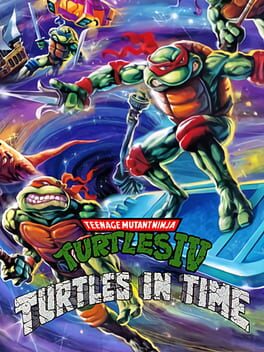
Teenage Mutant Ninja Turtles IV: Turtles in Time, developed by Konami, is a side-scrolling beat ’em up for up to two players. It is the fourth game in the series, following Teenage Mutant Ninja Turtles III: The Manhattan Project on the Nintendo Entertainment System. Originally released as an arcade game, it was later ported to the Super Nintendo Entertainment System in 1992.